United States: “Market Manipulation Day” and the Quiet Transfer of Wealth in Plain Sight
- TDS News
- U.S.A
- May 1, 2026
By: Donovan Martin Sr, Editor in Chief
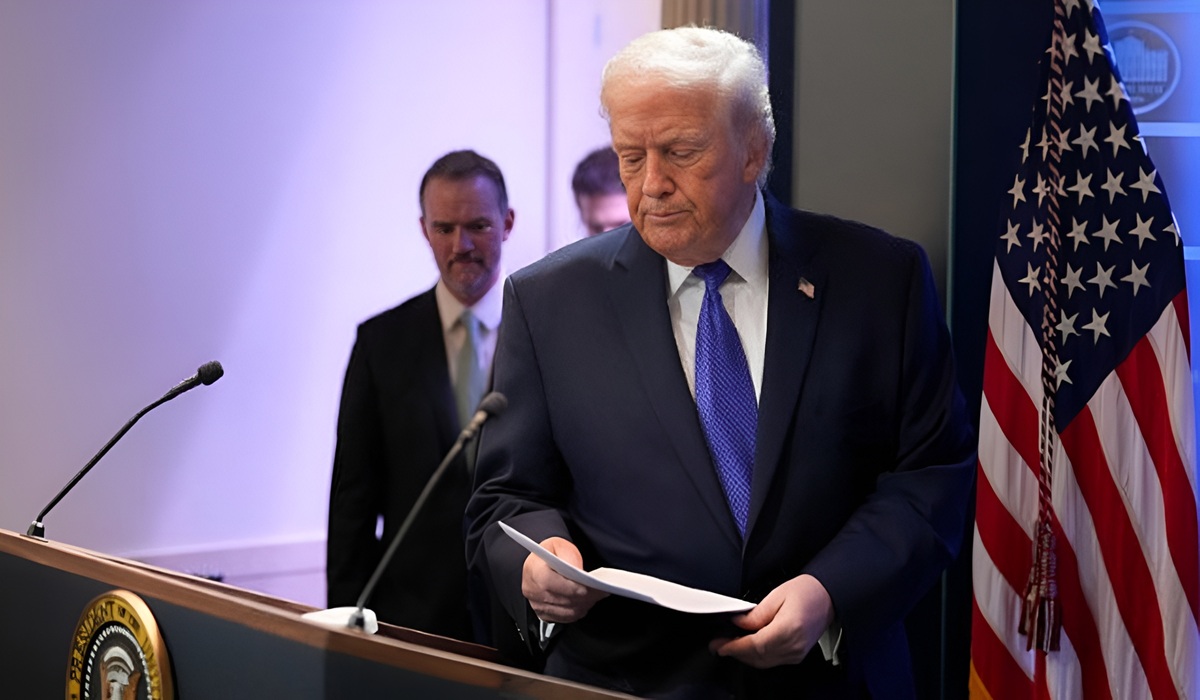
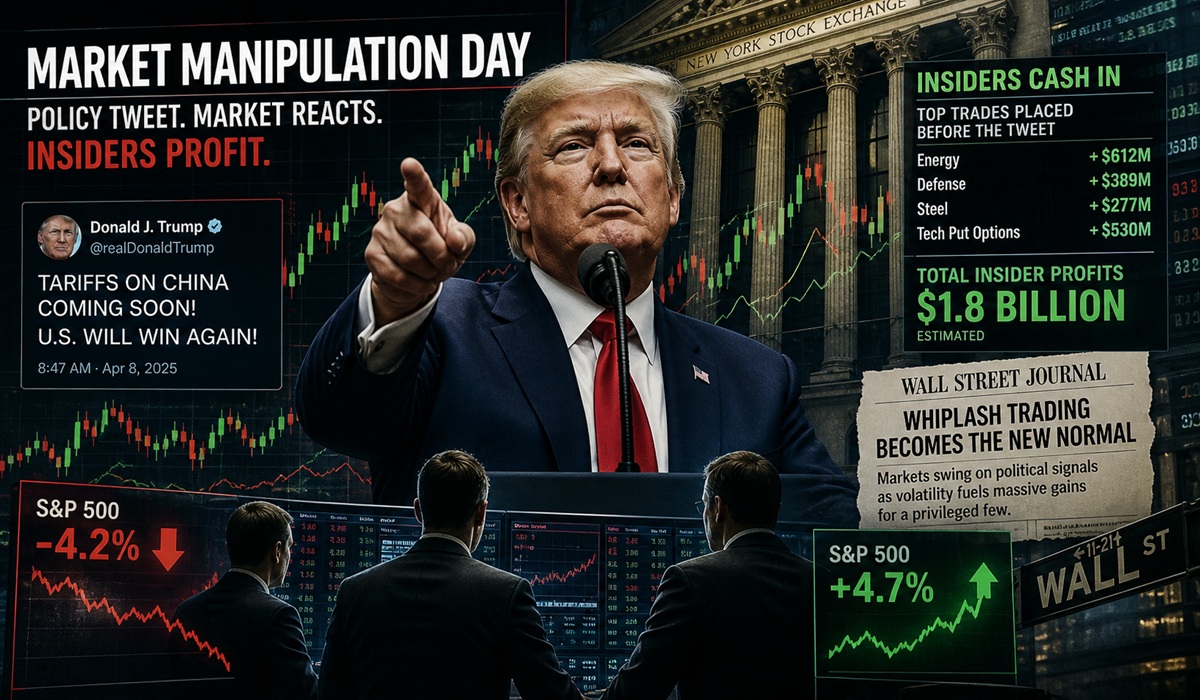
There is a growing phrase circulating among traders, hedge fund desks, and even retail investors who have been burned one too many times over the past year: “market manipulation day.” It does not appear on any official calendar, and you will not hear it acknowledged on financial networks in direct terms, but the pattern is becoming difficult to ignore. Under President Donald Trump’s administration, markets are increasingly moving not just on economic data, but on sudden policy shifts, abrupt tariff threats, geopolitical escalations, and carefully timed public statements that create massive, predictable swings. Those swings are not random, and the people positioned ahead of them are making extraordinary amounts of money.
The mechanics are not complicated, but they are deeply effective. A statement about tariffs drops unexpectedly, often outside of normal market hours or just before a major trading session. Futures markets react immediately, pricing in fear, uncertainty, or opportunity depending on the sector. By the time retail investors wake up or react, the move has already begun. Institutional players, those with faster access, deeper liquidity, and in some cases closer proximity to policy signals, are already positioned. Billions can move in minutes, not because of underlying economic fundamentals, but because of the expectation of what policy might do next.
Take the recent cycle involving energy markets and Middle East tensions. As rhetoric intensified around Iran and the stability of the Strait of Hormuz, oil prices surged sharply. Energy stocks followed, and defense contractors saw simultaneous spikes. These were not gradual climbs tied to supply data; they were rapid, sentiment-driven moves triggered by statements and escalations. Traders who were positioned before those announcements captured outsized gains, while late entrants were left chasing momentum that had already peaked. When the rhetoric cooled, even slightly, the reverse happened just as quickly, wiping out those who entered too late.
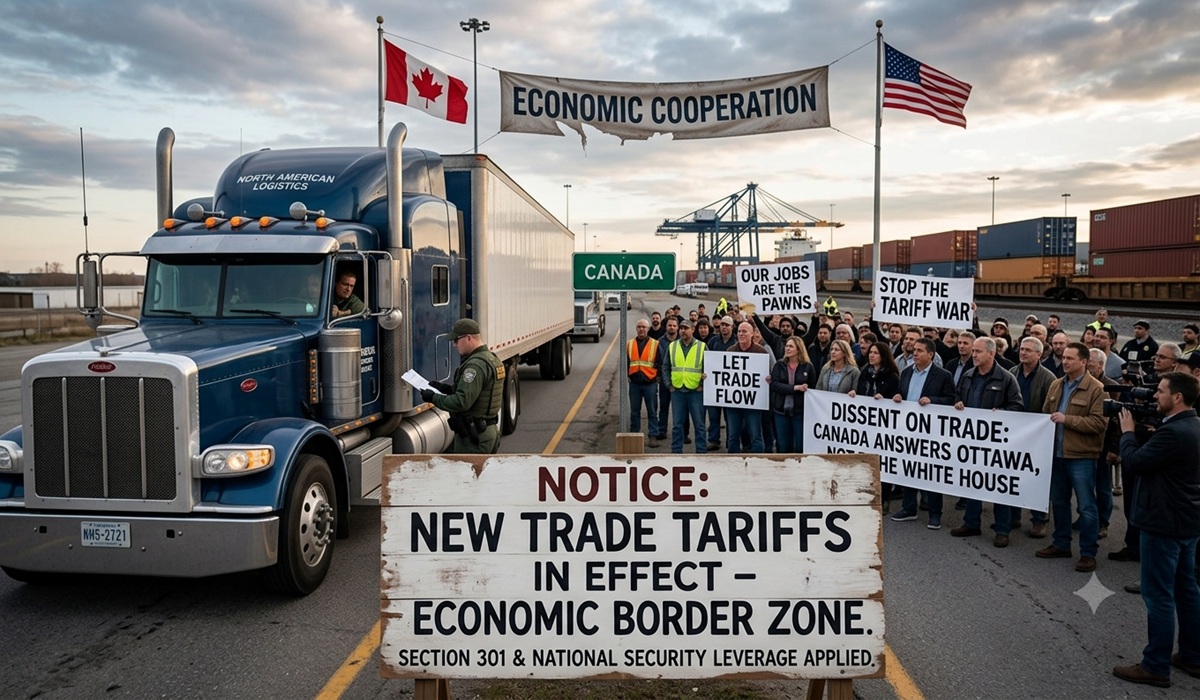
The same pattern is playing out in manufacturing and industrial sectors tied to tariffs. A threat of new tariffs on imports from key trading partners sends shockwaves through supply chains. Domestic producers spike on the assumption of protection, while multinational companies with global exposure drop sharply. Within hours or days, adjustments or partial walk-backs occur, and the market reverses again. This volatility is not just noise; it is structured chaos, where each swing creates a window of opportunity for those who can anticipate or react faster than the broader market.
What makes this environment particularly concerning is the perception, and in some circles the belief, that these moves are not entirely organic. There is a growing sense that certain market participants are consistently on the right side of these swings. Whether through superior analysis, faster execution, or closer alignment with policy signals, the outcome is the same: wealth is being transferred at a scale that is difficult to quantify in real time. Hedge funds and institutional traders are reporting some of their most profitable quarters in years, driven largely by volatility rather than long-term investment performance.
Retail investors, by contrast, are increasingly being drawn into what looks like opportunity but behaves more like a trap. A sudden dip caused by a policy announcement appears to be a buying opportunity, only for further negative news to push prices lower. A sharp rally triggered by geopolitical tension invites momentum trades, only for a de-escalation to erase gains within hours. The traditional playbook of fundamentals, earnings, and long-term growth is being overshadowed by a cycle of reaction to political signals.
Even the broader indices reflect this distortion. The S&P 500 and Nasdaq continue to post resilience, but the path to those levels is far more volatile than in previous cycles. Large-cap companies with strong balance sheets are weathering the swings, while smaller firms and more leveraged sectors are being whipsawed. The result is a market that appears stable at the top level but is far more unstable beneath the surface.
Regulators have not been silent, but they have been cautious. Proving direct manipulation tied to policy is extraordinarily difficult, especially when the actions themselves, tariffs, sanctions, public statements, fall within the scope of executive authority. The line between strategic policymaking and market-moving communication is blurred, and that ambiguity creates space for exploitation without clear accountability.
What is happening now is less about a single event and more about a system that rewards volatility at the highest levels. Each announcement, each escalation, each sudden shift creates a new wave of opportunity for those positioned to take advantage. The phrase “market manipulation day” may sound informal, even dismissive, but it captures a reality that many participants are beginning to accept: the market is no longer just reacting to the economy, it is reacting to the choreography of power, timing, and information.
The long-term implications are significant. Confidence in market fairness is a foundational element of financial systems, and when that confidence erodes, participation changes. Retail investors become more cautious or more speculative, neither of which contributes to stability. Institutional players continue to dominate, leveraging speed, scale, and access to capture gains that are increasingly tied to volatility rather than value creation.
This is not a collapse, and it is not a traditional crisis. It is something more subtle and, in many ways, more profound. It is a shift in how markets function, where political signaling has become one of the most powerful drivers of price action. Whether intentional or simply a byproduct of the current environment, the result is the same: a market where billions can be made or lost in the space of a headline, and where the distance between those who win and those who lose is defined less by insight and more by timing.
About The Author