Europe: Economic Realignment Under Pressure from War, Energy Shocks, and Trade Fragmentation
- Ingrid Jones
- Europe
- Tiger's Eye Advisory Group - Trending News
- May 1, 2026
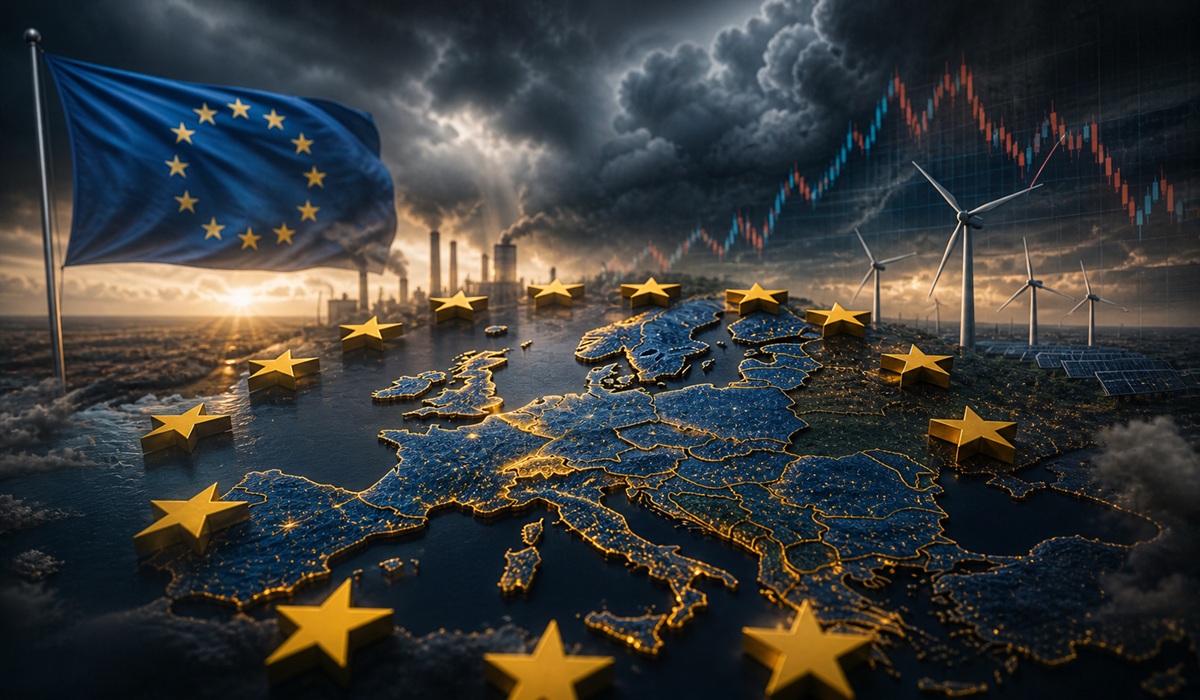
Europe is not simply adjusting to a shifting global economy; it is being forced into a structural reset that is exposing deep vulnerabilities across its industrial base, energy systems, and political alliances. What once functioned as a relatively stable, export-driven economic bloc is now navigating a convergence of pressures that are reshaping how the continent produces, trades, and sustains growth. The war in Ukraine remains the central fault line, but its consequences are no longer confined to Eastern Europe. They are embedded in every major economic decision being made across the European Union.
Germany, the economic engine of Europe, sits at the center of this transformation, and not comfortably. The loss of cheap Russian natural gas following the collapse of the Nord Stream pipelines has fundamentally altered the cost structure of German industry. For decades, manufacturers relied on stable, low-cost energy to maintain global competitiveness, particularly in chemicals, steel, and automotive production. That advantage has been eroded almost overnight. In its place, Germany has been forced to pivot toward liquefied natural gas imports, much of it sourced from the United States at significantly higher prices, while simultaneously accelerating investments in renewable energy infrastructure that cannot yet fully replace baseload industrial demand.
This shift has had immediate consequences. Industrial output in Germany has been volatile, with several months of contraction over the past year, particularly in energy-intensive sectors. Chemical giant BASF has already scaled back domestic operations and expanded production abroad, citing energy costs as a decisive factor. The automotive sector, already under pressure from electrification mandates and global competition, is facing additional strain as supply chains adjust to both geopolitical realities and new regulatory frameworks. The cumulative effect is a gradual erosion of Europe’s industrial core, not through collapse, but through incremental relocation and reduced output.
France, while less dependent on Russian gas due to its nuclear energy base, is dealing with its own set of pressures. Aging nuclear infrastructure has required extensive maintenance, leading to intermittent production disruptions that have forced the country to import electricity at critical moments. At the same time, domestic political resistance to pension reforms and labor changes has created an environment where economic policy is often constrained by social unrest. The French economy continues to grow modestly, but it does so under constant tension between reform and resistance.
Across the broader European Union, energy remains the defining economic variable. Natural gas prices have stabilized compared to the peaks seen in 2022, but they remain structurally higher than pre-war levels. This has forced governments to implement subsidies, price caps, and emergency support measures for both households and businesses. While these interventions have prevented immediate economic shock, they have also added to fiscal pressure, with several countries running elevated deficits to sustain these programs.
Trade dynamics are shifting just as dramatically. The European Union is actively pursuing new agreements to offset declining trade with traditional partners, particularly the United States, where tariffs and protectionist policies are reducing European export competitiveness. The Mercosur agreement, expected to begin implementation in 2026, is one of the most significant moves in this direction. It opens access to South American markets, particularly for industrial goods and automobiles, while also creating new competition for European agriculture. This dual effect highlights the complexity of modern trade strategy, where gains in one sector often come with losses in another.
At the same time, Europe is increasingly aware that it is competing not just with the United States, but with China for global economic influence. Chinese investment in infrastructure and manufacturing across Africa and Latin America has created strong economic ties that are difficult for European firms to penetrate. In response, the EU has begun emphasizing strategic autonomy, investing in domestic semiconductor production, battery manufacturing, and critical raw material supply chains. These efforts are designed to reduce dependence on external powers, but they require time, capital, and political alignment that is not always easy to achieve across 27 member states.
The war in Ukraine continues to cast a long shadow over all of these developments. Military spending across Europe has increased significantly, with countries like Poland and Germany committing to long-term defense expansion. This shift represents a structural change in fiscal priorities, redirecting resources toward security at a time when social programs and economic support measures are already under strain. The balance between defense and domestic investment is becoming a defining political issue across the continent.
Inflation, while easing compared to previous peaks, remains a concern, particularly in food and energy sectors. The European Central Bank has maintained relatively tight monetary policy, keeping interest rates elevated to ensure inflation continues to trend downward. This has had the predictable effect of slowing borrowing and investment, particularly in housing markets and small business expansion. The result is an economy that is stabilizing, but not accelerating.
What makes Europe’s current position so complex is that none of these challenges exist in isolation. Energy costs influence industrial output, which affects trade balances, which in turn shape fiscal policy and political decision-making. Each lever is connected, and adjustments in one area often create unintended consequences in another. The continent is not in crisis, but it is operating without the margins of comfort it once enjoyed.
Europe is adapting, but adaptation comes at a cost. The shift toward renewable energy, the diversification of trade, and the push for strategic autonomy are all necessary steps in a changing world. However, they require a level of coordination and long-term commitment that is difficult to sustain in a politically diverse union. The coming years will determine whether Europe can transform these pressures into a new model of resilience, or whether it will continue to absorb shocks in a system that is being tested on multiple fronts at once.
About The Author