President Asif Ali Zardari in China : Pakistan’s Strategic grip on Beijing Deepens
- Naveed Aman Khan
- Pinpoint
- China
- Tiger's Eye Advisory Group - Trending News
- April 29, 2026
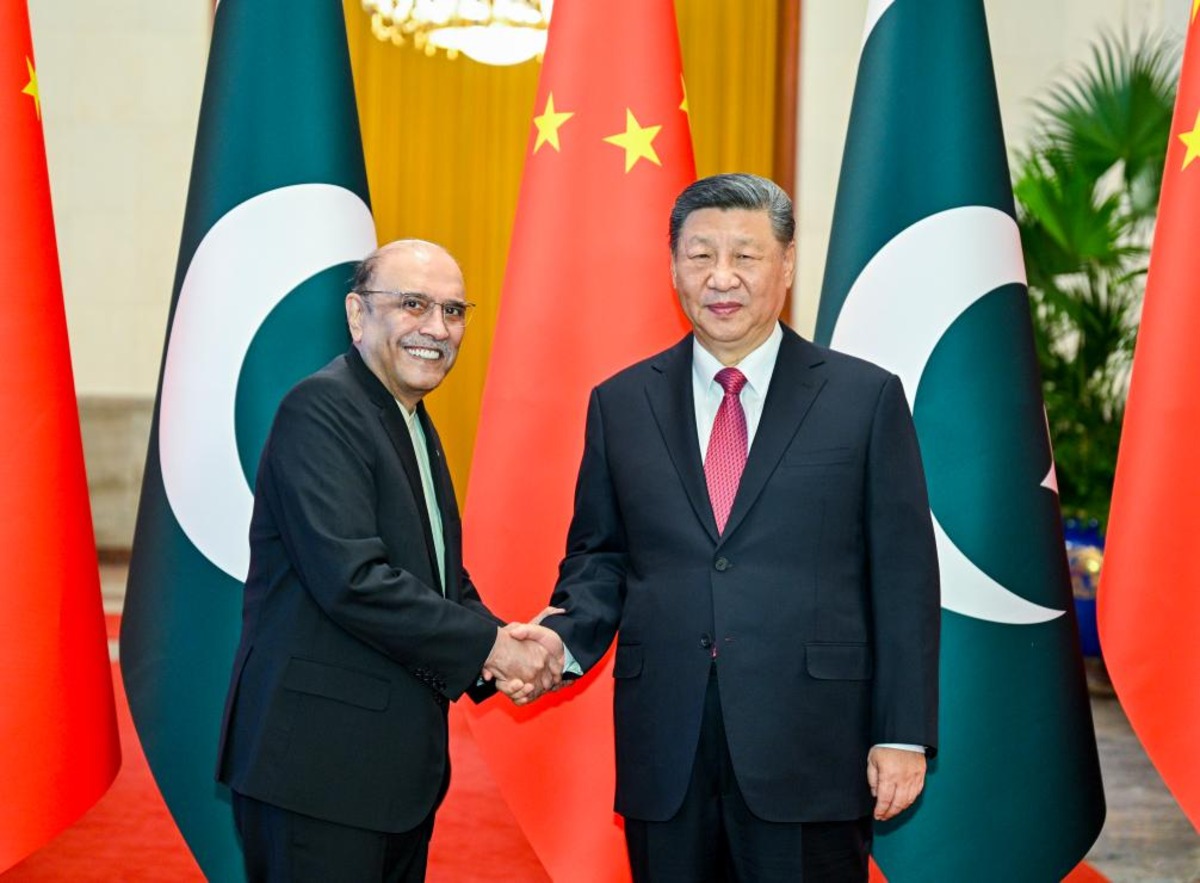
President Asif Ali Zardari’s five-day visit to China is not a ceremonial exchange of goodwill—it is a calculated diplomatic effort shaped by economic urgency, regional rivalries, and the evolving global balance of power. At a time when Pakistan is grappling with internal economic strain and navigating an increasingly polarized international environment, the visit underscores Beijing’s enduring centrality in Islamabad’s foreign policy.
The primary agenda of the visit revolves around economic revival. Pakistan’s fragile economy—burdened by inflation, debt obligations, and slow growth—demands immediate external support. In this context, China remains a critical partner, not only as a lender but as a long-term investor. Zardari’s discussions are expected to focus heavily on reinvigorating the China–Pakistan Economic Corridor (CPEC), which has long been described as the backbone of bilateral economic cooperation. The emphasis this time is not merely on infrastructure but on transitioning into the second phase of CPEC, which prioritizes industrialization, agriculture, and technological collaboration.
This shift reflects a deeper realization within Pakistan’s policymaking circles: large-scale infrastructure alone cannot deliver sustainable economic growth without parallel development in productive sectors. Zardari’s outreach to Chinese provincial authorities—particularly in industrial and agricultural hubs—signals a pragmatic turn toward localized partnerships. These engagements aim to attract investment in special economic zones, enhance agricultural productivity, and facilitate technology transfer that could boost Pakistan’s export capacity.
Domestically, the political significance of the visit is equally profound. The government faces mounting public pressure over rising living costs and limited economic opportunities. In such a climate, high-level diplomatic engagements serve not only as policy initiatives but also as political messaging. Zardari’s presence in China reinforces the narrative that Pakistan is actively pursuing economic diplomacy to stabilize its financial situation and create avenues for growth. It also highlights continuity in Pakistan’s China policy, which has historically transcended political divisions.
On the regional front, the visit carries strategic weight. South Asia remains a contested geopolitical space, with India strengthening its partnerships with Western powers, particularly the US. Pakistan, in contrast, continues to anchor its strategic outlook in its partnership with China. This alignment is not incidental; it is rooted in decades of defense cooperation, economic engagement, and shared geopolitical interests.
Zardari’s visit, serves to reaffirm this alignment at a time when regional dynamics are shifting. The potential expansion of connectivity projects linking Pakistan with Central Asia and beyond further elevates the importance of Pakistan–China cooperation. By positioning itself as a corridor for regional trade, Pakistan hopes to transform its geographic location into an economic advantage. China’s support is indispensable in realizing this vision.
At the global level, the visit reflects the broader context of great power competition. The intensifying rivalry between the US and China has reshaped international alliances and compelled countries like Pakistan to make strategic choices. While Islamabad maintains diplomatic relations with Washington, its deepening economic and strategic ties with Beijing indicate a clear long-term orientation. Zardari’s engagements are likely to include discussions on emerging areas such as digital infrastructure, renewable energy, and security cooperation, all of which are critical to Pakistan’s future development.
The ongoing conflicts involving US and Israel in ME have contributed to global uncertainty, reinforcing the importance of stable partnerships for countries like Pakistan. In this sense, Zardari’s visit can be seen as part of a broader effort to navigate an increasingly complex international landscape. By strengthening ties with China, Pakistan seeks to insulate itself from external shocks and align with a partner that offers both economic opportunities and strategic support. China’s own growing role as a global actor—particularly in promoting infrastructure development and regional connectivity—aligns with Pakistan’s aspirations for economic integration.
The symbolic dimension of the visit should not be overlooked either. This year marks a significant milestone in Pakistan–China relations, providing an opportunity to reaffirm a partnership often described as “ironclad.” Such symbolism carries weight in diplomacy, reinforcing mutual trust and signaling continuity in bilateral relations. For Pakistan, maintaining strong ties with China is not merely a policy choice but a strategic necessity.
The success of Zardari’s visit will be measured by tangible outcomes. Agreements on investment, progress on stalled projects, and new avenues of cooperation will determine whether the visit delivers meaningful benefits. However, even beyond immediate results, the visit underscores a fundamental reality: Pakistan’s future—both economically and strategically—is closely intertwined with China.
President Zardari’s China visit represents a convergence of domestic needs and international strategy. It is an effort to secure economic stability, reinforce regional alliances, and position Pakistan within an evolving global order. While challenges remain, the visit reflects a clear understanding of Pakistan’s priorities and the pathways it seeks to pursue. As the world moves toward a more multipolar structure, Pakistan’s engagement with China will continue to play a defining role in shaping its trajectory.
About The Author