KICKED, SILENCED, AND DISMISSED: A 7-Year-Old’s Ordeal Exposes a System Failing Black Children
- Emma Ansah
- Canada
- April 30, 2026
There are stories that demand attention, and then there are stories that expose something much deeper than a single incident, forcing us to confront the uncomfortable truth about the systems we trust to protect our children. This is one of those stories, and it should shake every parent, educator, and policymaker to their core.
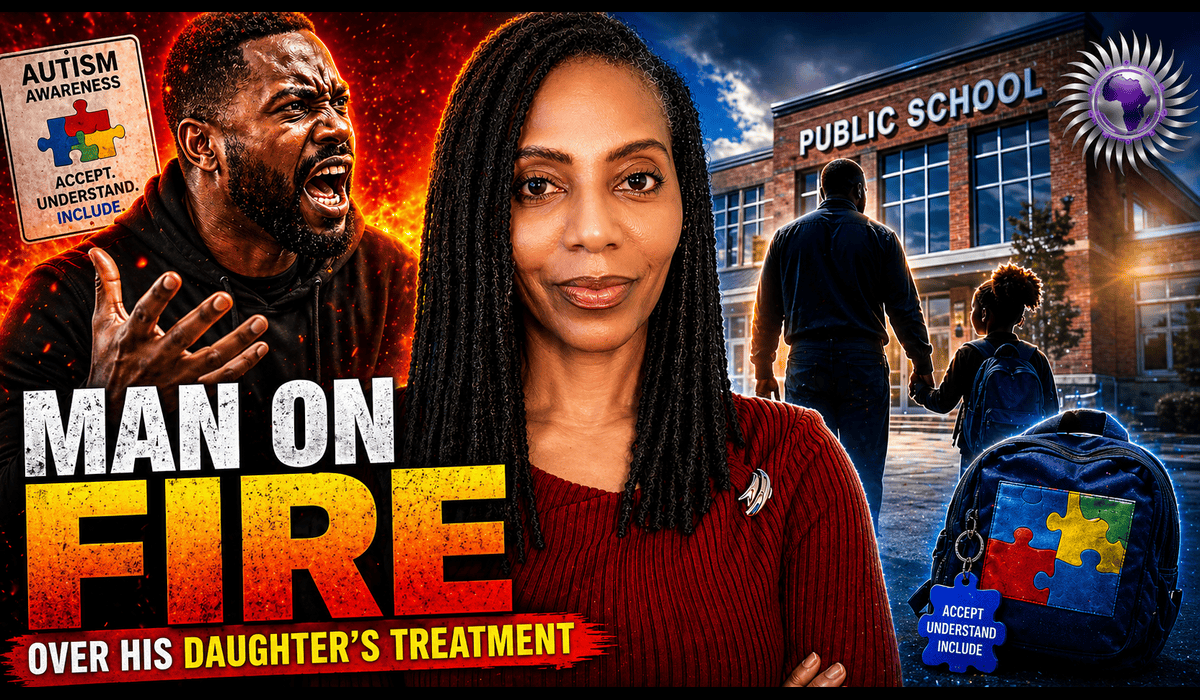
A 7-year-old nonverbal autistic Black child was allegedly kicked in the stomach by a teacher at Viola Desmond Public School in Ontario, a place that should represent safety, care, and support for every child who walks through its doors. This is a child who cannot verbally advocate for himself, who depends entirely on the adults around him to ensure his well-being, and who instead experienced harm at the hands of someone entrusted with his care.
The response from the school raises serious concerns about accountability and transparency, because rather than immediately involving law enforcement, the principal chose to report the incident directly to the father, effectively keeping the matter within the institution. Another child witnessed the incident, confirming that what happened was not hidden or unclear, and even more alarming is the admission that there have been other instances of physical abuse involving this same child and after-school staff.
What we are looking at is not a misunderstanding or a one-time lapse in judgment, but a pattern that suggests systemic failure, one that places vulnerable children at risk while institutions attempt to manage crises internally instead of confronting them head-on.
The teacher in question has reportedly been removed, but removal without accountability is not justice, and it certainly does not address the broader environment that allowed this to happen in the first place. When harm reaches this level, the response must go beyond quiet disciplinary action and move toward full transparency, investigation, and consequences that reflect the seriousness of the act.
Data from Parents of Black Children underscores how widespread and deeply rooted this issue is, revealing that 57 percent of cases they have handled this year involve neurodivergent children, a statistic that cannot be ignored because it highlights a dangerous intersection between anti-Black racism and the treatment of children with exceptionalities. These are children who already face challenges navigating educational systems, yet they are being disproportionately subjected to harm instead of support.
Black students in Ontario have consistently faced disparities in discipline, streaming, and treatment within schools, and when neurodivergence is added to that reality, the risks multiply in ways that are both predictable and preventable. These children are more likely to be misunderstood, more likely to be perceived as disruptive, and more likely to be subjected to punitive measures rather than compassionate, informed care.
When incidents of harm occur, the pattern of response often prioritizes institutional protection over student safety, with internal reporting, delayed accountability, and minimal external oversight becoming the norm instead of the exception. The decision not to call police in this case sends a troubling message about what is considered urgent and what is not, because if a 7-year-old child being physically assaulted by an adult does not meet the threshold for immediate law enforcement involvement, then the system itself requires serious examination.
The father of this child is demanding justice, and his fight represents something much larger than a single case, because it challenges a system that too often minimizes harm against Black children while expecting families to navigate the aftermath on their own. His voice is part of a growing demand for change, one that refuses to accept silence, delay, or half-measures as acceptable responses.
There are clear demands that must be addressed with urgency and integrity, starting with a full and independent investigation into all staff who have contact with vulnerable children at Viola Desmond Public School, ensuring that no aspect of this situation is handled internally or selectively. Accountability must extend beyond removal and include consequences that align with the severity of the harm, while the educator involved must be reported to the College of Early Childhood Educators with the pursuit of license removal if the findings support such action.
This moment also calls for a broader acknowledgment that this is not an isolated incident, but part of a systemic issue that continues to impact Black students across Ontario, particularly those who are neurodivergent and therefore more vulnerable to mistreatment. Systems do not change without pressure, and change will not happen unless these patterns are named, challenged, and disrupted with intention.
What happened to this child should never have happened, and the response to it will determine whether this becomes another story that fades from public memory or a turning point that forces real accountability and reform. The safety of Black children, especially those who cannot speak for themselves, cannot be treated as negotiable, and any system that fails to protect them must be held to account in a way that leaves no room for ambiguity.
This is not just about one school or one educator, but about a system that continues to fail those who need protection the most, and the time for quiet responses has long passed.
Watch the full Report: https://www.youtube.com/live/lLI5w-i8F0c?si=xYNDNaTKpeqXy0-Y
About The Author