From Business Owners to Crisis Managers: The New Reality of The Sargent Business Community
- TDS News
- Canada
- April 28, 2026
By: Donovan Martin Sr, Editor in Chief
In downtown Winnipeg, running a small business is no longer just about serving customers, paying staff, and keeping the lights on. For too many owners, it has become a daily exercise in survival, where crime, addiction, theft, and disorder are pressing in on the same people who invested their own money, time, and hope into building something for the community.
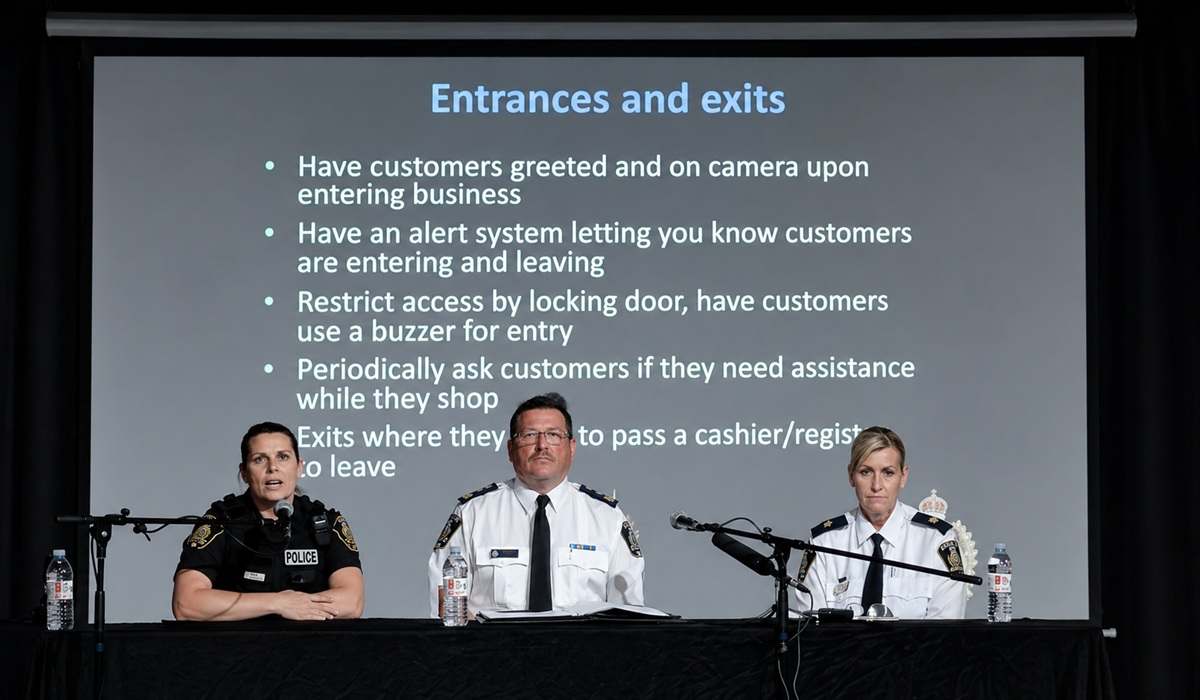
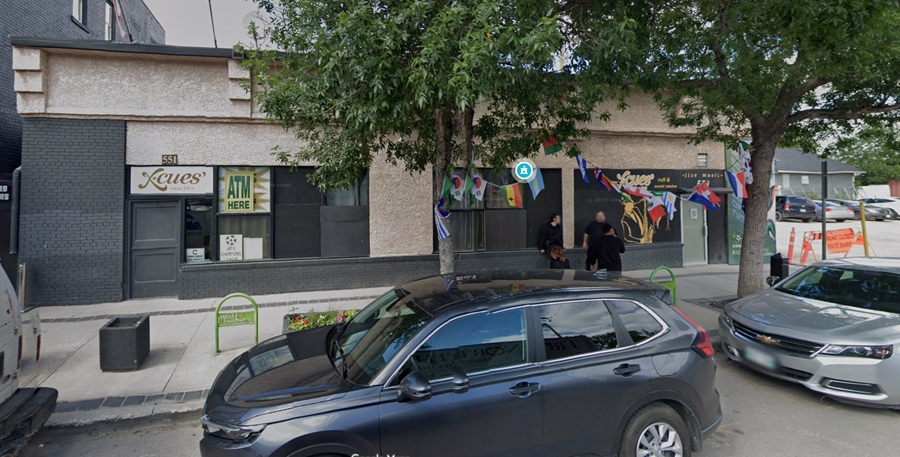
That reality was at the heart of a major crime prevention conference held at X-Cues, a longtime staple in the Sargent business community. Organized by the Sargent Business Community and led by its executive director, Michael Paille, the event brought together business owners, police, community safety groups, advocates, and provincial representatives to talk honestly about what is happening on the ground. Paille has been working to keep the area’s business community from being overwhelmed, pushing for practical solutions before more owners are forced to close their doors.
Paille speaks with the perspective of someone who understands what happens when crime is allowed to take root. He grew up on the South Side of Chicago, an area widely known for serious violence and deep social challenges. Today, when he goes back there, he wears a tracking device so he can be found if something happens. That detail says a lot about how dangerous that environment has become, and it explains why he is so concerned when he sees pieces of that same instability beginning to appear in Winnipeg.
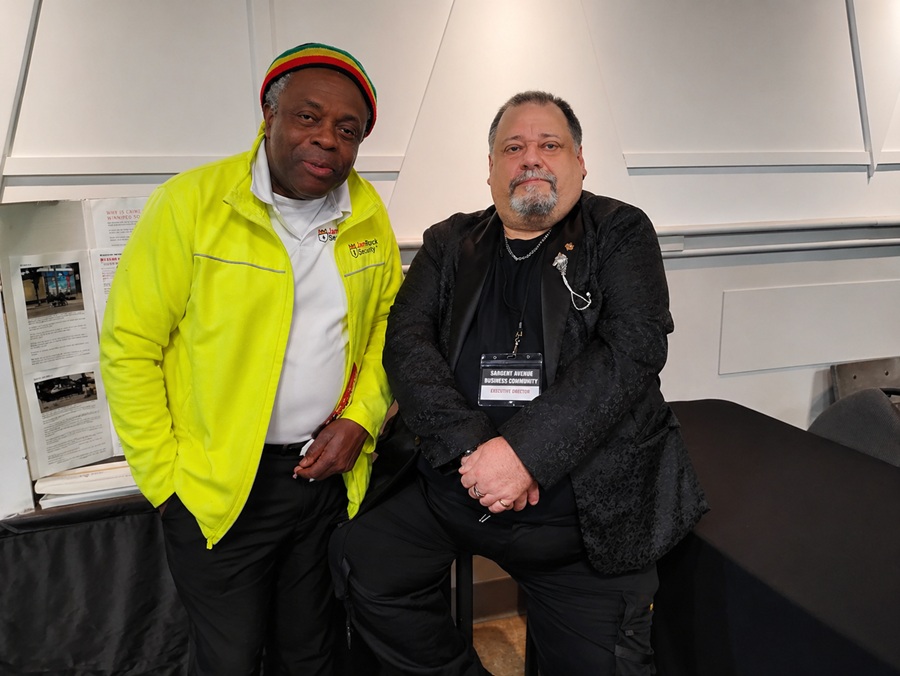
One of Paille’s major concerns is youth crime and addiction. He previously proposed a 24-hour multi-use complex focused on sports, games, recreation, and entertainment, a place where young people could go at any hour instead of being pulled into drugs, theft, and street-level crime. He brought the idea to Manitoba Deputy Premier Uzoma Asagwara, who reportedly called it a great idea, but nothing meaningful followed. That is where the province deserves scrutiny. If governments say they want prevention, then ideas like this should not be allowed to die in polite conversation. A 24-hour youth-focused space is not some wild concept. It is exactly the kind of resource that could help interrupt the cycle before another kid ends up on meth, in custody, or terrorizing a small business.
The host venue itself told part of the story. X-Cues, co-owned by Franca Colatruglio and her brother, has been a fixture in the community for decades, holding its corner while many businesses around it have come and gone. It has been more than a restaurant or lounge. It has been a gathering place for bands, fundraisers, quiz nights, community events, good food, and familiar faces. That kind of staying power matters in a neighbourhood that has seen so much change.
But even X-Cues has had to adapt to conditions no business should have to normalize. Colatruglio spoke about people coming in to wash up in the sinks, looking for a warm place to catch their breath, needing help, or arriving in distress. There is compassion in how they speak about it, but also frustration. They have had to create rules for entering the building because, at the end of the day, this is still a place of business. Owners like Colatruglio and Paille are no longer just business operators. They are being pushed into the roles of therapists, nutritionists, meal providers, counsellors, and crisis managers, all while trying to run a business in an already difficult economy.
The infrastructure debate has only added to the frustration. A proposal to reduce lanes on Sargent Avenue to make room for bike lanes was eventually scrapped after residents and businesses rallied against it. In an area already dealing with theft and public safety issues, Paille described the idea as a “rapid corridor for bike thieves,” pointing to the high number of bike thefts already affecting patrons and businesses. For owners, these decisions are not abstract planning exercises. They affect access, safety, customer confidence, and the ability to survive.
The city’s top cop, Chief Gene Bowers, brought one of the most grounded perspectives of the day. He spoke not only as police chief, but as someone who understands small business pressure and thin margins being a former small business owner himself. He also told a story from his earlier days as a beat cop that captured why visible, connected policing matters. A local meat shop had been repeatedly losing sausages and other products, and no one could figure out who was responsible. Bowers went undercover as a butcher, spent time inside the business, and helped discover that the theft was not coming from random shoplifters, but from a delivery person who had access to the freezers and was stealing meat to resell. The story mattered because it showed the value of beat officers who know the community, understand local businesses, and are willing to get close enough to solve real problems.
That visibility has become one of the more reassuring parts of the current response. Bowers has been one of the most visible police chiefs Winnipeg has seen in years, and beat officers are being seen throughout downtown, Sargent Avenue, Osborne, and other key areas. Their presence does not solve everything, but it does matter. Business owners notice when police are walking the streets, speaking with them, and treating their concerns as real.
Still, the absence of Mayor Scott Gillingham was hard to ignore. The irony is obvious. When Gillingham was running for the mayor’s chair, he was highly critical of police leadership and made public safety a central part of his campaign. He made it clear that change was needed, and the former chief was eventually removed. Yet at a major community-led conference focused directly on crime, business survival, youth addiction, and public safety, the mayor was not in the room. The councillor for the Daniel McIntyre area was also notably absent.
Despite that disappointment, the day was not defined by absence. It was defined by the people who showed up. Business owners, police, advocates, Bear Clan members, safety groups, and community leaders came together because they understand what is at stake. The problems are serious, but the community is not giving up. The next step is for governments to match that same urgency with resources, prevention, and real action before more businesses are lost and more young people are swallowed by the cycle everyone claims they want to break.
About The Author