There’s a growing feeling across the country that no matter how hard you work in Canada, your money disappears faster than you can earn it. For many Canadians, especially in provinces like Ontario, the issue is not just high taxes. It is the combination of layered taxation and a struggling economy that is making everyday life feel like a constant uphill battle.
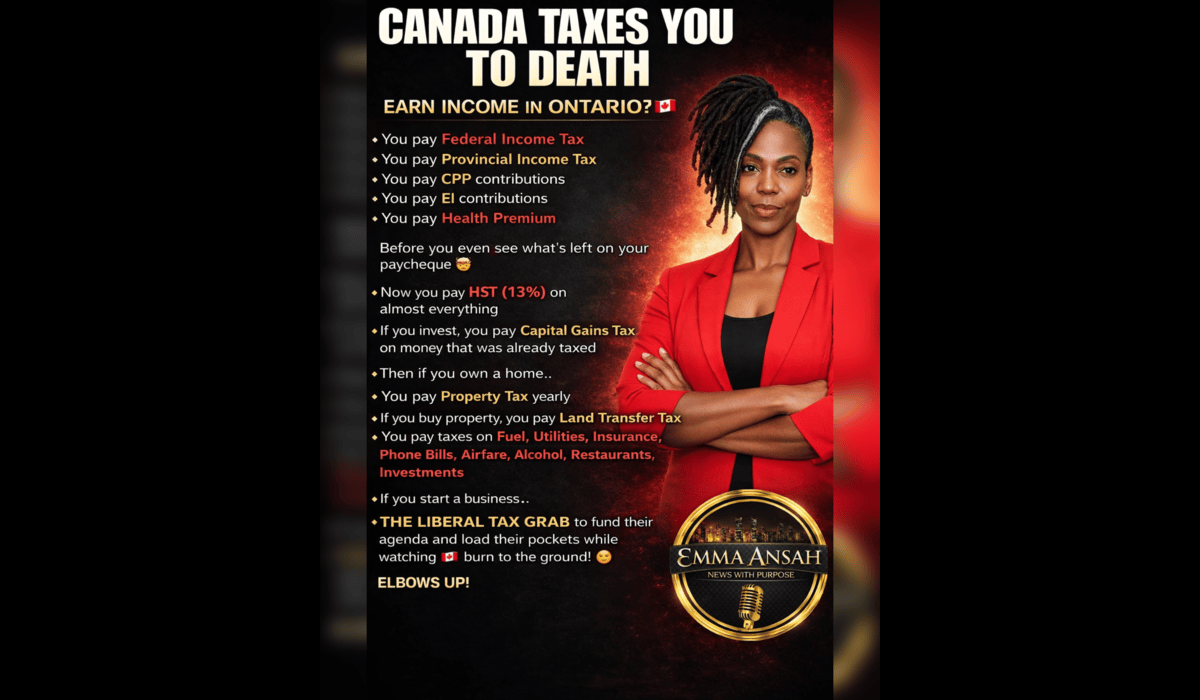
The reality starts the moment you earn income. Before you even see your full paycheck, deductions are already taken for federal income tax, provincial income tax, Canada Pension Plan contributions, Employment Insurance, and in Ontario, a health premium. By the time your pay hits your account, a significant portion is already gone.
But it does not stop there. Every time Canadians spend money, they are taxed again. The Harmonized Sales Tax adds another thirteen percent to most purchases. Gas, utilities, phone bills, and even basic essentials come with built in taxes and fees. Trying to enjoy life or simply keep up with bills often means paying tax on top of tax.
Even efforts to build wealth are not spared. Investments are subject to capital gains tax. Homeowners face annual property taxes, and those trying to enter the housing market are hit with land transfer taxes upfront. For entrepreneurs, the situation can feel even heavier. Business income is taxed, and then personal income is taxed again when they pay themselves. It creates a cycle where money is taxed at nearly every stage of its life.
At the same time, the broader economy is putting even more pressure on Canadians. The cost of living has surged while wages have not kept pace. Housing remains unaffordable for many, with both rent and home prices staying stubbornly high. Food costs continue to climb, pushing 2.2 million people toward food banks with 700,000 bring children. Interest rates have made borrowing more expensive, squeezing households that are already stretched thin.
What makes this situation more frustrating is the growing disconnect between what Canadians are paying and what they feel they are receiving. People are questioning why they are contributing more while struggling to afford basic necessities. Long healthcare wait times, strained public services, and rising daily costs are fueling a sense that the system is no longer working in their favor.
The path forward will require more than small adjustments. Canadians are looking for meaningful change that addresses both taxation and affordability. Reducing the tax burden on middle income earners would provide immediate relief and help stimulate the economy. Tackling housing supply and stabilizing food prices would directly address the cost of living crisis. Greater transparency in government spending could rebuild trust by showing how tax dollars are being used to improve everyday life.
Supporting small businesses is also critical. Lowering barriers and easing tax pressure on entrepreneurs can encourage growth and job creation. At the same time, creating stronger incentives for saving and investing would help Canadians build financial security rather than feel stuck in a cycle of just getting by.
Canada remains a country with strong potential, but right now many Canadians feel like they are working harder for less. The conversation around taxes and the economy is about whether people can realistically afford to live, grow, and succeed. Until that balance is restored, frustration will continue to grow, and the pressure for real solutions will only get louder.
About The Author