Carney’s Majority Government Begins to Reshape Canada’s Economic Direction
- Xuemei Pal
- Canada
- April 16, 2026
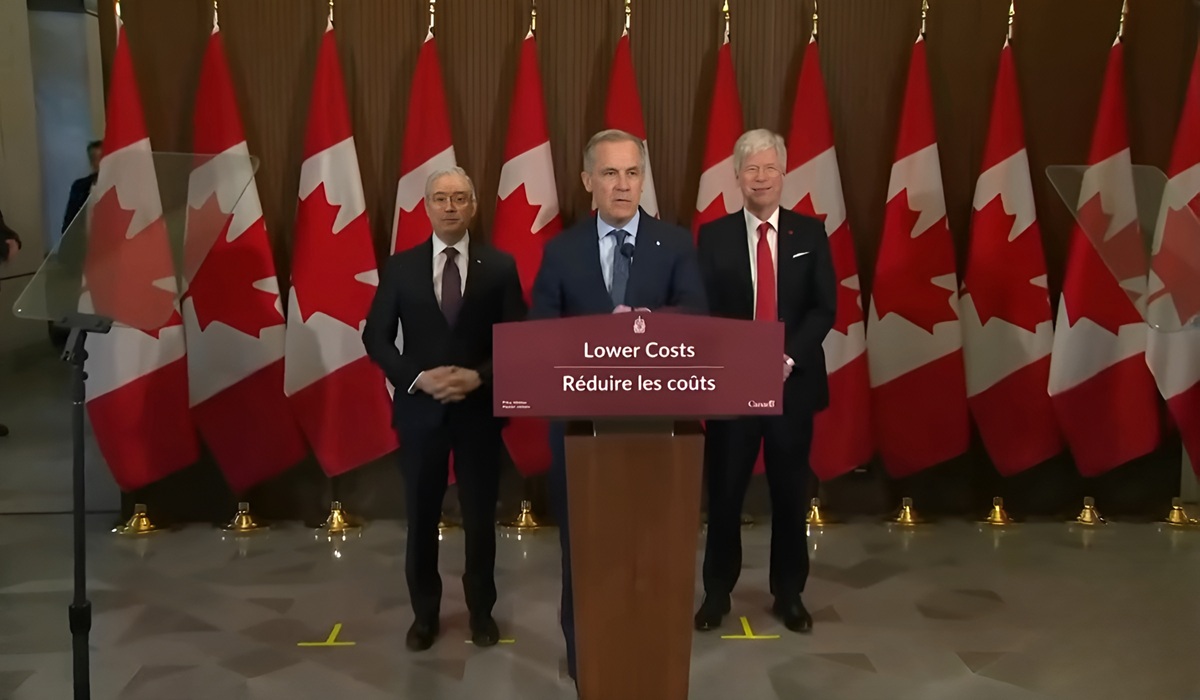
Canada is entering a critical stretch as Prime Minister Mark Carney begins governing with a confirmed Liberal majority, a development that is already shifting how policy is being pushed through Ottawa. In the days following the by-election victories that secured control, the federal government has moved quickly to align messaging around economic stability, affordability, and global uncertainty.
The immediate focus has turned to the upcoming fiscal roadmap, with officials signaling that housing supply, inflation pressure, and productivity will dominate the next phase of policy decisions. Canada continues to face elevated housing costs in major urban centres, while food prices remain stubbornly high compared to pre-pandemic levels. With majority control, the Liberals no longer need opposition support to pass legislation, which dramatically accelerates timelines for reforms tied to housing builds, infrastructure spending, and taxation adjustments.
There is also a growing debate around how this majority was achieved. While the by-election wins themselves are legitimate electoral outcomes, critics continue to point to floor crossings and political maneuvering over the past year that consolidated Liberal power before voters went back to the polls. That tension is now feeding into a broader conversation about democratic optics versus parliamentary reality.
Economically, Canada is navigating a fragile global environment shaped by energy volatility and geopolitical instability. The government’s approach appears to be one of controlled spending paired with targeted intervention, rather than sweeping austerity or aggressive expansion. Whether that balance can hold will depend heavily on how external pressures evolve, particularly in energy markets and international trade.
For Canadians, the impact is no longer theoretical. With a majority in place, decisions on housing, taxation, and cost-of-living relief will move faster than at any point in recent years. The question now is not whether the government can act, but whether those actions will produce results quickly enough to ease growing economic pressure.
About The Author