Why Quietly, Canadians Are Beginning to Look at Jordan for Their Next Real Estate Move
- TDS News
- Trending News
- Middle East
- April 16, 2026
For years, when Canadians looked overseas for real estate opportunities, the conversation almost always circled back to the same places. The United States offered familiarity, while destinations like Dubai in the United Arab Emirates promised rapid growth, luxury living, and the kind of modern skyline that signaled wealth and ambition. It became almost instinctive. If you wanted sun, stability, and a return on investment, you looked west or toward the Gulf. But the global landscape has shifted, and with it, so has investor thinking.
Ongoing instability across parts of the Middle East has forced a more careful, more nuanced conversation about where capital truly feels safe. Even markets once considered untouchable are now being re-examined through a different lens, one that weighs not just opportunity, but resilience, governance, and long-term security. For Canadian investors, particularly those approaching retirement or seeking a second home in a warmer climate, the question is no longer simply where money can grow, but where it can rest. It is in that quiet recalibration that Jordan is beginning to surface.
Often overlooked in broader investment conversations, Jordan occupies a unique position in the region. It is not defined by excess or spectacle. Instead, it has built its reputation on stability, measured growth, and a consistent commitment to maintaining internal security despite the volatility surrounding it. For decades, the country has managed to remain a steady presence in a region frequently marked by uncertainty, and that consistency is beginning to resonate with investors who are less interested in flash and more focused on fundamentals.
What stands out most, however, is not just the country itself, but how ownership works within it. In Jordan, when you purchase land, you own it outright. There is no recurring property tax quietly accumulating in the background, no annual burden that grows over time and chips away at long-term value. It is a concept that feels almost unfamiliar to Canadians, who are accustomed to ongoing municipal obligations tied to property ownership. In Jordan’s case, ownership is far more literal. Once acquired, the land remains yours, without the lingering financial pressure that often accompanies real estate elsewhere. That distinction alone is beginning to change the conversation.
For Canadians who have spent years watching housing affordability tighten at home, or who have reconsidered traditional vacation markets due to rising costs and shifting geopolitical risks, the appeal is straightforward. A property that is fully owned, without the long-term tax burden, in a country known for its safety and hospitality, presents a different kind of value. It is less about speculation and more about permanence.
There is also a cultural dimension that cannot be ignored. Jordan is widely regarded as one of the most welcoming countries in the region, known for its warmth, its history, and its ability to balance modern infrastructure with deep-rooted tradition. For investors who intend not just to hold property, but to visit, to spend time, or even to transition into retirement, that sense of comfort matters just as much as the numbers.
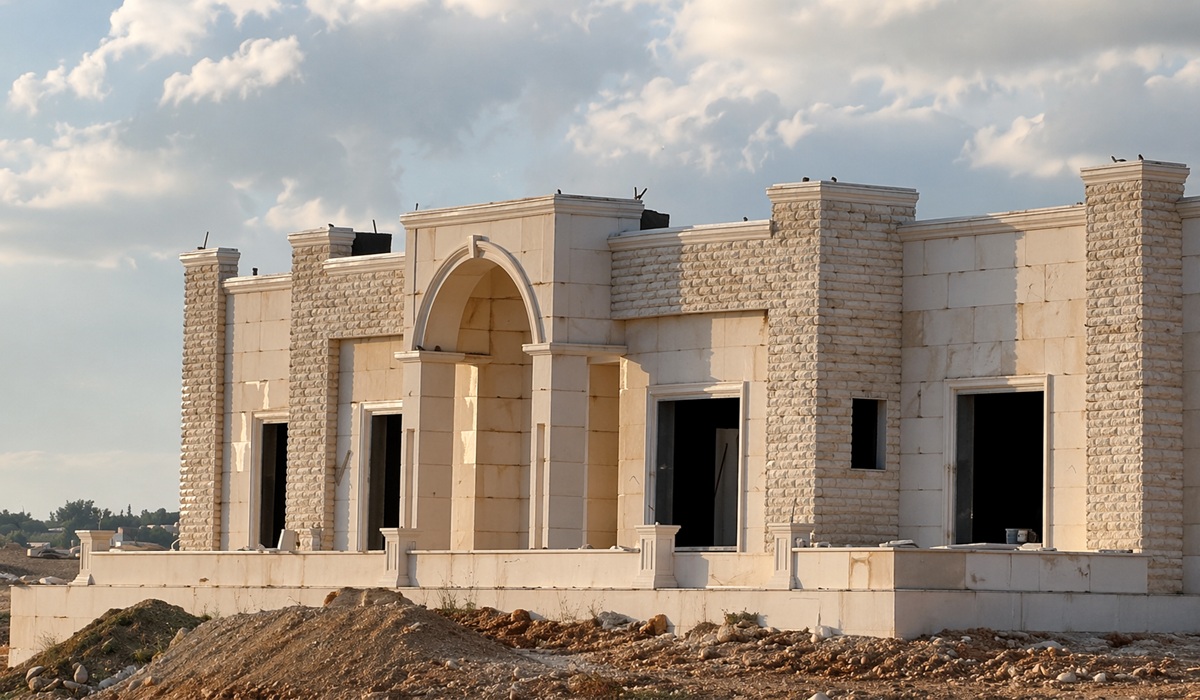
Developments on the outskirts of Amman are beginning to reflect this growing interest. Areas positioned near major infrastructure, including the international airport, are being quietly prepared for residential expansion, offering plots of land that are already serviced with essential utilities such as water and electricity. The approach is practical rather than speculative, designed for individuals who want clarity in what they are buying and confidence in what they own.
Hasan Al-Qadi of Nebraska Properties, who has been closely involved in introducing these opportunities to international buyers, describes the shift in perspective with a clarity that reflects what many are beginning to realize. “People are no longer just chasing the biggest return,” he says. “They are looking for something real, something they can hold onto without worrying that it will slowly be taken away through taxes or instability. In Jordan, ownership still means ownership.” That sentiment is beginning to carry weight.
For Canadian investors, the idea of stepping outside traditional markets is no longer as daunting as it once was. The past few years have reshaped how risk is understood, and in many ways, have made previously overlooked destinations feel more relevant. Jordan does not present itself as the loudest option, nor the most aggressively marketed. Instead, it offers something quieter, and arguably more enduring.
A place where the land is yours, fully and permanently. A place where the pace of development is steady rather than rushed. A place where the surrounding noise of global uncertainty feels, if not absent, then at least more distant. In a world where investment decisions are increasingly shaped by caution as much as ambition, that may be exactly what some Canadians have been searching for all along.
About The Author