By: Donovan Martin Sr, Editor in Chief
The balance of power in Ottawa has shifted in a way that is both familiar and deeply uncomfortable, depending on where one sits politically. The Liberals now hold a working majority in the House of Commons, not through a sweeping general election victory, but through a combination of by-election wins and strategic floor crossings that have reshaped Parliament in real time.
The reaction from Conservative leader Pierre Poilievre was immediate and forceful. In a sharply worded statement, he argued that the Liberals “did not win a majority government through a general election or today’s by-elections,” but instead secured it “through backroom deals with politicians who betrayed the people who voted for them.” He went further, tying the shift in power to rising affordability concerns, pointing to grocery prices and housing costs as evidence of a government that, in his view, has lost touch with Canadians.
It is a powerful message, but it is also one that leaves out critical context. The idea that backroom deals are somehow new or outside the norms of Canadian politics does not hold up under scrutiny. Political negotiation behind closed doors is not an exception, it is a constant. Governments are built this way, leadership races are decided this way, and alliances are often formed this way.
That reality introduces a more complicated layer to Poilievre’s criticism. His own political trajectory has benefited from similar maneuvering. It was a calculated political decision, widely understood in Ottawa, when a sitting Member of Parliament stepped aside, creating an opening for him to run and secure a seat. That was not a spontaneous act of public will. It was a strategic move, one that gave him another opportunity to advance his leadership ambitions. Viewed through that lens, the current outrage carries an undeniable element of political contradiction.
At the same time, the Liberals’ position cannot be explained solely by parliamentary maneuvering. The by-elections matter, and they matter more than critics may want to admit. Winning all three contests at a moment of heightened political tension is not insignificant. By-elections often serve as a pressure valve for voters looking to send a message to the government. Instead, those results reinforced Liberal momentum. They provided a form of electoral validation that, when combined with floor crossings, helped solidify the party’s path to a majority.
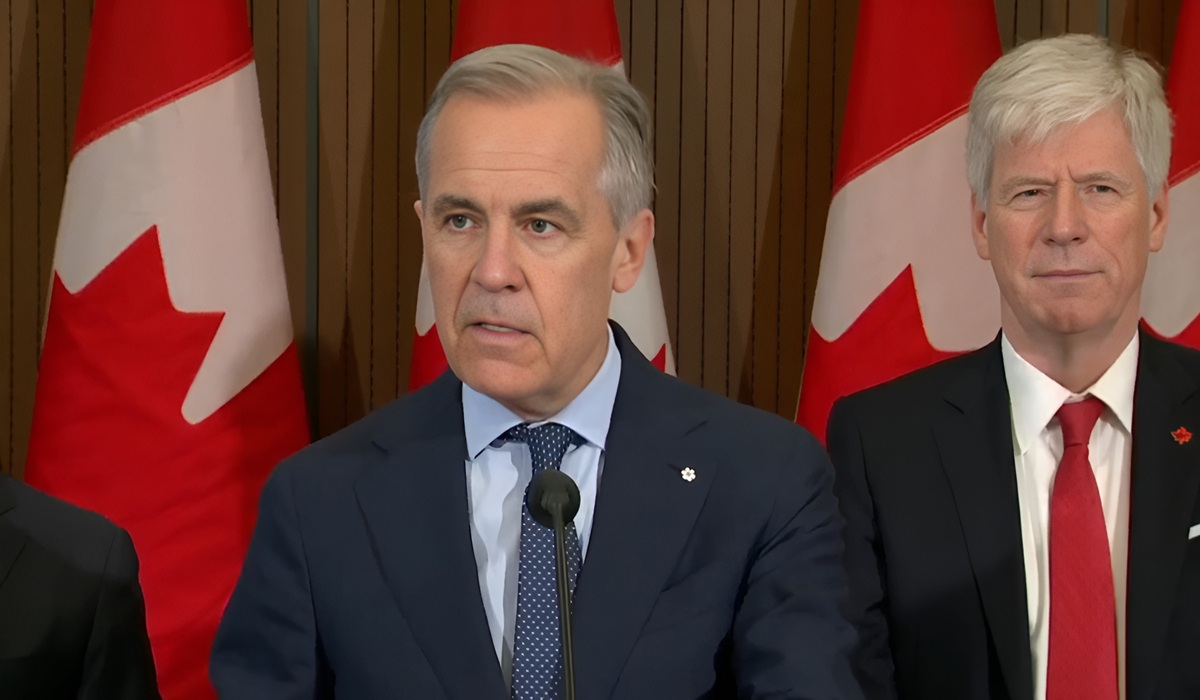
Prime Minister Mark Carney has largely allowed the numbers to speak for themselves. With a majority now in place, the Liberals have the ability to move legislation with far greater ease, facing fewer procedural barriers and less dependence on opposition support. In practical terms, it is the kind of control most governments only achieve after a decisive national vote.
Still, the optics are impossible to ignore. A majority formed without a general election invites questions about democratic legitimacy, even if the process itself follows established parliamentary rules. Canadians are left to reconcile two truths at once. The system allows for this kind of shift, and yet it feels fundamentally different from a mandate delivered at the ballot box.
For Conservatives, the more pressing issue may not be what the Liberals have done, but why it was possible. Floor crossings at this scale are rarely random. They often signal deeper currents within a party, whether dissatisfaction with leadership, concerns about electoral viability, or a belief that influence lies elsewhere. If Members of Parliament had unwavering confidence in Poilievre’s leadership, it is fair to ask whether they would have made the decision to leave at such a critical moment.
That question becomes more urgent if additional MPs begin to reconsider their position. At what point does this stop being about Liberal strategy and become a reflection of internal Conservative instability. Political parties can withstand disagreement, but sustained movement across the aisle has a way of forcing uncomfortable conversations about direction and leadership.
The Liberals, for their part, have capitalized on both opportunity and timing. They have paired electoral wins with political maneuvering, turning individual decisions into a structural advantage. It is not unprecedented, but it is undeniably effective.
Which brings the conversation back to the central question now hanging over Ottawa. The Liberals have a majority. They secured it through a mix of by-election victories and parliamentary strategy. The process is entirely within the rules, even if it challenges public expectations.
In the end, the debate may not be about how they got there at all. It may come down to whether Canadians care more about the path to power, or what is done with it now that it has been secured.
About The Author