Canada Is Entering a Harder, More Uncertain Era in Its Relationship With the United States
- Ingrid Jones
- Canada
- April 20, 2026
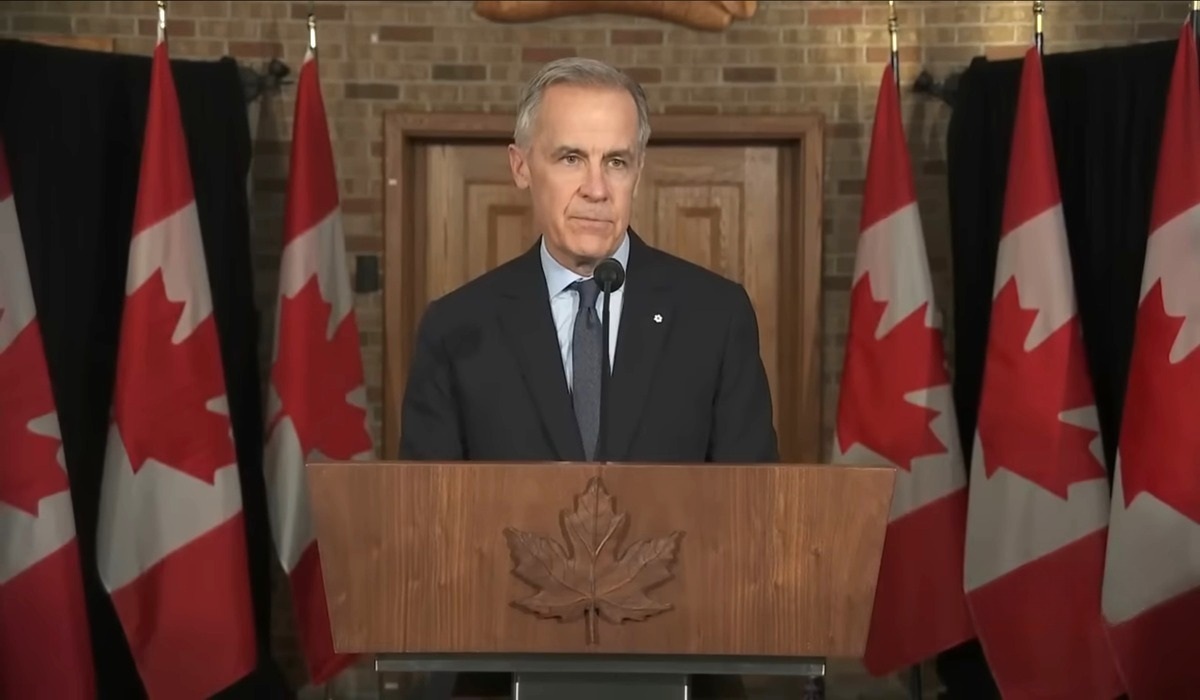
Canada is beginning to speak more openly about a reality that has been building for some time. Its economic relationship with the United States, once viewed as an unquestioned strength, is now being reassessed as a potential vulnerability. Recent remarks from Prime Minister Mark Carney have made that shift clear, as he outlined the need for Canada to diversify its trade relationships and strengthen its economic independence.
This change in tone reflects growing concern over U.S. trade policies, particularly the use of tariffs as a tool of economic pressure. For a country like Canada, whose economy is deeply integrated with that of its southern neighbor, even small disruptions can have wide-ranging effects. When those disruptions become part of a broader pattern, the need for adjustment becomes unavoidable.
Carney’s approach is rooted in a desire to build resilience. That includes reducing internal trade barriers between provinces, attracting new investment, and expanding access to international markets beyond North America. These are not new ideas, but they are being presented with a new level of urgency. The message is no longer about improving competitiveness. It is about protecting national stability.
Recent political developments have strengthened the government’s ability to act. A parliamentary majority provides more room to pass legislation and pursue long-term economic strategies without constant negotiation. That creates an opportunity to move more quickly, but it also raises expectations. Canadians will be looking for tangible results, not just policy announcements.
The economic pressures are already visible. Job growth has slowed in key sectors, and businesses are facing uncertainty around tariffs and cross-border trade. Industries that rely heavily on exports to the United States are particularly exposed. For many companies, the question is no longer whether change is needed, but how quickly it can be implemented without causing further disruption.
At the same time, Canada’s geographic and economic ties to the United States cannot simply be undone. The two countries share infrastructure, supply chains and a level of integration that has developed over decades. That reality makes the current shift more complex. It is not about replacing one relationship with another. It is about recalibrating an existing one while building new options.
There is also a broader national conversation taking shape. What does economic independence look like in a globalized world. How much diversification is realistic. And what trade-offs are Canadians willing to accept in order to reduce reliance on a single partner. These are not simple questions, and the answers will shape policy decisions for years to come.
Politically, the shift reflects a move toward a more pragmatic and less assumption-driven approach. The idea that proximity guarantees stability is being replaced by a recognition that policy decisions in one country can quickly become economic challenges in another. That awareness is driving a more cautious and deliberate strategy.
For now, Canada is entering a period of adjustment. The relationship with the United States remains essential, but it is no longer being viewed as sufficient on its own. The goal is not separation, but balance. Whether that balance can be achieved will depend on execution, timing and the ability to navigate a changing global environment.
About The Author