Trump Escalates Again: War at Sea, Shots Fired, and a Presidency Driving the Crisis Further
- Hami Aziz
- Middle East
- Tiger's Eye Advisory Group - Trending News
- April 20, 2026
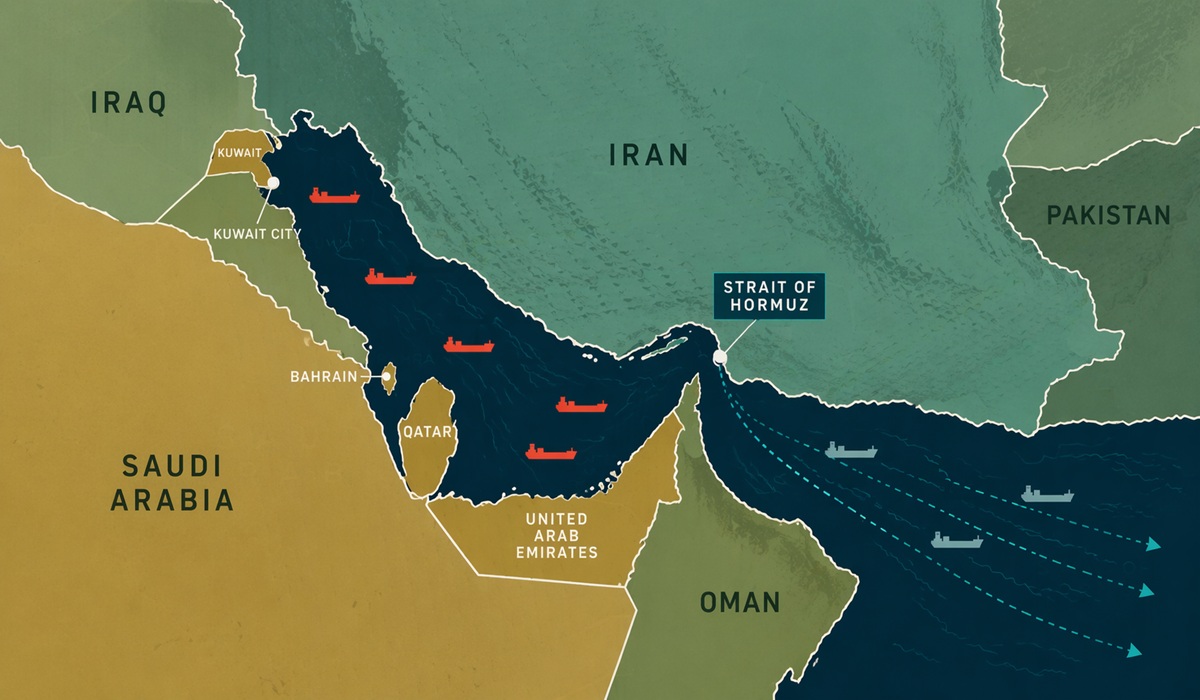
What unfolded over the weekend is no longer just rhetoric spilling out online, because it has crossed into direct military confrontation in one of the most sensitive regions in the world. By Sunday, the situation had escalated into open action, with reports confirming that U.S. naval forces fired on and seized an Iranian-flagged cargo vessel in the Gulf of Oman after it allegedly refused to comply with orders. According to statements attributed to Donald Trump, the ship’s engine was deliberately disabled before U.S. forces boarded and took control, marking a significant and dangerous shift from tension into direct engagement.
This development did not happen in isolation, and that is what makes the moment more alarming. In the hours leading up to the seizure, Iranian forces were reportedly firing on commercial vessels attempting to move through the Strait of Hormuz, sending an unmistakable signal that the region is no longer operating under any meaningful sense of stability. The Strait of Hormuz is one of the most critical oil corridors in the world, and when ships are being fired upon or turned back under threat, the ripple effects extend far beyond the region into global markets, supply chains and national security calculations.
The situation has now reached a point where competing shows of force are unfolding almost simultaneously. The United States is seizing vessels and enforcing a naval presence that resembles a blockade, while Iran is responding with warnings, restrictions and direct action against shipping traffic. That combination is not sustainable, and it is exactly the kind of environment where miscalculation becomes inevitable. What is particularly concerning is that while the military situation becomes more complex, the messaging coming from the White House has only become more aggressive and less restrained.
Trump has continued to use Truth Social as his primary outlet for communicating during this crisis, and the tone of those messages has raised serious concerns. In recent posts, he has openly threatened to target critical infrastructure inside Iran, including power plants and bridges, framing the conflict in sweeping, almost total terms. That kind of language is not typical of controlled diplomatic communication. It reads more like a declaration of unlimited escalation, and it is being delivered in real time as military actions are unfolding.
At the same time, Iran has responded by pulling back from negotiations and accusing the United States of violating the ceasefire conditions that had been loosely holding the situation together. Officials in Tehran have described the seizure of the cargo vessel as an act of aggression and have warned that retaliation is being considered. That response closes the door, at least temporarily, on any immediate diplomatic off-ramp and reinforces the sense that both sides are moving deeper into confrontation rather than away from it.
What makes this moment different from previous flare-ups is the pace and visibility of escalation. There is no delay between action and reaction, and there is no clear separation between military operations and public messaging. Everything is happening at once, and it is happening in full view. Ships are being targeted, seized or redirected, and at the same time, the president of the United States is posting threats, claims of control and declarations of intent without the kind of filtering or discipline that typically accompanies high-stakes international conflict.
That lack of restraint is beginning to draw open criticism from other world leaders. Brazil’s president has publicly pushed back against the idea that the United States can dictate outcomes for the rest of the world, rejecting any notion that Trump speaks as a default leader of global affairs. That kind of statement would have been unthinkable in a different era, but it reflects a growing frustration with how this crisis is being handled and a broader concern about unilateral decision-making that carries global consequences.
The economic implications are already becoming visible, and they are not minor. Oil markets are reacting to instability in the Strait of Hormuz, shipping companies are reassessing routes, and insurers are recalculating risk in real time. Even the perception of prolonged disruption is enough to push prices higher and create uncertainty across multiple sectors. This is not a distant geopolitical issue that can be contained within a single region. It is a live situation with immediate global impact, and every escalation increases the likelihood of wider economic fallout.
Inside the United States, the political environment is not exactly projecting stability either. Trump’s recent behavior has drawn criticism not only from opponents but also from observers who are questioning whether there is a coherent strategy guiding these actions. The contrast between claims of control and the reality of escalating conflict is becoming harder to ignore. On one hand, there are suggestions that talks could resume or that a resolution is possible. On the other hand, there are ships being fired upon, threats being issued and a ceasefire that appears to be collapsing.
That contradiction is not just a communication issue. It affects how allies respond, how adversaries interpret signals and how quickly situations can spiral when there is uncertainty at the highest level of decision-making. In a region as volatile as the Persian Gulf, mixed messaging can be just as dangerous as overt aggression, because it leaves too much room for misinterpretation and reaction.
What is unfolding now is not a contained crisis. It is an expanding one, driven by a combination of military action and unpredictable leadership. The Strait of Hormuz is becoming increasingly unstable, Iran is signaling that it will not back down quietly, and the United States is escalating both in action and in tone. That combination creates a situation where each new development carries the risk of triggering something larger.
This is no longer about speculation or warning signs. The escalation is already happening, and the consequences are already being felt. Ships have been fired upon, vessels have been seized and diplomatic channels are narrowing. At the center of it all is a president who is not just responding to events but actively shaping them through a style of communication that is amplifying tension rather than easing it.
The world is not just watching this unfold. It is reacting to it, adjusting to it and, increasingly, pushing back against it. That is what makes this moment so volatile, because when a crisis reaches the point where global actors begin openly challenging the direction being set by the United States, it signals a deeper shift in how power, leadership and responsibility are being viewed on the international stage.
About The Author