The People of St. Boniface Spoke. City Hall Chose Not to Listen.
- Don Woodstock
- Tiger's Eye Advisory Group - Trending News
- April 17, 2026
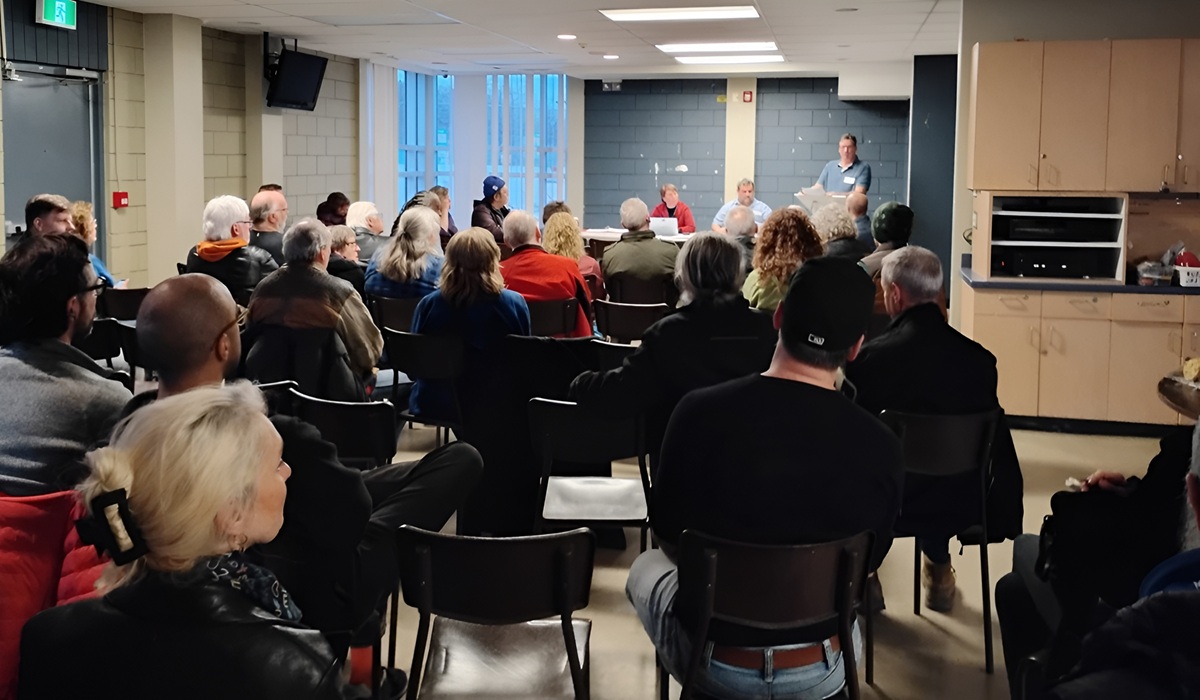
The room in St. Boniface last night was full before the meeting even began, and that alone told me everything I needed to know. I attended not just as a journalist, but as someone who believes that when a community shows up in force, it is because something matters deeply. This was not a routine gathering. It was a room filled with people who care about where they live and who are no longer willing to be sidelined in decisions that affect their daily lives.
St. Boniface showed itself in full. There was a natural blend of young and old, francophone and anglophone, families and long-time residents, all united by a shared commitment to their neighbourhood. These are not passive citizens. These are people who volunteer, who organize, who give their time year after year to keep their community strong. They are engaged, thoughtful, and ready to be part of the solution.
And yet, despite that, they are not being heard where it counts. It needs to be said plainly. Councillor Matt Allard was invited and did not attend. In a room filled with his own constituents, that absence was more than symbolic. It was a missed responsibility. The local MLA did attend and offered remarks, which was appreciated, but municipal concerns require municipal leadership. When people take time out of their lives to show up, they deserve the same level of commitment from those elected to represent them.
As the discussion unfolded, one thing became very clear. This is not a community opposed to growth or to affordable housing. The people of St. Boniface understand the pressures facing the city. They recognize the need for development. What they are rejecting is the way it is being imposed on them.
The City of Winnipeg, under Mayor Scott Gillingham and council, is aggressively pursuing federal funding to accelerate housing development. On its face, that is a positive step. Cutting through red tape to build housing is something most residents can support. The problem is not the goal. It is the execution.
For years, there has been a practical and immediate solution sitting in plain sight. Across the city, there are hundreds of vacant and derelict buildings, many owned by the city or left to deteriorate by landlords. These are not theoretical opportunities. They are existing structures that can be repurposed, retrofitted, and brought up to code far more quickly than building new developments from the ground up. They represent a path forward that respects neighbourhoods while addressing housing needs.
Instead, what residents are seeing are large-scale high-rise proposals being forced into established areas like St. Boniface. These are not small adjustments to a growing city. These are major structural changes that alter skylines, strain infrastructure, and place immediate pressure on services that are already stretched. Consultation has become a formality rather than a meaningful exchange, and people feel it.
There is also a reality that cannot be ignored when large volumes of housing are introduced into an area all at once. Growth brings people, and people bring needs that extend far beyond the buildings themselves. Schools become overcrowded, yet there are no significant new schools being built to accommodate that increase. Classrooms fill up quickly, resources are stretched thin, and families are left trying to navigate a system that was never expanded to match the pace of development.
The same pressure applies to child care. Waiting lists are already pushing into two-year minimums in many cases. When you introduce large-scale housing without addressing that reality, you are not solving a problem, you are shifting it onto families who are already struggling to find space for their children. These are not secondary concerns. They are central to whether a community can function properly.
The concerns extend beyond development alone. On Goulet, the shift to reduced traffic lanes to accommodate bike infrastructure has created real frustration. Residents spoke about congestion, delays, and a growing concern that safety has been compromised rather than improved. These are everyday realities that affect how people move through their own neighbourhood.
Safety, however, was not just about traffic. It came up repeatedly in a way that was more personal and more concerning. Residents spoke openly about feeling less safe in areas that were once part of their daily routines, particularly along the riverbanks. What should be some of the most peaceful and accessible parts of the community are now, for many, places they avoid. Concerns about homelessness, loitering, and a lack of visible response have left people feeling uneasy walking those paths, especially at certain times of day.
This is not about blaming individuals who are struggling. It is about acknowledging that when public spaces become unpredictable or feel unsafe, the entire community is affected. Families stop using them. Seniors avoid them. The sense of openness that defines a neighbourhood begins to shrink. When residents say they are afraid to walk along their own riverbanks, that is not a minor issue. It is a failure that needs to be addressed with seriousness, balance, and urgency.
The closure of Happyland Pool remains another point of frustration, a decision that many see as a step backward for community services. At the same time, ongoing issues with homelessness and loitering along riverbanks are adding to a sense of unease that residents feel is not being adequately addressed.
Then there is the pressure of rising property taxes. Many residents are seeing significant increases without corresponding improvements to their homes or surroundings. While inflation and market shifts are understood, the scale of these increases feels disconnected from reality for those living through them.
At one point, someone in the room joked about St. Boniface separating from the city altogether. It drew laughter, but it was the kind of comment that reveals something deeper. It spoke to a growing sense that this community is being overlooked and taken for granted.
I left that meeting with a clear understanding. The people of St. Boniface are doing their part. They are showing up. They are speaking out. The failure is not on them.
When the people of Winnipeg choose their next mayor, there will be an opportunity to reset that relationship. Under my leadership, the approach will be grounded in respect for communities and in decisions that reflect the realities on the ground.
That means taking a firm and unambiguous position on development. Unchecked high-rise construction in established neighbourhoods like St. Boniface will not move forward without clear and demonstrated community support. Growth must be responsible, measured, and aligned with the capacity of the area, not pushed forward in a way that overwhelms it.
It also means protecting what cannot be replaced. Green spaces, riverbanks, and open community areas are not surplus land waiting for development. They are essential to the health, livability, and long-term sustainability of St. Boniface. Preserving them will be a priority, not an afterthought. Once they are lost, they are gone for good, and leadership must treat them with that level of seriousness.
We will also change how we approach housing solutions. The city will prioritize repurposing and retrofitting existing vacant and derelict buildings before pushing new large-scale developments into communities that have not asked for them. This is not just a better option. It is the most immediate and responsible path forward.
Infrastructure decisions will be revisited with a focus on safety and practicality. Where changes have created real concerns for residents, those concerns will be addressed with transparency and a willingness to adjust course. Most importantly, consultation will mean something again. When residents gather, when they speak, and when they invest their time in their communities, they will be met with leadership that listens and responds.
Because this is the reality that cannot be ignored. You cannot force decisions onto people and call it consultation. You cannot be absent when it matters most and expect trust to remain intact. The people of St. Boniface showed up last night. They made their voices heard. The path forward is not complicated. It requires leadership that is present, accountable, and prepared to act. And when that leadership is in place, communities like St. Boniface will no longer feel like they are being managed from a distance. They will feel like they are finally being represented.
About The Author