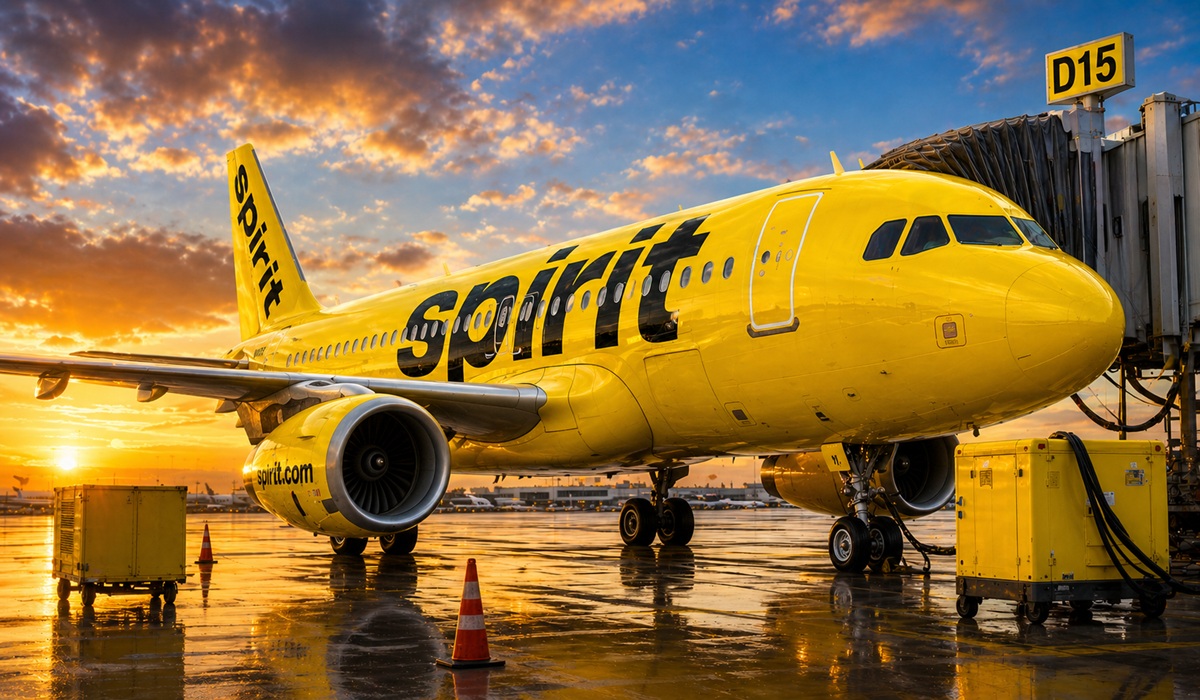
What Really Happened to Spirit Airlines—and Why Ultra-Low-Cost Carriers Keep Collapsing
- Contributor
- Travel
- Business
- Tiger's Eye Advisory Group - Trending News
- May 5, 2026
By: Captain Ross Aimer
(UA/BA Ret.)
CEO, Aero Consulting
I am asked on numerous occasions what exactly happened to Spirit Airlines.
ULCCs (Ultra Low Cost Carriers) started showing up after the Airline Deregulation Act of 1978.
People Express, New York Air, and dozens of others came and went — often built on the dreams of hard-working employees who loved aviation, and the get-rich schemes of airline executives.
They operated on razor-thin margins, and many executives simply moved on to other ventures when the airplanes stopped making money.
The operating costs of airlines are actually very similar.
The biggest advantage a new ULCC has is lower labor costs.
New pilots, flight attendants, mechanics, and ground staff are willing to work longer hours for lower pay, hoping they’ll eventually make up the difference when the airline becomes successful. Unfortunately, many never see that happen.
Eventually they begin wondering why they are busting their backs for one-third of the compensation and benefits enjoyed by employees at the major airlines.
Some are fortunate enough to unionize and negotiate better contracts. Unfortunately, that can become a double-edged sword for a company that still cannot afford to match the economics of the larger carriers.
Upper management, of course, is usually excluded from that formula!
Meanwhile, the Walmart-style bargain shoppers searching for a $39 fare often don’t realize that by the time they pay for bags, seat assignments, and other extras, they are approaching the cost of a ticket on Southwest Airlines or JetBlue — but without the reliability, fewer cancellations, and sometimes without the inflight “entertainment” in the form of fistfights!
Any downturn or turbulence in the economy hits ULCCs far harder than the established carriers.
United Airlines, Delta Air Lines, and American Airlines can often add fuel surcharges or absorb temporary losses more effectively. But at certain price points, many Spirit customers simply stop flying.
And that is exactly what has happened repeatedly with many ULCCs over the years.
The only faint light at the end of the tunnel for thousands of displaced Spirit employees may be that another investor group or airline could eventually pick up aircraft leases, routes, or experienced crews. Some of their more experienced pilots, for example, may still find opportunities with companies that continue hiring.
Regular taxpayers generally do not have much appetite for subsidizing failed companies — and frankly, they shouldn’t.
Back in the 1960s and 1970s, furloughs and bankruptcies were common throughout the airline industry.
Some airlines apparently didn’t even have the heart to fire troubled employees like me…
they simply went bankrupt to get rid of me instead!
About The Author