From a corridor of connectivity into a pathway of sustainable economic growth
- Naveed Aman Khan
- Pinpoint
- South Asia
- Tiger's Eye Advisory Group - Trending News
- May 4, 2026
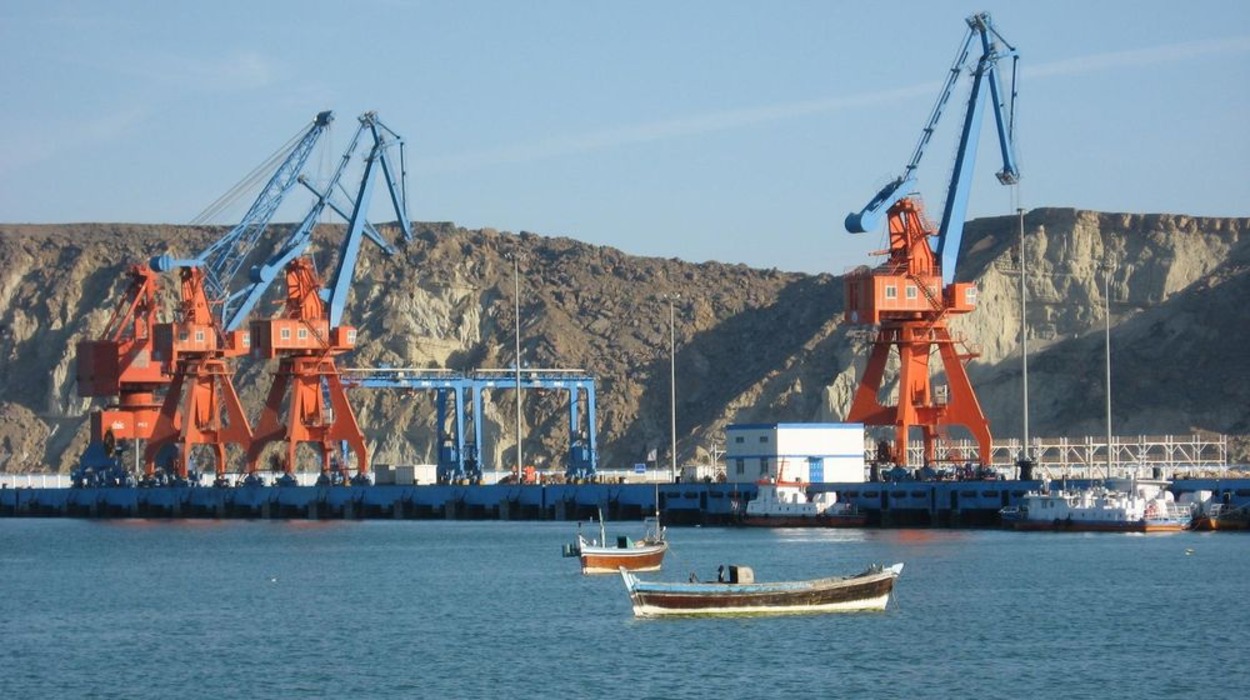
More than a decade after the launch of the China-Pakistan Economic Corridor, expectations of a transformative economic shift in Pakistan remain only partially fulfilled. Conceived as a flagship component of the Belt and Road Initiative under the leadership of President Xi Jinping, CPEC promised infrastructure modernization, industrial growth, and regional connectivity. While Pakistan has witnessed improvements in energy generation and road networks, the broader structural transformation—particularly in exports, industrialization, and technological advancement—has lagged. Understanding this gap requires a deeper examination of governance, national temperament, policy priorities, and comparative development trajectories.
One of the central reasons behind Pakistan’s limited gains from CPEC lies in inconsistent policy continuity. Frequent political transitions and governance disruptions have led to shifting priorities, renegotiations, and delays in project execution. Unlike China’s centralized and long-term planning model, Pakistan’s democratic but unstable system often results in fragmented decision-making. Bureaucratic inertia, regulatory bottlenecks, and issues of transparency have further slowed down implementation. In contrast, China’s governance framework emphasizes discipline, continuity, and execution, enabling rapid completion of large-scale projects.
Equally important is the divergence in national temperament between the Pakistani and Chinese societies. Chinese society, shaped by decades of collectivist ideology and state-led discipline, tends to prioritize long-term national goals over short-term individual gains. The Chinese workforce is often characterized by high productivity, time-consciousness, and a strong work ethic aligned with national objectives. Pakistan, on the other hand, struggles with systemic inefficiencies, weaker institutional discipline, and a tendency toward short-termism in both policymaking and societal behavior. While these are broad generalizations, they reflect structural tendencies that influence economic outcomes.
Another critical factor is the difference in priorities between the two nations. China’s development strategy over the past three decades has been laser-focused on industrialization, export-led growth, and technological innovation. Massive investments in education, research, and infrastructure created a foundation for sustained growth. Pakistan, by contrast, has often prioritized consumption over production, with insufficient focus on building a robust industrial base. The absence of consistent industrial policies and limited investment in human capital development have hindered Pakistan’s ability to fully leverage opportunities created by CPEC, particularly in Special Economic Zones (SEZs).
China’s remarkable rise as a technological powerhouse did not occur overnight. It was the result of deliberate state policies, including heavy investment in science and technology, strategic protection of domestic industries, and gradual integration into global markets. Companies like Huawei and Alibaba Group symbolize China’s transition from a manufacturing hub to an innovation-driven economy. Pakistan, however, has struggled to build a comparable ecosystem. Limited research funding, brain drain, and weak industry-academia linkages have restricted technological advancement. While Pakistan has made strides in sectors like IT services and freelancing, these remain fragmented and lack the scale seen in China.
The inability to learn from China’s development model is not due to lack of exposure but rather a failure of adaptation. China’s success was rooted in pragmatism, gradual reforms, and strict accountability mechanisms. Pakistan has often attempted to replicate outcomes without adopting the underlying discipline and institutional reforms. For instance, while SEZs were envisioned as engines of industrial growth under CPEC, delays in land acquisition, infrastructure provision, and investor facilitation have limited their effectiveness.
Despite these challenges, it is important to acknowledge achievements on both sides. China’s accomplishments over the past three decades are extraordinary: lifting hundreds of millions out of poverty, becoming the world’s second-largest economy, leading in infrastructure development, and emerging as a global leader in technology and manufacturing. Pakistan, though facing constraints, has also made notable progress. CPEC has helped alleviate energy shortages, improved road connectivity, and enhanced Pakistan’s strategic importance in regional trade. Additionally, Pakistan’s armed forces and diplomatic engagements have strengthened its geopolitical standing in recent years.
However, the gap between potential and performance remains significant. A key lesson from China’s experience is the importance of consistency in vision and execution. China’s leadership maintained a clear development trajectory across decades, insulated from political disruptions. Pakistan, by contrast, has struggled to sustain long-term economic policies, often resetting priorities with each change in government. This lack of continuity undermines investor confidence and delays economic transformation.
Furthermore, China’s emphasis on meritocracy and accountability within its institutions has played a crucial role in its success. Pakistan’s governance challenges, including corruption and lack of institutional efficiency, continue to impede progress. Without addressing these structural issues, even well-designed initiatives like CPEC cannot deliver their full potential.
In examining why Pakistan has not attained China’s level of technological advancement, the role of education cannot be overlooked. China invested heavily in STEM education, research institutions, and skill development, creating a workforce capable of driving innovation. Pakistan’s education system, however, faces issues of quality, access, and relevance to market needs. Bridging this gap is essential for long-term competitiveness.
Ultimately, the story of CPEC in Pakistan is not one of failure but of unrealized potential. China rightly has played it’s part. Chinese initiative has provided a foundation, but the responsibility of building upon it lies with Pakistan. Structural reforms, policy consistency, investment in human capital, and a shift in national priorities toward productivity and innovation are necessary steps forward.
The contrast between Pakistan and China is not merely about resources or opportunities but about choices, discipline, and execution. China’s rise demonstrates what is possible with a clear vision and unwavering commitment. Pakistan’s challenge is to internalize these lessons and adapt them to its own context. Only then can the promise of CPEC be fully realized, transforming it from a corridor of connectivity into a pathway of sustainable economic growth.
About The Author