The Return of Interstate War Should Change How We Think About Conflict
- Contributor
- Breaking News
- June 11, 2026
By Siri Aas Rustad, Research Director, Peace Research Institute Oslo (PRIO)
The rise in interstate conflict signals a dangerous shift that demands new thinking in prevention, peacebuilding, and global governance.
For decades, the dominant story about global conflict was one of transformation. Interstate wars—the kind fought directly between nations—had become rare. Instead, civil wars, insurgencies and fragmented internal conflicts defined the landscape of violence.
That story is no longer accurate.
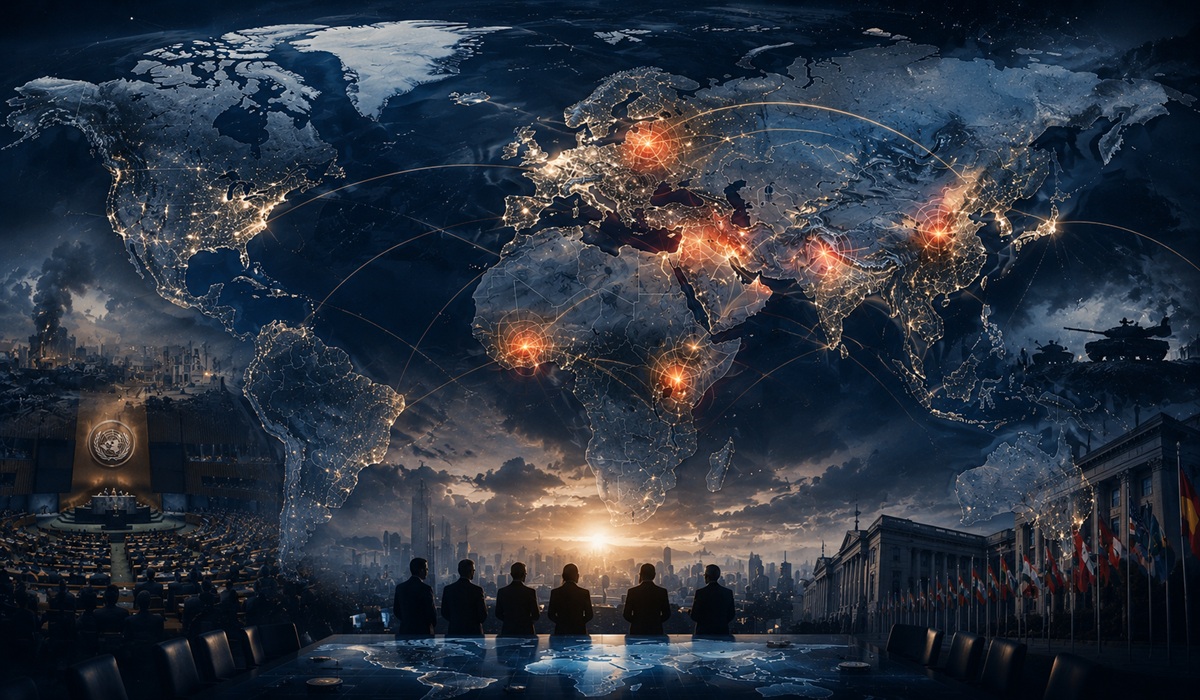
The Peace Research Institute Oslo’s latest Conflict Trends report, based on new data from the Uppsala Conflict Data Program (UCDP), shows that interstate conflicts doubled in 2025, reaching their highest level since the end of the Second World War. Eight such conflicts were recorded—twice as many as the previous year. This marks a significant and worrying shift in the nature of global violence.
It is tempting to see this as a temporary spike, driven by a handful of high-profile crises. But the broader pattern suggests something more structural: the gradual erosion of the international order that helped keep direct conflict between states relatively contained for much of the post–Cold War period.
The return of interstate conflict does not mean the disappearance of civil war. On the contrary, today’s conflicts are increasingly layered, involving both internal and external actors. In many cases, the distinction between civil war and interstate war is becoming blurred.
Take the war in Ukraine, which remains one of the largest drivers of global battle deaths. Or the expanding regional dynamics in the Middle East, where multiple states are directly or indirectly engaged across overlapping fronts. In South Asia, tensions between India and Pakistan continue to escalate, while Afghanistan’s regional relations have grown more volatile. These are not isolated cases—they are part of a broader trend of intensifying geopolitical rivalry.
At the same time, conflict levels overall remain exceptionally high. In 2025, 65 state-based conflicts were recorded across 35 countries—the highest number since 1946. The human cost is staggering: approximately 245,000 battle-related deaths, making the year the third deadliest since the end of the Cold War.
But the scale of violence is only part of the story. Equally important is how that violence is distributed and how it unfolds.
Conflicts today are becoming increasingly concentrated. A relatively small number of countries experience multiple, overlapping conflicts simultaneously. Myanmar and Israel each saw five distinct conflicts in 2025, while countries such as Nigeria, Mali and Pakistan are grappling with several concurrent crises.
Conflicts are also becoming more interconnected. External actors play a growing role—through direct military involvement, proxy forces, arms transfers or political support. This increases both the intensity of violence and the difficulty of resolving it.
Perhaps most alarming is the sharp rise in violence targeted specifically against civilians. In 2025, over 76,000 civilians were killed in one-sided violence—the highest number recorded since the Rwandan genocide in 1994. Much of this increase was driven by the war in Sudan, which has become one of the most devastating and underreported conflicts in the world today.
In Sudan, fighting between the Sudanese Armed Forces and the Rapid Support Forces has produced not only large-scale battlefield violence, but also systematic and widespread targeting of civilians. Mass killings, sieges of urban areas, and the destruction of essential infrastructure have contributed to an extremely high death toll, particularly in Darfur. The massacre in El-Fasher City stands out as one of the most lethal episodes of civilian victimization in recent years.
The Sudan case also illustrates how today’s conflicts combine internal fragmentation with external involvement, making them harder to contain and resolve. Regional actors, shifting alliances, and limited international leverage have all contributed to prolonging the violence. The result is a conflict environment in which accountability is weak, humanitarian access is constrained, and civilian protection mechanisms struggle to function effectively.
To understand how significant this shift is, it is useful to recall the relative decline in violence during the 2000s. That period was not free of war, but it was marked by a notable reduction in high-intensity conflicts and a greater degree of international cooperation. United Nations peacekeeping operations expanded significantly, helping to stabilize post-conflict settings and reduce violence in several regions. Multilateral diplomacy was more active, and there was greater consensus among major powers on the importance of conflict management and resolution.
While UN interventions were never a panacea, they played a critical role in mitigating violence, supporting peace agreements, and preventing relapse into war in a number of cases. The relative success of this period was closely tied to a functioning multilateral system and a willingness among states to invest in collective security mechanisms.
Today, that context has changed. The fragmentation of international politics, increasing geopolitical competition, and declining consensus in the UN Security Council have reduced the effectiveness of these tools. Peacekeeping missions face tighter mandates and fewer resources, while diplomatic efforts are often undermined by competing strategic interests.
This changing landscape has important implications for policy. Conflict prevention can no longer be understood primarily as a domestic challenge; it must account for regional dynamics and great power relations. Development, diplomacy, and security policies need to be better integrated, as the drivers of conflict increasingly cut across these domains. International institutions must also adapt to operate in a more contested environment, where cooperation cannot be taken for granted.
At the same time, there is a need to reinvest in early warning and preventive action, both within and between states. This includes recognizing the warning signs of escalating interstate tensions, as well as the conditions that enable large-scale violence against civilians.
The world has entered a period of higher risk—marked by more actors, more complex conflicts and greater potential for escalation. Recognizing and responding to this shift will be critical if we are to prevent further deterioration in global security and reduce the human cost of war.
About The Author