Winnipeg Moving in the Right Direction as New Police Statistics Show Encouraging Progress Across the City
- Don Woodstock
- Breaking News
- May 27, 2026
The release of the 2025 Annual Statistical Report from the Winnipeg Police Service offers something Winnipeg residents have not heard enough of in recent years: measurable signs that the city is beginning to move in a more positive direction when it comes to public safety. For years, concerns surrounding violent crime, repeat offenders, social disorder, weapons offences, and safety in the downtown core dominated conversations across the city. While no one is suggesting Winnipeg’s challenges have disappeared overnight, the latest numbers point to real progress that should not be ignored.
The report highlights major reductions in several categories that directly affect how safe people feel in their daily lives. Violent crime severity dropped by 11.2 percent, one of the largest declines on record. Homicides fell by nearly 49 percent, firearm offences dropped by 24.6 percent, knife-related crimes decreased by 15.7 percent, while robberies and assaults also continued trending downward. These are not simply statistics on paper. They represent fewer families impacted by violence, fewer victims suffering trauma, and more communities beginning to regain confidence in the direction the city is heading.
One of the more encouraging developments is the decline in youth crime for the first time in four years. According to the report, youth crime dropped by 11.7 percent overall, including sharp decreases in violent and weapon-related offences. That trend matters because it signals that intervention, engagement, prevention efforts, and community partnerships may finally be starting to gain traction with younger people who are often most vulnerable to falling into cycles of crime, gangs, addiction, and instability.
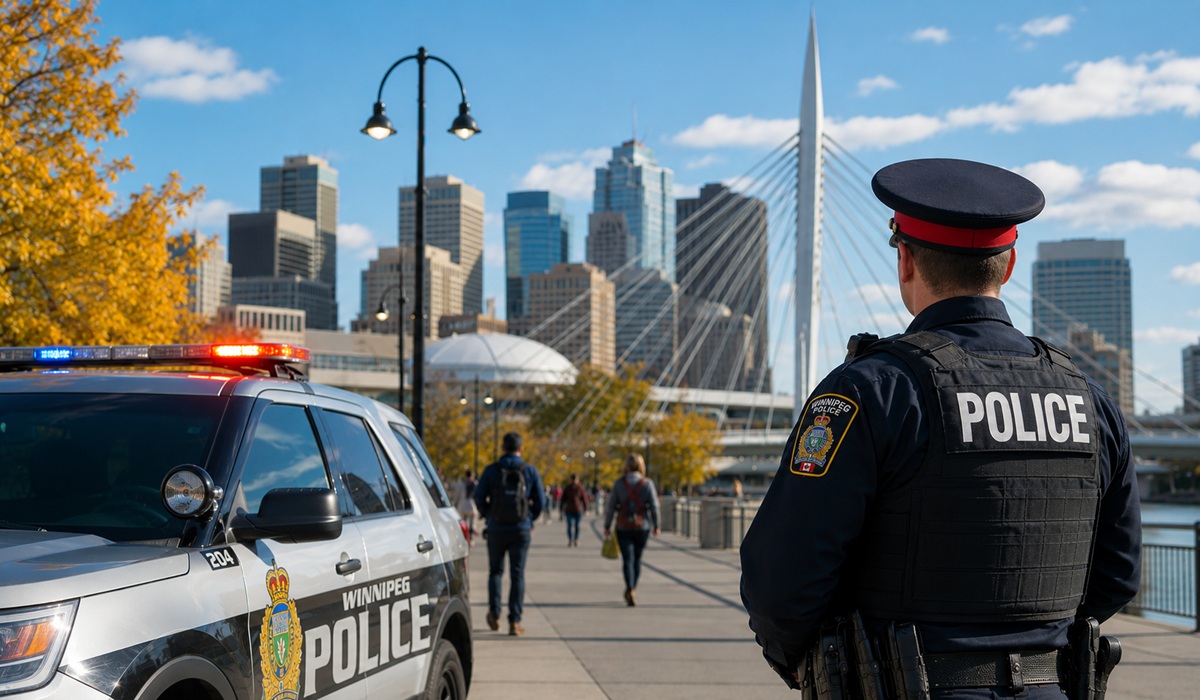
Many residents throughout Winnipeg have also noticed a more visible police presence in the downtown core and surrounding neighbourhoods over the past year. Officers are being seen more frequently on patrol, specialized units appear increasingly active, and there has been a stronger focus on visibility and community interaction. For many businesses, workers, transit users, and residents, simply seeing officers present and engaged creates a stronger sense of confidence and reassurance that public safety concerns are being taken seriously.
Under the leadership of Gene Bowers, there also appears to be a greater emphasis on community engagement and listening directly to residents. Town halls, public meetings, neighbourhood discussions, and ongoing outreach are becoming more common parts of the public safety conversation. That approach is important because policing alone cannot solve every challenge facing Winnipeg. However, when police leadership actively listens to communities and works collaboratively alongside organizations, outreach workers, businesses, and residents, trust begins to strengthen and solutions become more realistic.
The report also reinforces the enormous pressures still facing frontline officers and emergency responders. Calls for service reached historic highs in 2025, averaging more than 2,000 calls per day. Even with crime reductions in several key categories, Winnipeg continues to face major social challenges tied to addiction, mental health, homelessness, poverty, and population growth. Those realities place constant strain not only on police services, but also on healthcare workers, community agencies, shelters, and countless organizations trying to stabilize vulnerable individuals before situations escalate into violence or crisis.
This is why all three levels of government now have a responsibility to continue building on the momentum reflected in the report. Public safety cannot fall entirely on the shoulders of law enforcement. Municipal, provincial, and federal leaders must work together on long-term investments in addictions treatment, mental health resources, affordable housing, youth recreation, education, and employment opportunities. Prevention and intervention remain just as important as enforcement if Winnipeg wants to continue moving in the right direction.
The improvement in crime clearance rates also deserves recognition. Clearance rates improved for the third consecutive year, including a homicide clearance rate of 95.5 percent. Those numbers send an important message to the public that investigations are producing results and accountability remains a priority. For families impacted by violent crime, those outcomes matter deeply because they represent persistence, professionalism, and the commitment of investigators working to deliver justice.
Community organizations, volunteers, coaches, parents, outreach workers, and ordinary citizens also deserve credit for helping create safer neighbourhoods across Winnipeg. Public safety works best when it becomes a shared responsibility rather than a divided conversation. Whether it is mentoring youth, operating community programs, supporting struggling families, or simply creating stronger neighbourhood connections, many people throughout the city are contributing quietly behind the scenes to making Winnipeg stronger and safer.
None of this means the city should become complacent. Residents still want safer transit systems, safer parks, safer downtown streets, and stronger responses to open drug use and chronic disorder in public spaces. Businesses continue facing challenges, and many neighbourhoods are still dealing with the long-term effects of poverty, addiction, and social instability. However, for the first time in a long time, the public conversation is beginning to include measurable progress alongside the criticism and frustration.
Cities do not transform overnight. Rebuilding public confidence happens gradually through consistency, collaboration, accountability, and visible action. The 2025 Annual Statistical Report suggests Winnipeg may finally be starting to gain meaningful traction in that effort. If the city can continue combining proactive policing, stronger community engagement, prevention strategies, and coordinated support from all levels of government, Winnipeg has an opportunity not only to reduce crime further, but also to rebuild confidence in the future of the city itself.
About The Author