Powerful Earthquake Strikes Southern Philippines, Leaving Dozens Dead and Hundreds Injured
- Naomi Dela Cruz
- Breaking News
- June 8, 2026
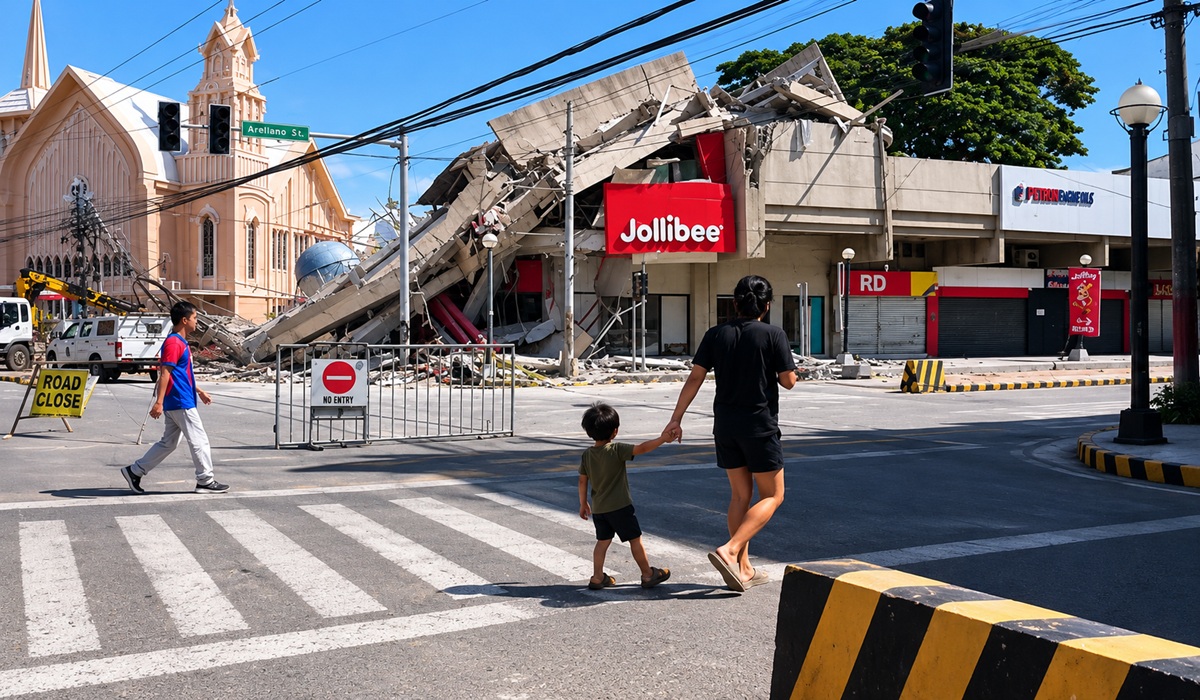
GENERAL SANTOS CITY, Philippines — Rescue crews raced through damaged buildings and landslide zones across the southern Philippines on Monday after a powerful offshore earthquake struck near the island of Mindanao, killing at least 35 people, injuring more than 200 others, and triggering tsunami warnings across the region.
The earthquake, measured at magnitude 7.8 by international monitoring agencies, struck shortly after 7:30 a.m. local time off the coast of Sarangani Province. The tremor was felt across large portions of Mindanao and sent residents fleeing from homes, schools, offices, and businesses as powerful shaking rocked communities throughout the region. Authorities say the earthquake is the strongest to strike the Philippines so far this year and warn that significant aftershocks are expected in the days ahead.
Emergency officials reported widespread structural damage in General Santos City, one of the largest urban centres in southern Philippines. Several low-rise buildings collapsed while others suffered severe structural damage. Search-and-rescue teams were deployed to multiple locations where people were believed trapped beneath debris, including commercial buildings, warehouses, schools, and residential structures. At least four people were initially reported missing as emergency crews worked through damaged areas.
One of the deadliest incidents occurred in Sarangani Province, where a landslide triggered by the earthquake buried residents and claimed numerous lives. Provincial disaster officials reported that at least 13 people were killed in the slide alone, while additional fatalities were reported in neighbouring communities as buildings collapsed and debris fell onto residents attempting to escape the shaking. Authorities cautioned that the death toll could continue to rise as emergency teams reach remote areas and complete damage assessments.
The earthquake also prompted tsunami warnings across parts of the Philippines and neighbouring countries. Coastal communities were evacuated as authorities monitored sea levels and warned residents to move away from shorelines. Waves measuring approximately one metre were recorded in some coastal areas, while smaller sea-level disturbances were observed in Indonesia, Palau, and southern Japan. After several hours of monitoring, officials lifted the tsunami warnings, saying the immediate threat had passed.
Scenes of panic unfolded throughout Mindanao as the earthquake struck during the first day of the new school year. Videos circulating on social media showed students and teachers scrambling for safety as buildings shook violently. In one widely shared incident, a canopy structure collapsed at an elementary school in Davao Occidental while children were gathered for school activities. Despite the frightening scenes, school officials reported that students were safely evacuated before more serious injuries could occur.
Transportation infrastructure also suffered significant disruptions. Authorities temporarily shut down the airport in General Santos City while engineers inspected runways and terminal facilities for damage. Multiple domestic flights were cancelled, and several roads throughout the region were blocked by debris, fallen structures, and landslides. Power outages were reported in several communities as utility crews worked to restore service and assess damage to critical infrastructure. (WTOP News)
Philippine President Ferdinand Marcos Jr. said national agencies had been mobilized to assist affected communities and pledged full government support for rescue and recovery efforts. Emergency shelters were opened across Mindanao, and disaster response teams were dispatched to the hardest-hit areas to provide food, medical assistance, temporary housing, and other emergency services. Government officials urged residents to remain alert and avoid entering damaged buildings until structural inspections could be completed.
Seismologists said the earthquake originated beneath the sea southwest of Maasim in Sarangani Province at a depth of approximately 33 kilometres. The location places the event within one of the most active seismic zones in the world. The Philippines sits along the Pacific Ring of Fire, a vast belt of tectonic activity that produces many of the world’s largest earthquakes and volcanic eruptions. Experts noted that the same region has experienced major earthquakes and tsunamis in the past, making preparedness and rapid emergency response critical components of disaster management.
More than 100 aftershocks were recorded within hours of the main quake, including several powerful enough to be felt by residents already coping with damaged homes and ongoing rescue operations. Emergency officials warned that additional aftershocks could further weaken structures that survived the initial shaking and increase the risk of additional landslides in mountainous areas. Residents were advised to stay informed through official channels and follow instructions from local authorities.
As night fell across Mindanao, rescue crews continued searching through collapsed buildings while thousands of residents remained displaced from their homes. The full extent of the damage is still being assessed, but officials say the earthquake has already become one of the deadliest natural disasters to strike the Philippines in recent years. With recovery efforts only beginning, authorities expect the humanitarian and economic impacts of the disaster to be felt long after the ground has stopped shaking.
This version is based on the June 8, 2026 earthquake reports coming out of Mindanao and uses the latest casualty and damage information available at the time of writing.
About The Author