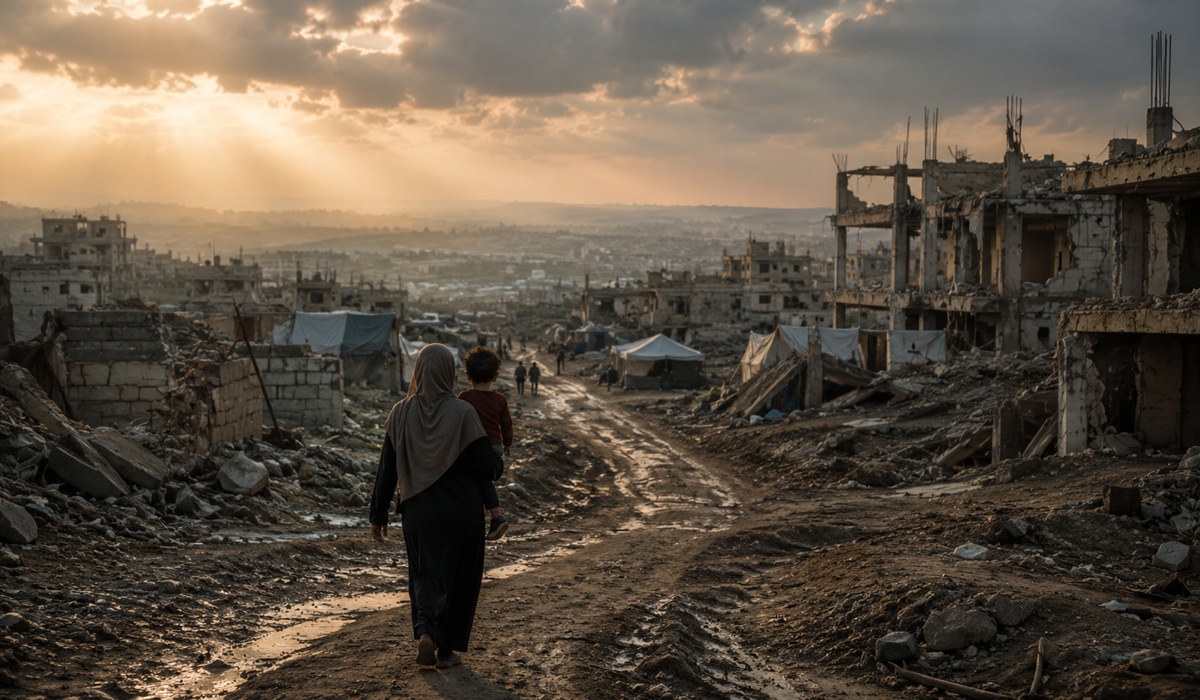
The global internal displacement crisis reached unprecedented levels in 2025, according to newly released findings from the Internal Displacement Monitoring Centre, as wars, political instability, climate disasters and humanitarian emergencies forced tens of millions of people from their homes within their own countries.
The organization’s latest report on Internal Displacement paints a deeply concerning picture of a world increasingly strained by overlapping crises. According to the report, a staggering 62.2 million internal displacements were recorded globally during 2025, marking the highest figure ever documented. Of those movements, 32.3 million were linked directly to conflict and violence, while another 29.9 million were caused by disasters ranging from floods and hurricanes to wildfires, droughts and severe storms.
The findings underscore how modern displacement crises are no longer driven by a single factor. Armed conflict continues to devastate communities across multiple regions, while worsening climate instability is simultaneously uprooting populations at a pace that humanitarian agencies warn could intensify in the coming years.
Officials involved in the report note that while disaster-related displacement figures declined from the extreme highs recorded in 2024, the overall numbers remain alarmingly elevated. The 29.9 million disaster displacements documented in 2025 were still approximately 13 per cent above the average recorded over the past decade. Researchers say that trend highlights how climate and weather-related disasters are becoming a more persistent and destabilizing force worldwide rather than isolated emergencies.
The report also raises serious concerns about the growing lack of reliable data collection in some regions. According to the Internal Displacement Monitoring Centre, displacement data availability worsened in roughly 15 per cent of monitored countries during 2025, representing a threefold increase compared to the previous year. Humanitarian analysts warn that incomplete reporting may be masking the true scale of displacement crises in several parts of the world, particularly in regions where conflict, weak governance and damaged infrastructure make accurate tracking difficult.
The Internal Displacement Monitoring Centre, widely recognized as the world’s leading authority on internal displacement data and analysis, has monitored these crises since its establishment in 1998 as part of the Norwegian Refugee Council. The organization works extensively with governments, humanitarian agencies and policymakers to improve understanding of displacement trends and to help reduce future risks for vulnerable populations.
Unlike refugee statistics, which track individuals who cross international borders, internal displacement measures people forced to flee their homes while remaining within their country of residence. Researchers emphasize that the figures represent movements rather than unique individuals, meaning a single person displaced multiple times during the year is counted each time they are forced to relocate.
The report also distinguishes between “internal displacements” and “internally displaced people,” commonly referred to as IDPs. Internal displacements refer to each new forced movement recorded throughout the year, while the IDP total represents the number of people still living in displacement at a specific point in time, typically measured at the end of the calendar year.
Humanitarian experts say the growing scale of internal displacement reflects a rapidly changing global landscape where armed conflict, political unrest, environmental degradation and extreme weather increasingly intersect. Many displaced populations face repeated upheaval, often losing access to housing, employment, healthcare, education and essential services multiple times over.
The Global Report on Internal Displacement is considered one of the most authoritative annual assessments of displacement worldwide and is relied upon heavily by governments, international organizations and relief agencies to guide policy development, emergency planning and humanitarian response strategies.
As governments and international agencies continue debating responses to migration, climate resilience and global instability, the latest findings serve as another stark reminder that millions of people are being uprooted not by choice, but by circumstances far beyond their control.
Readers wishing to explore the findings further can access the official report and supporting datasets below:
Download References
About The Author