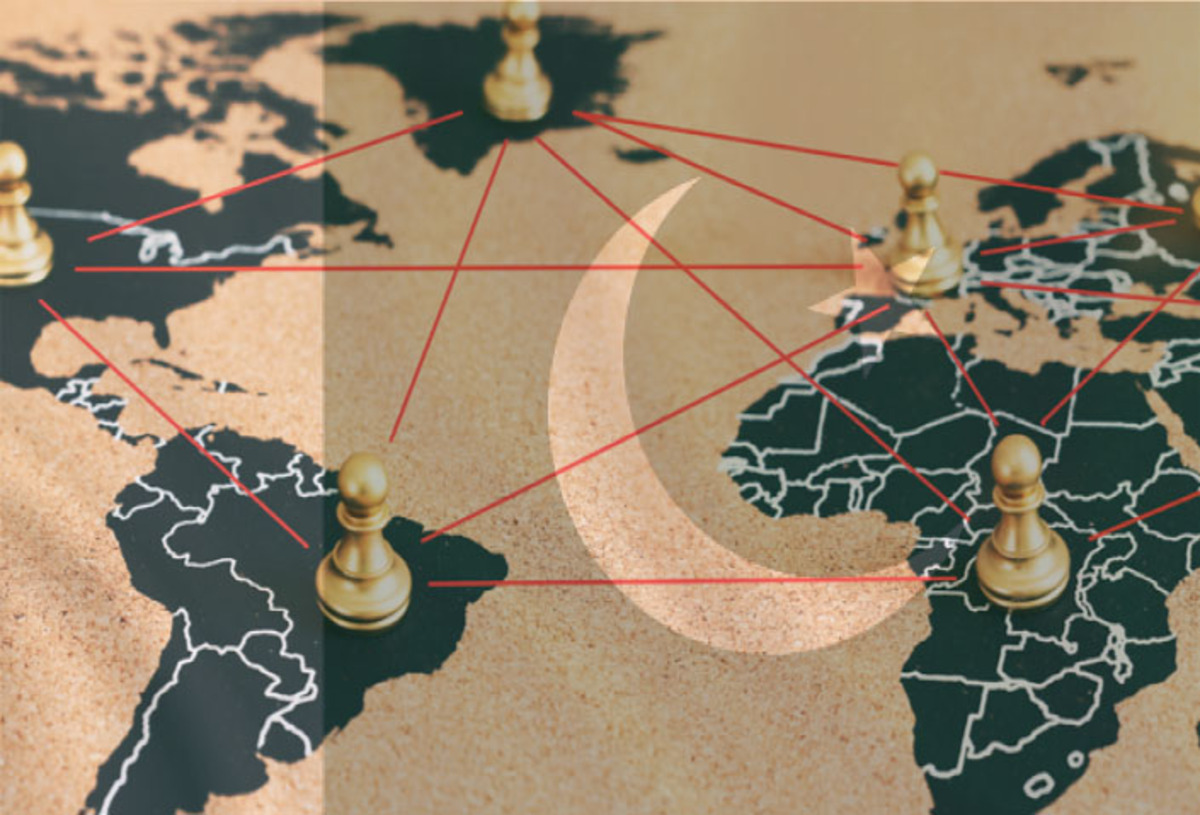
For decades, Pakistan’s geography has been described as both a blessing and a burden. Located at the junction of South Asia, Central Asia, the Middle East, and China, the country has historically attracted the attention of global powers seeking influence, security, trade routes, and strategic partnerships. Today, however, Pakistan finds itself in a potentially transformative moment. A combination of shifting global alliances, regional conflicts, economic realignments, and diplomatic engagements have placed Islamabad at the center of multiple geopolitical calculations. The question is no longer whether roads lead to Pakistan, but whether Pakistan can effectively capitalize on this convergence of opportunities.
The contemporary international environment is undergoing profound change. The traditional unipolar order dominated by the US is gradually giving way to a more complex multipolar system in which China, Russia, regional powers, and middle powers increasingly shape global affairs. In such an environment, countries occupying strategic geographic locations gain renewed importance. Pakistan’s position along key trade corridors, its proximity to energy-rich regions, and its role in regional security have elevated its relevance once again.
The US continues to view Pakistan as an important regional actor despite periods of tension in bilateral relations. Washington recognizes that long-term stability in South Asia, developments in Afghanistan, counterterrorism cooperation, and broader regional diplomacy cannot be pursued without engaging Islamabad. The successful diplomatic role played by Pakistan in facilitating communication and reducing tensions between rival states has reinforced its image as a responsible stakeholder capable of contributing to regional peace and stability.
At the same time, China remains Pakistan’s most significant strategic partner. The China-Pakistan Economic Corridor (CPEC) has already transformed the nature of bilateral cooperation beyond traditional defense ties. Beijing sees Pakistan as a crucial gateway connecting western China to the Arabian Sea through Gwadar Port. In an era of increasing geopolitical competition, China’s investment in Pakistan is not merely economic; it is also strategic, offering Beijing alternative trade and energy routes while creating opportunities for Pakistan’s industrial and infrastructure development.
Russia, once distant from Pakistan’s strategic orbit, has also moved closer in recent years. Moscow’s interest in regional connectivity, energy cooperation, and South Asian stability has created new avenues for engagement. Russia views Pakistan as an important partner in discussions concerning Afghanistan, Central Asian connectivity, and future trade corridors linking Eurasia with the Arabian Sea. Although Pakistan-Russia relations remain less developed than Pakistan’s ties with China, the trajectory is unmistakably positive.
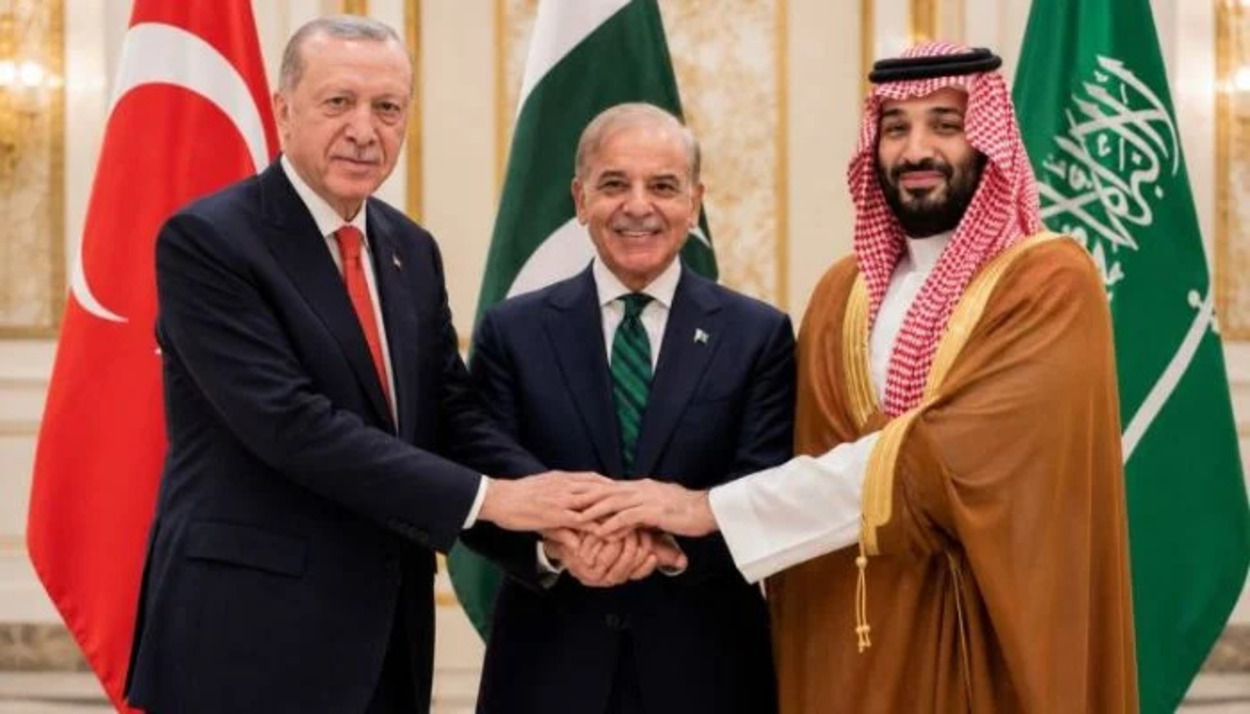
The Muslim world presents another dimension of Pakistan’s growing relevance. Saudi Arabia and the Gulf states increasingly regard Pakistan not merely as a source of manpower but as a strategic partner. Large-scale investment initiatives, cooperation in energy, mining, infrastructure, and technology demonstrate this evolving relationship. The Gulf economies are diversifying beyond oil and seeking new investment destinations. Pakistan’s large market, young population, and strategic location make it an attractive option for long-term economic partnerships.
Turkey represents another important pillar of Pakistan’s diplomatic outreach. The relationship between Ankara and Islamabad is rooted in historical goodwill, cultural affinity, and converging strategic interests. Both countries advocate stronger regional cooperation and have expanded collaboration in defense, trade, technology, and diplomatic forums. As Turkey pursues a more independent foreign policy, its partnership with Pakistan is likely to acquire greater strategic significance.
Iran, despite challenges created by international sanctions and regional rivalries, remains an essential neighbor whose importance cannot be overstated. Energy cooperation, border security, regional trade, and connectivity projects offer enormous opportunities for both countries. Any improvement in relations between Iran and the broader international community enhances Pakistan’s ability to serve as a bridge connecting the Middle East with South Asia and beyond.
Within this broader geopolitical context, the aftermath of the May 2025 India-Pakistan military confrontation has generated significant debate regarding Pakistan’s strategic standing. Supporters of Islamabad’s position argue that Pakistan demonstrated military resilience, strategic deterrence, and operational effectiveness under difficult circumstances. Regardless of differing interpretations, the conflict reinforced the reality that Pakistan remains a major military power whose security concerns cannot be ignored by regional and global actors. This has contributed to renewed diplomatic engagement with Islamabad by several international stakeholders seeking stability in South Asia.
Yet military achievements alone do not create lasting national power. History consistently demonstrates that sustainable influence emerges from economic strength, institutional stability, technological advancement, and human development. The most important challenge before Pakistan is therefore not military success but economic transformation. Strategic geography can attract attention, but only economic performance can convert attention into prosperity.
Pakistan’s future success depends upon several critical decisions. First, it must maintain balanced relations with competing global powers without becoming entangled in great-power rivalries. Second, it must accelerate economic reforms that improve investor confidence, expand exports, and enhance industrial productivity. Third, it must leverage CPEC and other connectivity initiatives to become a regional trade hub linking South Asia, Central Asia, China, and the Middle East. Fourth, political stability and policy continuity are essential for sustaining foreign investment and long-term development projects.
Pakistan should invest heavily in education, technology, artificial intelligence, renewable energy, and digital infrastructure. The next era of geopolitical competition will not be determined solely by military capabilities or geography but by innovation and knowledge-based economies. Countries that successfully combine strategic location with technological advancement will emerge as the true winners of the twenty-first century.
The country’s recent diplomatic engagements, including efforts to facilitate dialogue and reduce tensions among regional actors, highlight another source of future influence.
In a fragmented world marked by conflicts and rivalries, states capable of mediation acquire strategic value disproportionate to their economic size. Pakistan’s ability to maintain working relationships with the US, China, the Gulf states, Turkey, Iran, and other regional players gives it a unique diplomatic advantage that few countries possess.
The future of Pakistan, extends far beyond individual diplomatic successes or military achievements. The country stands at a historic crossroads where geography, diplomacy, economics, and strategy converge. If national leadership can translate geopolitical relevance into economic modernization, Pakistan may indeed emerge as one of the most important connecting states of the emerging multipolar world.
If internal political divisions, economic instability, and governance challenges persist, the opportunities currently flowing toward Pakistan may remain unrealized. The roads of diplomacy, trade, energy, and strategy are increasingly leading to Pakistan. The ultimate test is whether Pakistan can build the institutions, economy, and national consensus necessary to travel those roads toward lasting prosperity and global influence.
About The Author