Britain’s Revolving Door at 10 – Downing Street: Keir Starmer’s Resignation and the Crisis of Political Stability
- Naveed Aman Khan
- Pinpoint
- June 23, 2026
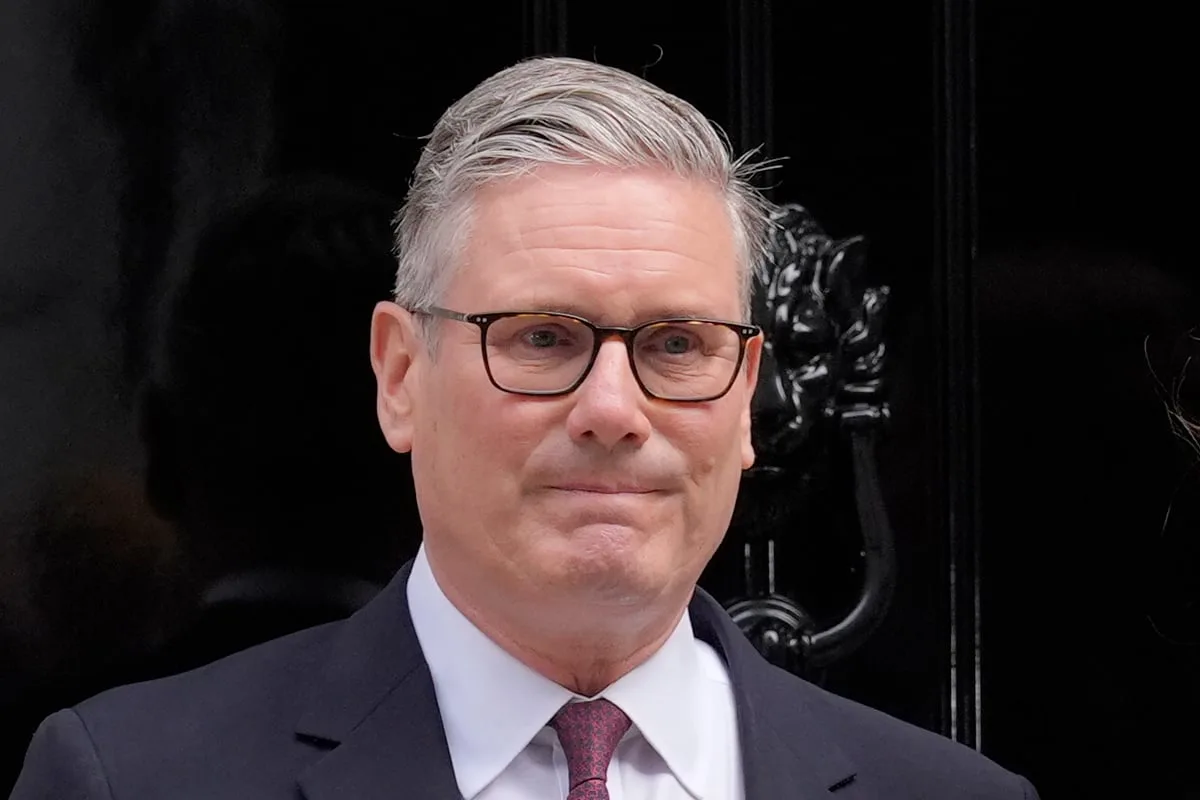
The resignation of British Prime Minister Keir Starmer marks yet another dramatic chapter in the United Kingdom’s turbulent political history. Less than two years after leading the Labour Party to a landslide victory and promising a return to stability, Starmer stepped down amid mounting pressure from his own party, declining public confidence, electoral setbacks, and growing dissatisfaction with his leadership. His departure means Britain is preparing to welcome its seventh prime minister in just a decade—a statistic that would have seemed unimaginable in a country long regarded as one of the world’s most stable parliamentary democracies.
The immediate reasons behind Starmer’s resignation appear largely domestic rather than foreign. Labour’s disastrous performance in local elections, internal rebellions by MPs, ministerial resignations, policy reversals, economic frustrations, and the rise of Reform UK significantly weakened his authority. By the time senior cabinet members began openly questioning his leadership, his position had become increasingly untenable.
A key question, however, is whether Britain’s support for Israel during the Gaza conflict contributed to Starmer’s downfall. The answer is partly yes, but not exclusively. His government’s perceived pro-Israel stance alienated many Muslim voters, progressive activists, and sections of Labour’s traditional base. Similar criticism had confronted his predecessor Rishi Sunak. Yet attributing Starmer’s resignation solely to Palestine would be an oversimplification. Electoral losses were driven by a broader mix of economic concerns, immigration debates, public-service pressures, and leadership dissatisfaction. The Gaza issue accelerated disillusionment among some voters, but it was one factor among many rather than the decisive cause.
To understand Britain’s current instability, one must examine the fate of its last six prime ministers. David Cameron resigned in 2016 after losing the Brexit referendum. Having campaigned for Britain to remain in the European Union, he concluded that he lacked the mandate to implement a withdrawal he opposed. His successor, Theresa May, spent three years struggling to secure parliamentary approval for a Brexit agreement. Repeated defeats in Parliament ultimately forced her resignation in 2019. Boris Johnson won a commanding majority but was brought down by ethics scandals, particularly the “Partygate” controversy and accusations of misleading Parliament. Cabinet resignations triggered his departure in 2022.
Liz Truss lasted only weeks in office. Her government’s unfunded tax-cutting agenda triggered market turmoil, a falling pound, and a crisis of investor confidence, making her tenure one of the shortest in British history.
Rishi Sunak inherited economic difficulties, high inflation, public frustration, and Conservative Party divisions. His party’s heavy defeat in the 2024 general election ended his premiership. Finally, Starmer’s resignation reflects the challenges of governing a polarized society facing slow economic growth, rising expectations, and increasingly impatient voters.
Taken together, these departures reveal several recurring themes. Brexit shattered traditional political alignments. Economic stagnation eroded public trust. Social media intensified scrutiny. Political parties became more fragmented. Voters grew less loyal and more volatile. Prime ministers increasingly found themselves removed not by opposition parties but by their own colleagues.
Does this mean democracy is weakening in Great Britain?
The answer requires nuance. Britain’s democratic institutions remain functional. Elections are held regularly, courts remain independent, Parliament continues to exercise oversight, and peaceful transfers of power occur without constitutional crises. In that sense, British democracy remains resilient.
However, political stability is undeniably weakening. Frequent leadership changes create uncertainty, undermine long-term policymaking, and damage public confidence in government. The revolving door at Downing Street suggests that Britain’s political system is struggling to produce durable leadership capable of navigating complex economic and geopolitical challenges. The problem is not the collapse of democracy but the erosion of effective governance.
Moreover, the emergence of new political forces, including Reform UK, has fragmented the traditional two-party system. Both Labour and the Conservatives face declining voter loyalty, while regional, populist, and issue-based movements are becoming more influential. This trend mirrors developments across many Western democracies, where established parties are finding it increasingly difficult to maintain broad electoral coalitions.
The resignation of Keir Starmer therefore represents more than the fall of a single prime minister. It symbolizes a deeper transformation in British politics. The United Kingdom remains a democracy, but it is no longer the predictable and politically stable democracy it once was. Brexit’s aftershocks, economic pressures, identity politics, international conflicts, and shifting voter expectations have combined to create an era of chronic political volatility.
The ultimate challenge for Starmer’s successor will not simply be winning the next election. It will be restoring public trust, rebuilding political stability, and proving that Britain’s parliamentary system can still deliver effective leadership in an age of uncertainty. Until that happens, 10 – Downing Street may continue to resemble a revolving door rather than the seat of enduring government.
About The Author