Reconciliation Requires More Than Words — Winnipeg Is Beginning to Show What Progress Looks Like
- TDS News
- Tiger's Eye Advisory Group - Trending News
- June 25, 2026
By: Donovan Martin Sr, Editor in Chief
For years, discussions about reconciliation in Winnipeg have often been accompanied by frustration, skepticism, and at times outright distrust. Many Indigenous people have heard promises from governments, institutions, and organizations before, only to see those promises fall short of meaningful action. That history has understandably left many people cautious whenever reconciliation becomes part of a public conversation. That is precisely why genuine progress deserves recognition when it occurs.
This week, the Winnipeg Police Service announced the introduction of eagle feathers for Indigenous victims and witnesses providing statements, as well as for officers affirming oaths. While some may view the initiative as symbolic, it represents something much larger. It is another step in a relationship that is evolving in a meaningful way between the Winnipeg Police Service and Indigenous communities across the city.
The initiative stems from a commitment made by Chief Gene Bowers and the executive team, who have consistently spoken about improving relationships with Indigenous communities and ensuring reconciliation becomes part of the culture of the organization rather than simply a statement on paper. In 2025, Bowers established the Chief’s Indigenous Working Group, bringing together Indigenous members within the service to identify barriers, improve communication, and help guide the Winnipeg Police Service along its reconciliation journey.
The eagle feather initiative emerged directly from those discussions. For many Indigenous cultures, the eagle feather is among the most sacred items a person can hold. It represents truth, honesty, integrity, and a connection to the Creator. For some, it also provides comfort and strength during difficult moments, making its use particularly meaningful for victims and witnesses navigating the justice system.
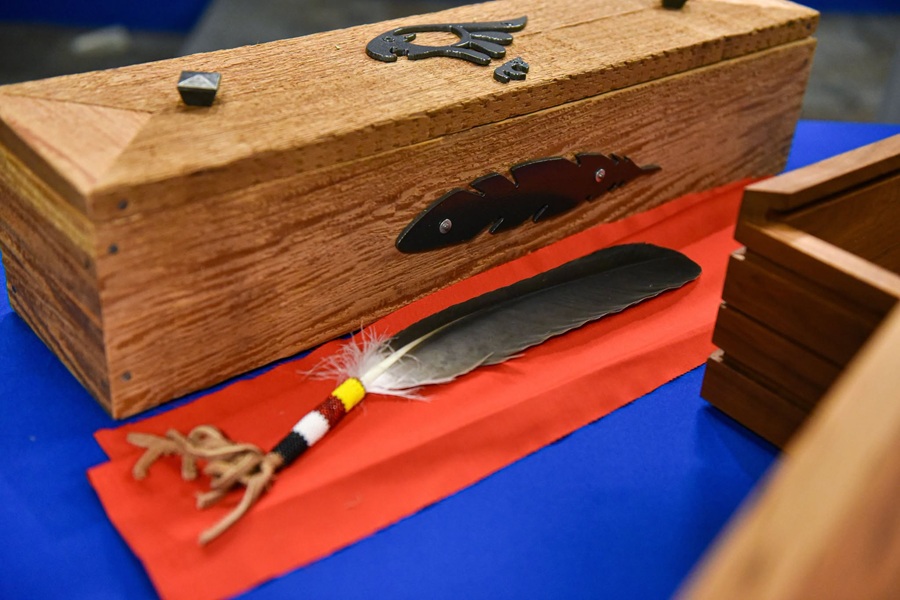
What stood out during the announcement was not only the initiative itself, but the people behind it. Standing alongside Chief Bowers were Elder Mike Calder, Winnipeg Police Service Indigenous Relations Advisor Sheila North, and Staff Sergeant Brian Chrupalo, a member of the Chief’s Indigenous Working Group and the service’s chaplaincy and spiritual care program. The announcement was not presented as a police initiative alone. Instead, it reflected collaboration between police leadership, Indigenous members of the service, elders, community advisors, knowledge keepers, and justice partners who all contributed to bringing the project forward.
That collaborative approach is important because reconciliation cannot be imposed from the top down. It requires people sitting at the same table, listening to one another, and building trust over time. One of the most significant aspects of this initiative is that Indigenous members within the organization helped shape it from the beginning. Their experiences, perspectives, and recommendations were not treated as an afterthought. They were central to the process.
The eagle feathers themselves were gifted through proper protocols and prepared through traditional ceremonies. Elder Mike Calder helped ensure those traditions were respected, while consultations took place with Indigenous leaders, Manitoba prosecutions, justice partners, and knowledge keepers from across the province. The handcrafted boxes accompanying the feathers, along with traditional medicines and beadwork completed through Indigenous programming at the Behavioural Health Foundation and partnership with RB Russell School, further reflect the care taken to ensure the initiative was rooted in authenticity rather than symbolism alone.
What makes this announcement particularly noteworthy is that it reflects a broader trend many people have begun noticing over the past several years. Nobody is suggesting that every challenge has been solved or that difficult conversations no longer need to happen. However, there is a genuine effort underway to strengthen communication and engagement between the Winnipeg Police Service and Indigenous communities.
That effort can increasingly be seen outside formal announcements and press conferences. Whether it is National Indigenous Peoples Day, community gatherings, youth events, cultural celebrations, or neighborhood initiatives, members of the Winnipeg Police Service are showing up and participating in ways that are becoming more visible. Officers have been seen helping raise teepees, participating in ceremonies, attending community events, and engaging with Indigenous residents outside of enforcement situations.
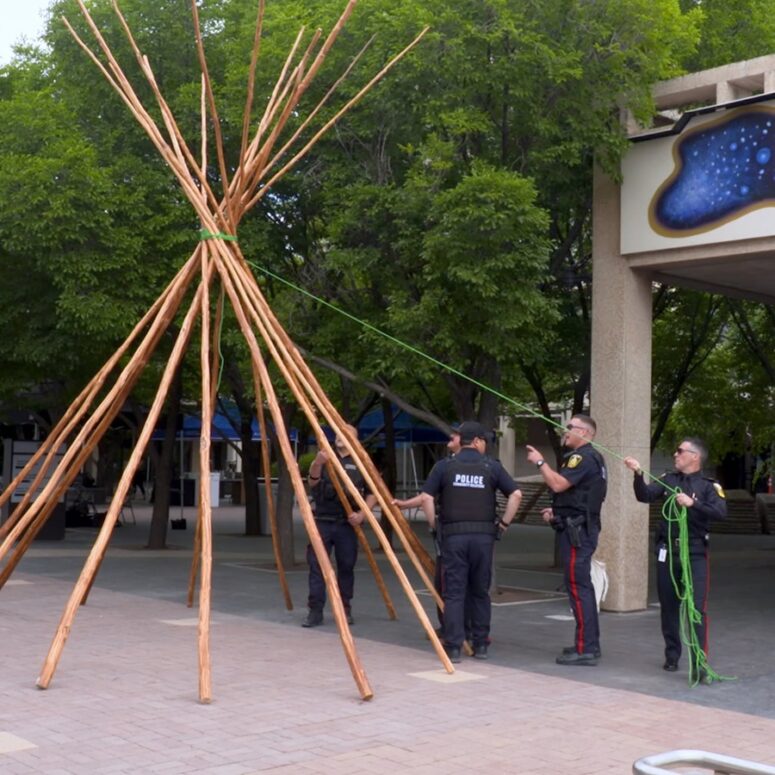
Perhaps most importantly, when significant incidents involving Indigenous communities occur, there is a growing willingness to communicate directly with Indigenous leadership and community representatives. Those conversations are not always easy, and there will inevitably be disagreements. Yet meaningful relationships are not measured by the absence of disagreement. They are measured by the willingness to continue talking even when conversations become difficult.
Unfortunately, positive developments rarely receive the same attention as conflict. When something goes wrong, it makes headlines. When relationships improve, trust begins to develop, or communities come together, those stories often receive far less attention. As a result, many Winnipeggers may not fully appreciate the amount of work taking place behind the scenes.
Acknowledging progress does not mean ignoring past mistakes. It does not mean abandoning accountability or pretending challenges no longer exist. It simply means being honest enough to recognize when people are making a sincere effort to move things forward.
For Winnipeg to reach its full potential, everyone has a role to play. That responsibility does not belong solely to Indigenous communities, governments, police services, or public institutions. Non-Indigenous residents also have a role in building understanding, strengthening relationships, and supporting meaningful dialogue. Reconciliation was never intended to be a one-sided process. It requires participation, commitment, and goodwill from everyone who calls this city home.
The Winnipeg Police Service’s eagle feather initiative will not solve every challenge facing Indigenous and non-Indigenous relations in our city. What it does represent, however, is evidence that meaningful progress is possible when people are willing to listen, collaborate, and approach difficult conversations with sincerity. In a time when public discourse often focuses exclusively on what is broken, there is value in recognizing what is improving.
Real progress is rarely dramatic. More often, it is built through a series of small but meaningful steps that accumulate over time. This initiative is one of those steps, and if Winnipeg is serious about reconciliation, those steps deserve to be acknowledged.
About The Author