Japan Remains on Alert as Earthquake Concerns Continue Across the Pacific Ring of Fire
- Naomi Dela Cruz
- East Asia
- Tiger's Eye Advisory Group - Trending News
- June 18, 2026
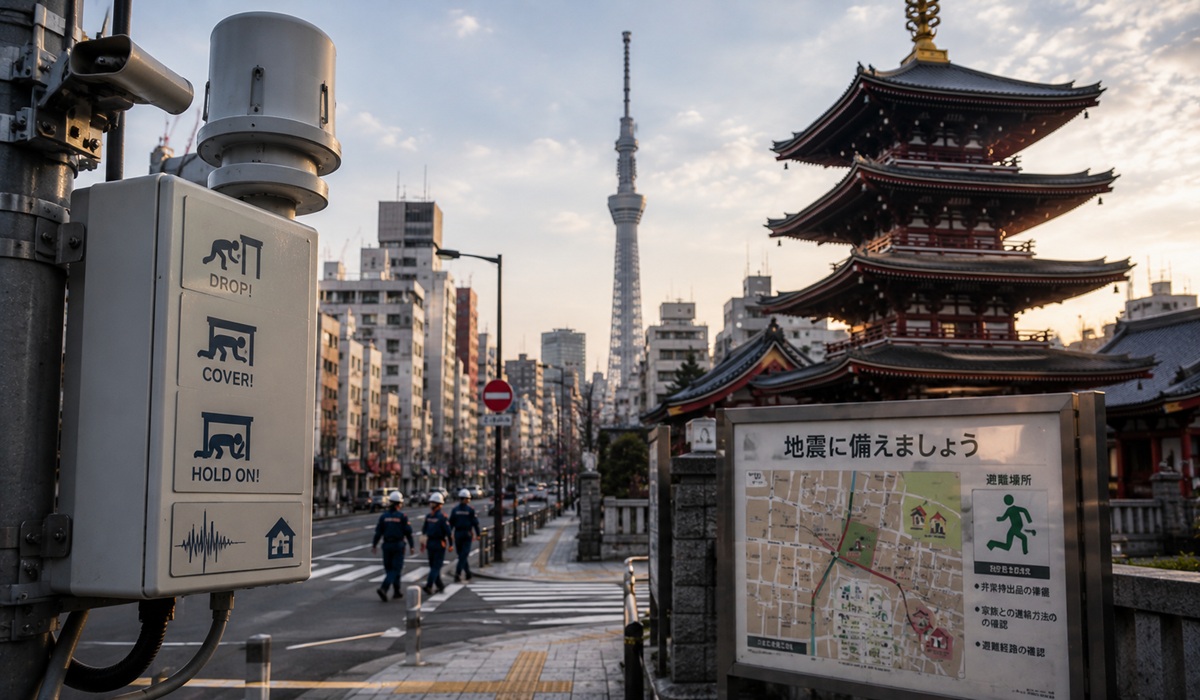
Japan is once again being reminded of the powerful geological forces that shape life across the Pacific Ring of Fire. Recent earthquake activity has renewed public attention on disaster preparedness, infrastructure resilience, and the ever-present possibility of a larger seismic event. While no catastrophic earthquake has struck in recent days, a series of tremors and ongoing scientific monitoring efforts have kept both government agencies and residents on alert.
Few countries are as accustomed to living with earthquakes as Japan. Situated at the convergence of several major tectonic plates, the country experiences thousands of seismic events every year, most of which are too small to cause significant damage. Even so, every noticeable tremor serves as a reminder that Japan remains one of the most seismically active nations in the world, and that preparedness is not simply a government policy but a way of life.
The latest concerns come amid continued monitoring of several offshore fault zones that have produced notable activity over the past year. Seismologists stress that increased earthquake activity does not necessarily indicate a major event is imminent, but it does provide valuable data that helps researchers better understand the complex geological systems beneath the region. Scientists continue to study fault movement, ocean floor activity, and historical seismic patterns in an effort to improve risk assessments and emergency planning.
One of Japan’s greatest strengths remains its commitment to preparedness. Decades of investment in earthquake-resistant construction, strict building codes, advanced warning systems, and public education have helped significantly reduce casualties from many earthquakes that might otherwise have caused far greater destruction. Modern infrastructure is designed with seismic activity in mind, and many buildings are capable of absorbing significant movement without suffering catastrophic structural failure.
Public awareness plays an equally important role. Earthquake drills are a routine part of life in schools, government offices, businesses, and residential communities. Families are encouraged to maintain emergency supplies, evacuation plans, and communication strategies should a major disaster occur. These measures may seem ordinary to Japanese residents, but they represent one of the most comprehensive disaster readiness programs anywhere in the world.
Technology has also become a critical component of Japan’s earthquake response strategy. The country’s advanced early warning systems can detect seismic waves and provide alerts seconds before stronger shaking arrives in affected areas. While those few seconds may seem insignificant, they can provide enough time to stop trains, halt industrial equipment, alert emergency services, and allow individuals to take protective action.
The economic implications of earthquake preparedness are substantial. Governments and private companies invest billions of dollars annually in infrastructure upgrades, research initiatives, emergency planning, and building improvements. Although these expenditures are significant, officials often point to the devastating financial and human costs of past disasters as evidence that preparation remains far less expensive than recovery.
Japan’s experience has attracted attention from countries facing similar risks. Engineers, emergency management professionals, and policymakers from around the world frequently study Japanese building standards and disaster response systems. The lessons learned from decades of seismic activity have helped shape international approaches to earthquake preparedness and urban planning.
At the same time, experts continue to caution against complacency. Earthquake prediction remains one of the most challenging areas of scientific research. While monitoring systems have become increasingly sophisticated, no technology currently exists that can accurately predict the precise timing, location, and magnitude of a future major earthquake. This reality reinforces the importance of readiness rather than reliance on forecasts.
The broader concern extends beyond the immediate impact of ground shaking. Major earthquakes can trigger landslides, infrastructure failures, transportation disruptions, and in some cases tsunamis. Emergency planners therefore focus not only on the initial event but also on the cascading consequences that can follow. Coordinating responses across multiple levels of government remains a central component of Japan’s disaster management strategy.
As seismic activity continues to be monitored across the region, Japan’s approach offers an important lesson for the rest of the world. Natural disasters cannot be prevented, but their consequences can be significantly reduced through planning, investment, education, and strong public awareness. In a country where earthquakes are an unavoidable part of life, preparedness remains the most powerful tool available, and it is a strategy that continues to save lives year after year.
About The Author