An Open Letter to all Parliamentarians. Is your own citizenship secure?
- TDS News
- Canada
- Tiger's Eye Advisory Group - Trending News
- August 1, 2026
By: Don Chapman, Head of The Lost Canadians
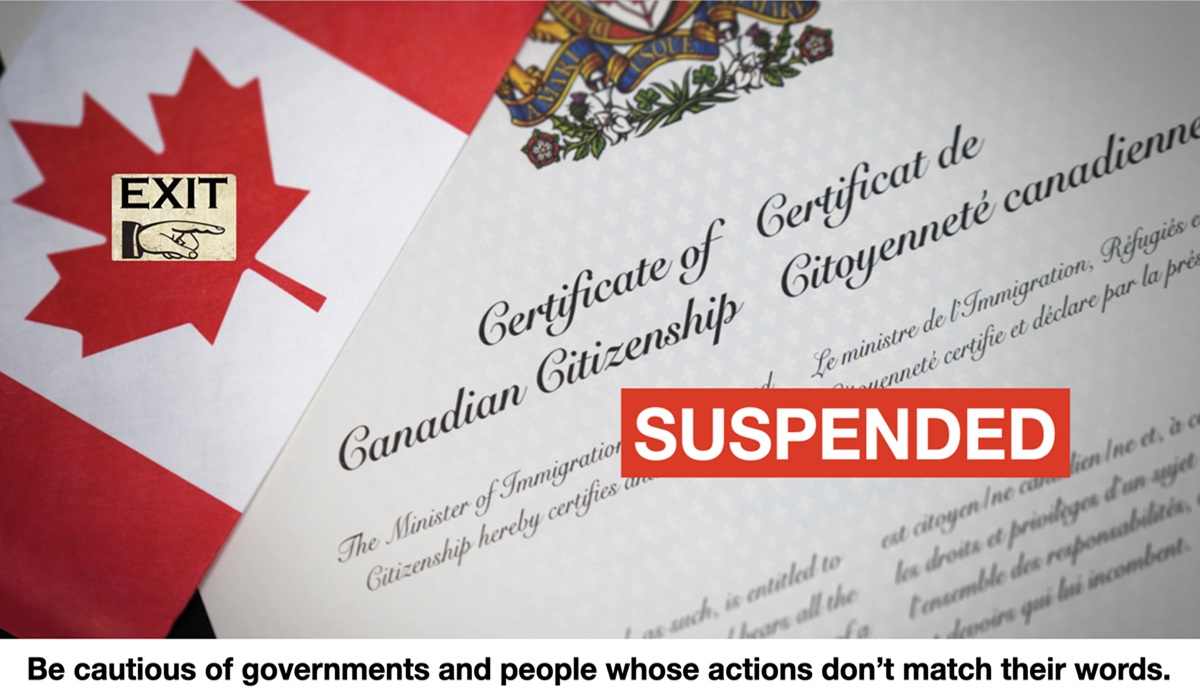
Several Members of Parliament have responded to my concerns regarding Immigration, Refugees and Citizenship Canada (IRCC) suspending the citizenship certificates of approximately 100 “Lost Canadians.” Of those affected, roughly 33 have since been reinstated.
This situation highlights a troubling reality: IRCC’s only consistency is that it’s consistently inconsistent. This instability was explicitly noted in Bjorkquist v. Canada, a landmark case which ruled that Canada’s Citizenship Act violated the Charter of Rights and Freedoms equal rights provisions, and that it disproportionately harmed women. In her judgment, Justice Akbarali highlighted IRCC’s staggering 50% error rate for the specific families involved in that Charter challenge.
For decades, IRCC has been falsely stating on its website that Canada extends equal treatment to all citizens—a claim the court has since struck down. Unfortunately, case processors frequently, and still do, regurgitate these institutional falsehoods:
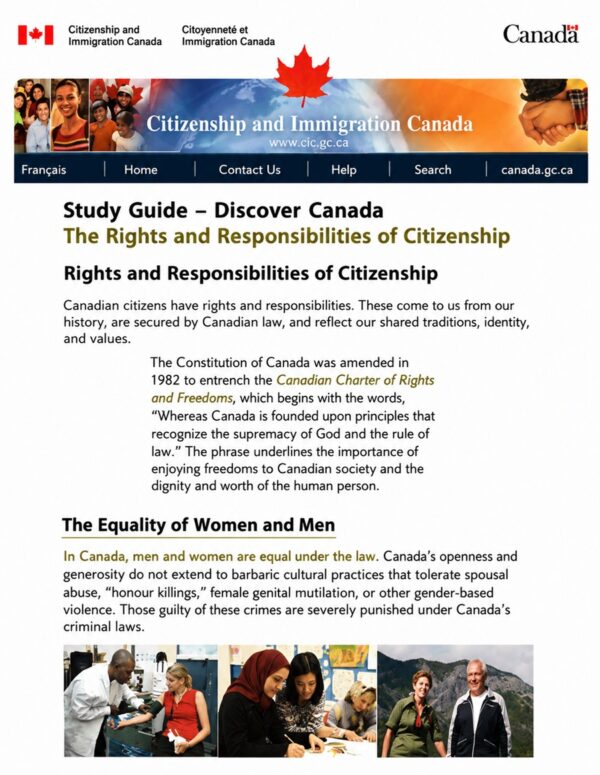
Per the court’s ruling, the Citizenship Act was declared to be discriminatory—IRCC was wrong.
Hence, any parliamentarian who previously validated IRCC’s assertions inadvertently became complicit in those abuses. Many’s the time it resulted in forced family separations—a situation that’s still happening.
My intention is not to assign blame to past lawmakers; they understandably relied on the assumption that IRCC is a reliable and legitimate authority. However, history proves that IRCC has been repeatedly and demonstrably wrong. Parliamentarians must no longer blindly adopt bureaucratic talking points claiming that suspending citizenship is logical, rational, or protective of civic rights.
The reality is quite the opposite.
Suspending citizenship to people who’d already been approved and received their documents is not a minor bureaucratic footnote—it’s a catastrophic disruption. It risks making individuals stateless. There are people who moved to Canada, built lives, and bought homes. Taking away citizenship destroys their ability to maintain employment, secure mortgages, and access essential healthcare. While IRCC uses the sanitised term “suspend” for citizenship, they explicitly “revoked” these people’s passports. To give citizenship with one hand and then take it away with another is both reprehensible and cruel. For those whose status was later reinstated, this administrative overreach constitutes a clear violation of Sections 6(1) and 7 of the Charter of Rights and Freedoms. It also makes a mockery of the Rule of Law.
Cancelling citizenship of legitimate Canadian citizens is a grave matter, and it should not be dismissed by a ministerial or bureaucratic press release.
It also raises a fundamental question: when is a person’s Canadian citizenship truly secure? The War Brides of the Second World War discovered the hard way—IRCC decided in 2006 that they were not Canadian citizens after all, forcing these elderly women into a stressful judicial review. It took until 2014, and a subsequent amendment to the Citizenship Act, to finally compel the government to honour the promises made six decades earlier by a previous government, to legally recognize that the War Brides were, and had been, citizens all along.
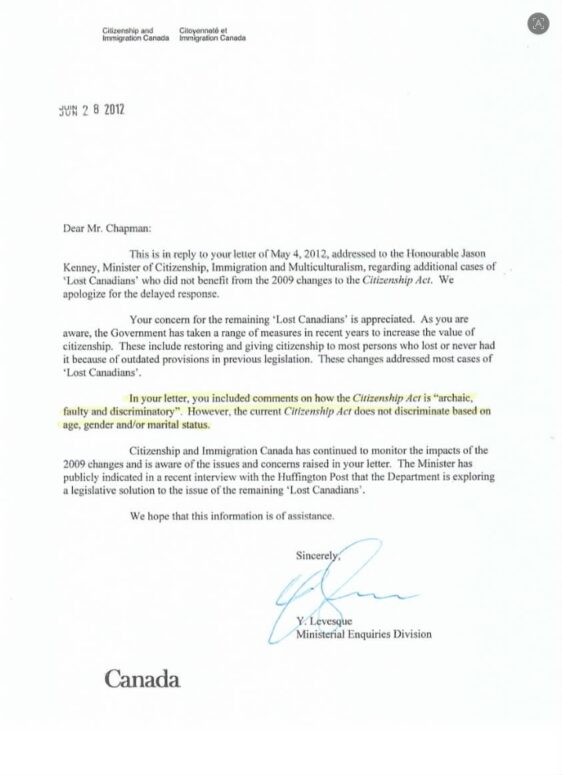
Thus, the recent “Lost Canadian” suspensions are not new nor unique. IRCC has been suspending and revoking citizenship since Confederation. The bureaucracy has historically escaped accountability due to a lack of oversight, which stems directly from two parliamentary flaws: 1) Wrongly relying on the bureaucrats, and 2) having scant personal knowledge of the Citizenship Act. Stated differently, MPs and Senators can’t say with certainty just who is, or is not, entitled to be Canadian under current law. The Citizenship Act really is that convoluted. Yet, citizenship is the glue that binds us together as a nation.
How can something so intrinsic to a country and its people be so misunderstood?
Don’t be fooled—while IRCC’s legal arguments to suspend may initially sound logical, the precedent it sets is incredibly dangerous. Granting a single bureaucrat the unilateral power to strip anyone of their citizenship via email, without any semblance of due process, isn’t just appalling—but also a blatant violation of international human rights law.
Now let’s compare: Donald Trump frequently threatens to strip people of their citizenship, yet he can’t because U.S. citizenship is a constitutionally protected right. In Canada, citizenship is a statutory privilege. This legal vulnerability is precisely why Minister Diab and her bureaucracy were able to execute the suspensions / revocations and then attempt to justify them. It’s not only wrong, but it cheapens Canadian citizenship for everyone.
Personal opinions regarding any Citizenship minister or political party are irrelevant; what truly matters—and what the security of Canada depends on—is how a future Prime Minister might abuse this power. No government must ever be permitted to revoke citizenship without robust due process.
“First they came for the socialists, and I did not speak out—because I was not a socialist…then they came for the trade unionists…the Jews…and then they came for me—and there was no one left to speak for me.” We’re not talking about 1930s Germany here; we’re talking about today’s Canada!
Mark Carney frequently reassures the international community, saying that Canada is a reliable, dependable, and stable nation. Yet, how can Canada project stability abroad when even its own citizens lack stability and security at home?
Canada will never be CANADA STRONG until it’s also CITIZENSHIP STRONG.
About The Author