Unlocking the Vault: What Canada’s Landmark LNG Deal Means for National Sovereignty and the Future of Energy
- Ingrid Jones
- Canada
- July 31, 2026

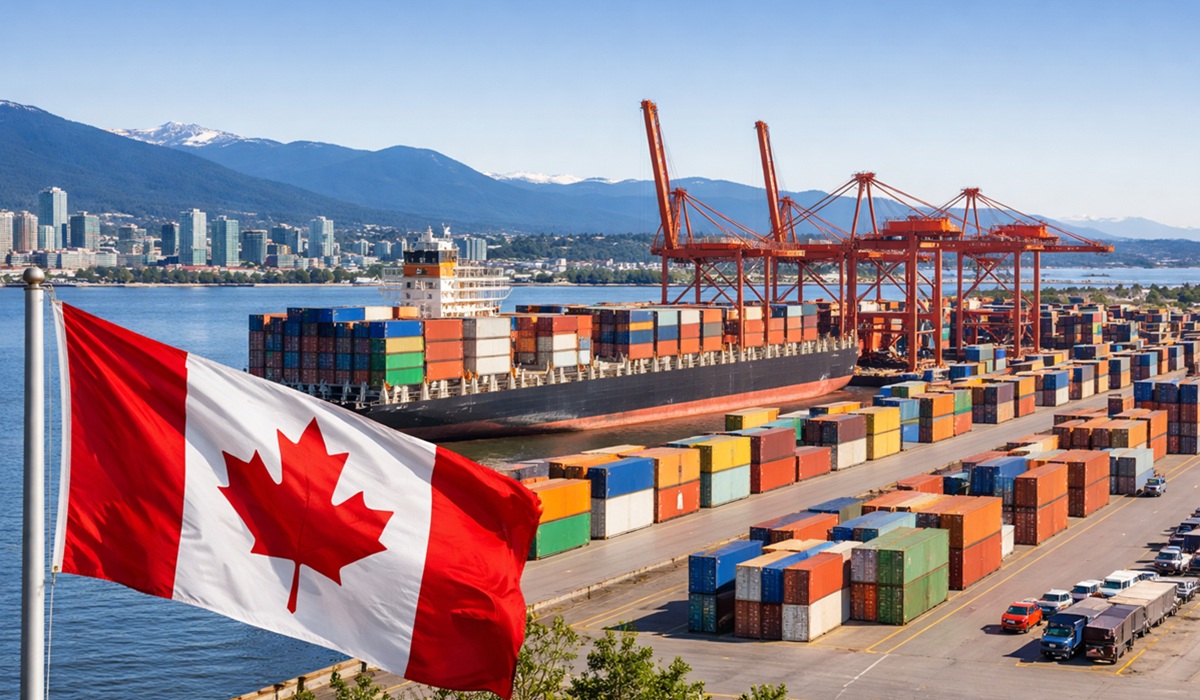
Image Credit Djedj
For years, the narrative surrounding Canada’s natural resource sector has been mired in debate, regulatory friction, and a heavy reliance on a single export market. Critics have long argued that an over-emphasis on environmental red tape stifled economic growth, leaving billions of dollars in untapped potential sitting idle while global allies scrambled for reliable energy supplies. However, the landscape is shifting. The recent binding agreement between Ksi Lisims LNG and Germany’s Uniper SE, signed in the Nisga’a Nation, marks a defining turning point. Under this multi-billion-dollar deal, the country will supply two million tonnes per annum of liquefied natural gas to Europe for up to two decades, with deliveries beginning in 2032. When combined with earlier milestones, such as the letter of intent with Germany’s SEFE, a full quarter of this massive production is now locked in for transatlantic allies. This milestone redefines economic futures, geopolitical standing, and long-term sovereignty.
Historically, the national energy export strategy suffered from a glaring vulnerability through extreme geographic concentration. For generations, producers relied almost entirely on the American market to absorb natural gas outputs. The new pact represents a masterclass in trade diversification, shifting federal projections drastically away from that old paradigm. In 2024, less than 0.01 percent of domestic natural gas exports went to non-U.S. markets, but driven by projects like Ksi Lisims, overseas destinations are projected to skyrocket to 55 percent by the early-to-mid 2030s. By securing long-term contracts with trusted European partners including Germany, the United Kingdom, Sweden, and the Netherlands, policymakers are finally insulating the economy from regional price swings, pipeline bottlenecks, and shifting foreign trade policies.
Valued at roughly $30 billion, the coastal project is set to become the second-largest liquefaction facility in the federation while redefining how major resource initiatives are developed through Indigenous partnership at the very heart of the operation. The venture is projected to contribute $15 billion directly to the gross domestic product and create thousands of well-paying careers in British Columbia, helping fund vital public infrastructure like regional schools and hospitals. Spearheaded by the Nisga’a Nation, the initiative demonstrates that economic reconciliation and resource development can and must go hand in hand.
A central argument from resource advocates has always been that if the world demands fossil fuels during the multi-decade transition to renewables, supplies should come from jurisdictions with rigorous oversight. Ksi Lisims serves as a prime example of this reality. Designed as a floating natural-gas liquefaction, production, storage, and offloading facility on the northern coast, it is engineered to be among the lowest-emission operations globally, boasting outputs 94 percent below the global average. By exporting low-carbon liquid fuel to Europe, domestic producers are actively helping displace dirtier coal and higher-emission foreign alternatives abroad, supporting international emissions targets while maintaining strict domestic standards.
Looking toward the horizon, this development signals the realization of true energy independence. Security is paramount, and by forging direct maritime trade routes to international markets, Canada is transforming from a landlocked producer captive to a single buyer into a true global energy supplier. Furthermore, it highlights a pragmatic approach to the global transition, recognizing that change will not happen overnight and that hydrocarbons remain foundational while electrification advances. Finally, the acceleration of the venture through the federal Major Projects Office and provincial review models signals a crucial government acknowledgment that the country cannot afford to let nation-building initiatives languish in bureaucratic limbo. If the region is to remain competitive on the world stage, speed to execution is just as important as regulatory rigor. Ultimately, the Uniper agreement is far more than a simple commercial contract; it is a blueprint for an economic renaissance that proves the nation can responsibly unlock its vast natural wealth, partner meaningfully with Indigenous communities, protect the environment, and deliver unmatched prosperity.
About The Author