Iran and the United States Move Closer to Wider Conflict After Naval Clashes in the Strait of Hormuz
- Hami Aziz
- Middle East
- Tiger's Eye Advisory Group - Trending News
- May 8, 2026
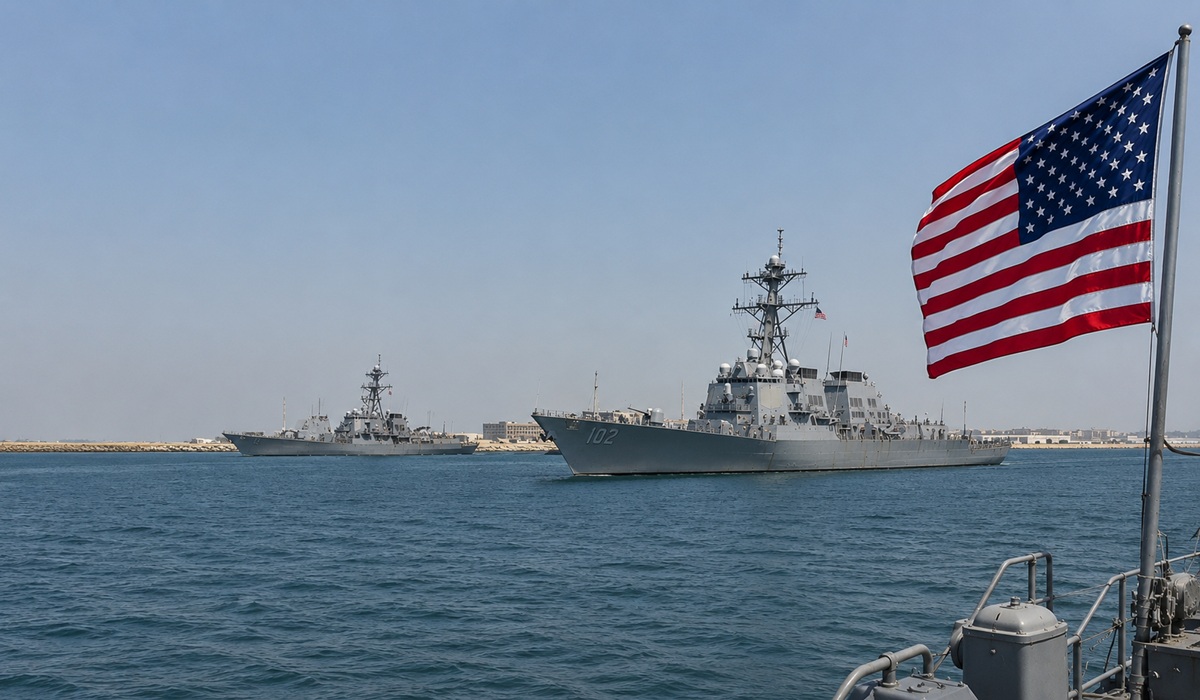
Tensions between Iran and the United States escalated dramatically this week after multiple confrontations involving American warships and Iranian military forces in the Strait of Hormuz, one of the world’s most strategically important waterways. The latest incidents have raised fears that the fragile ceasefire between both countries may be collapsing as military operations intensify across the Persian Gulf.
According to U.S. Central Command, three American destroyers, the USS Truxtun, USS Rafael Peralta and USS Mason, came under attack while operating near the Strait of Hormuz. American officials say Iranian forces launched drones, missiles and fast attack boats toward the naval vessels during what Washington described as an “unprovoked assault.” The United States responded with retaliatory strikes targeting Iranian launch sites, drone facilities and command infrastructure near Bandar Abbas and Qeshm Island.
Iran, however, is presenting a very different version of events. Iranian state media claims American forces violated the ceasefire first by targeting an Iranian tanker and conducting strikes near civilian areas along the southern coastline. Tehran argues its military actions were defensive responses to American aggression and has accused Washington of deliberately destabilizing the region while negotiations were ongoing.
The Strait of Hormuz has become the central flashpoint in the broader conflict. Nearly a fifth of the world’s oil passes through the narrow shipping corridor, making any military escalation there a direct threat to global energy markets. Over the past several weeks, shipping traffic through the region has slowed dramatically as commercial vessels, oil tankers and insurers grow increasingly concerned about the danger of being caught in crossfire.
President Donald Trump has continued defending the American military response while insisting that the broader ceasefire agreement technically remains in place. Trump warned that if Iran refuses to finalize a peace framework currently being discussed through international intermediaries, the United States would respond with “much harder” military action. Despite the aggressive rhetoric, several diplomatic channels reportedly remain active behind the scenes as regional powers attempt to prevent the situation from spiraling into full-scale war.
Part of the current tension also revolves around “Project Freedom,” a U.S.-led naval initiative designed to escort commercial ships through the Strait of Hormuz after months of disruption. The operation was temporarily paused earlier this week following diplomatic pressure and concerns from Gulf allies that the mission could trigger even larger clashes with Iran.
Meanwhile, countries throughout the Middle East are watching developments closely. Gulf nations remain deeply concerned about the possibility of regional spillover, while oil markets continue reacting sharply to every military exchange or diplomatic statement. Brent crude prices have already experienced significant volatility as traders attempt to determine whether the confrontation is moving toward de-escalation or something far more dangerous.
What makes the current crisis particularly unstable is that both Washington and Tehran appear unwilling to back down publicly, yet neither side seems eager to launch a full invasion or prolonged regional war. Instead, the conflict is increasingly unfolding through naval confrontations, airstrikes, economic pressure and strategic posturing around one of the world’s most important maritime choke points.
For now, the situation remains highly unpredictable. Diplomatic negotiations continue quietly in the background, but each new military exchange increases the possibility that a contained confrontation in the Persian Gulf could evolve into a much broader international crisis.
About The Author