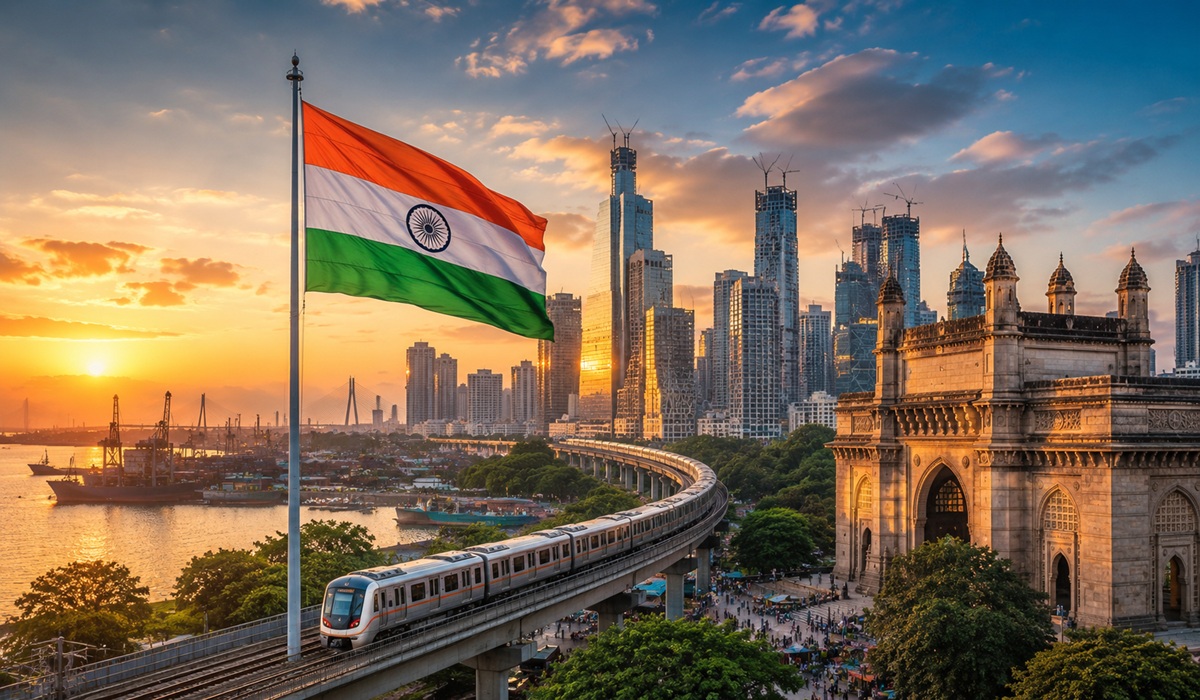
India is increasingly positioning itself as one of the most influential economic powers of the modern era, and the shift is becoming impossible for the rest of the world to ignore. What was once viewed primarily as a developing economy with enormous potential is now evolving into a manufacturing, technology and geopolitical heavyweight capable of competing directly with major global powers.
Much of that growth is being driven by aggressive infrastructure expansion and industrial investment. Across the country, billions of dollars are being poured into highways, rail corridors, airports and port systems designed to modernize trade and transportation networks. Large-scale manufacturing zones are also expanding rapidly as international companies search for alternatives to China amid rising geopolitical tensions and supply-chain concerns.
Apple, for example, continues moving a larger percentage of iPhone production into Indian factories. What began as a small diversification effort several years ago has grown substantially, with analysts estimating that a significant portion of global iPhone assembly could eventually shift there over the next decade. Electronics manufacturing overall has surged as companies seek lower geopolitical risk and access to one of the world’s fastest-growing consumer markets.
The country’s technology sector also continues expanding at an extraordinary pace. Cities like Bengaluru, Hyderabad and Pune have evolved into major innovation hubs filled with software firms, artificial intelligence startups and engineering talent. Indian-born executives now lead several of the world’s largest technology companies, reinforcing the country’s growing influence in the global digital economy.
Prime Minister Narendra Modi’s government has leaned heavily into this economic transformation, promoting domestic manufacturing through initiatives aimed at reducing import dependence and strengthening industrial output. Programs encouraging semiconductor production, renewable energy development and defense manufacturing are all part of a broader strategy to make the country less reliant on foreign suppliers in key sectors.
At the same time, the economy continues benefiting from demographic advantages that many Western nations no longer possess. With one of the world’s youngest populations, the labor force continues growing while countries across Europe and parts of East Asia struggle with aging populations and workforce shortages. That demographic strength gives the country a major long-term advantage if employment growth and infrastructure development continue keeping pace.
Agriculture remains another major pillar of the economy despite rapid urbanization. Recent discussions surrounding sugar exports highlighted the government’s confidence in domestic supply stability even amid fluctuating global demand. Meanwhile, agricultural modernization programs aimed at improving irrigation, storage and food processing continue receiving major investment.
Geopolitically, the country is also becoming far more assertive. Rather than aligning itself fully with either Western powers or rivals like Russia and China, New Delhi has increasingly pursued a strategy centered on strategic independence. That balancing act has allowed it to maintain strong energy and defense relationships with Moscow while simultaneously strengthening economic and military ties with the United States and Europe.
There is also a visible sense of national confidence that has intensified over the past decade. Large-scale infrastructure projects, growing military modernization and ambitious space initiatives have all contributed to a broader narrative that the country is no longer simply participating in the global economy, but actively shaping it. Successful lunar missions and expanding space research capabilities have reinforced that perception domestically and internationally.
However, major challenges still remain. Income inequality continues to affect millions, particularly between rapidly modernizing urban centers and poorer rural regions. Pollution, overcrowding and water access remain serious concerns in several major cities. Critics have also raised concerns about democratic freedoms, religious tensions and press independence under the current political climate.
Even so, the overall trajectory remains difficult to dismiss. While many developed economies are consumed by political division, stagnant growth and rising debt, India continues projecting expansion, confidence and long-term ambition. The conversation is no longer about whether the country will become a global giant someday. Increasingly, the debate is about how much influence it will ultimately wield once this transformation fully matures.
About The Author