A $3.5 Million War Chest and a Fractured Opposition: Why All Signs Point to an Early Manitoba Election
- TDS News
- Breaking News
- November 13, 2026
By: Donovan Martin Sr, Editor in Chief
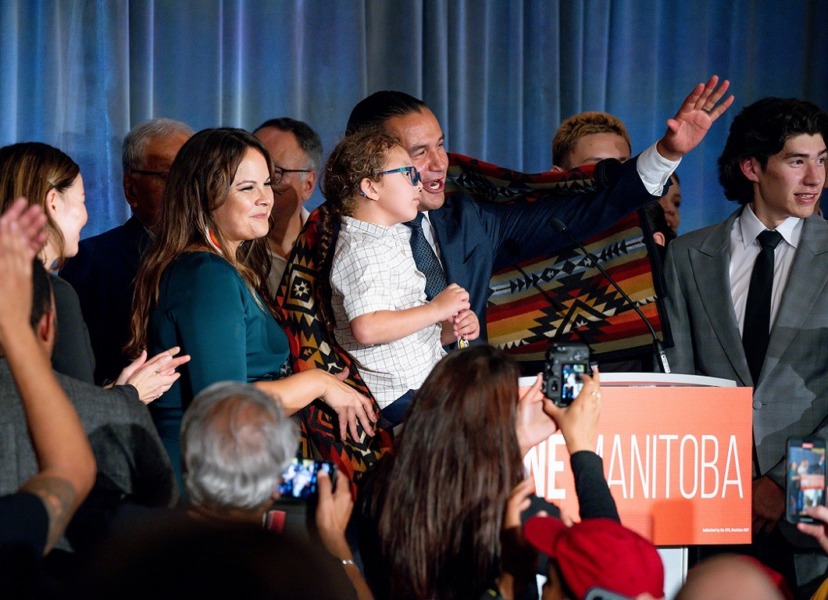
When the Manitoba New Democratic Party (NDP) kicked off its 2026 convention in Winnipeg this Friday, the official line was about celebrating three years of governance, debating policy, and looking ahead to the scheduled October 2027 provincial vote. Read between the lines of the opening press release, however, and a very different picture emerges. With more than 400 delegates registered, a sold-out Saturday gala dinner of 800 attendees, and a massive $3.5 million sitting in the campaign war chest alongside a ready slate of candidates, Premier Wab Kinew is not merely preparing for a distant autumn campaign. He is signalling that the governing party is locked, loaded, and positioned for an early election call that could deliver an expanded majority.
In politics, timing is everything, and rarely does an incumbent government find the provincial chessboard arranged so favorably. Since taking office in 2023, Kinew has maintained remarkably strong personal popularity. Voters view him as approachable, likable, and trustworthy, qualities that continue to insulate his administration even when policy files hit rough waters. Every election cycle brings its share of seat turnovers, with expected gains and unexpected losses across the map, yet the overarching trajectory for the Manitoba NDP points toward a second consecutive majority mandate. Barring an unforeseen catastrophe, it is difficult to imagine the governing party imploding the way their counterparts in British Columbia recently did. For Kinew, the runway ahead looks remarkably clear.
What makes an early election call almost irresistible for New Democrat strategists is the utter disarray across the aisle. Right now, Manitoba does not have a competitive three party system. It barely has a functional two party race.
The Progressive Conservative Party of Manitoba is in complete shambles. Just six weeks ago, in late September, Obby Khan resigned as party leader and walked out of the caucus to sit as an independent MLA for Fort Whyte, citing toxic internal feuding and a lack of moral integrity among a faction of his own members. Khan lasted barely seventeen months at the helm, leaving the Official Opposition leaderless and forcing La Vérendrye MLA Konrad Narth into an interim caretaker role. Inside the Tory ranks, the atmosphere resembles a revolving door of infighting, suspended board directors, and departing campaign staff.
Worse still for the Tories, they shot themselves squarely in the foot on the financial front. Financial filings with Elections Manitoba revealed that the party spent the last couple of years digging out from a deep deficit while lagging badly behind the NDP in fundraising. In a self inflicted wound that political observers will study for years, the party alienated and drove away its single largest financial backer, former leadership runner up Wally Daudrich, who quit the Progressive Conservatives to join the rival Keystone Party. A great deal of the blame for that organizational and financial collapse lands squarely on Khan’s chaotic tenure as leader. With weak coffers, no permanent captain on the bridge, and a fractured base, the Tories are completely unprepared to fight a province wide campaign tomorrow. For the NDP, holding $3.5 million in the bank while the opposition scrambles to keep the lights on makes dropping the writ early an obvious tactical play.
Meanwhile, the Manitoba Liberal Party remains a non factor on the provincial stage. Holding just a single seat in the 57 seat legislature, the Liberals have become the ultimate political non playable character. Provincially, the Liberal brand carries almost no currency with Manitoba voters, and political insiders would be genuinely surprised if the party manages to hold onto even that lone seat whenever ballots are next cast. That reality leaves voters with a stark binary choice between Kinew’s well oiled machine and a Tory party busy fighting itself.
None of this means Kinew’s government is without serious vulnerabilities. If there is an Achilles heel that could slow the NDP’s momentum, it remains healthcare. Fixing the province’s strained medical system was the cornerstone of the party’s 2023 victory, yet emergency room wait times remain stubbornly long and front-line pressures persist. While voters appreciate the government’s focus on affordability and healthcare investments, patience is not infinite, and the premier knows he needs to show more tangible progress before frustration hardens into cynicism.
Equally troubling is the state of Manitoba’s capital city. Winnipeg is a municipality visibly struggling under the weight of compounding crises. Homelessness and severe drug addiction have reached levels that many residents describe as beyond livable, hollowing out core neighborhoods and straining social services to the breaking point. Yet in last month’s municipal election, an apathetic electorate returned Mayor Scott Gillingham to office with less than forty percent of the vote on an abysmal voter turnout of roughly 37.9 percent.
To be frank, Gillingham’s first term offered little evidence that he knows how to govern, motivate, or lead a major Canadian city through a generational crisis. While civic boosters might wish for a sudden turnaround in his second term, expecting bold transformation from City Hall is wishful thinking. Because Winnipeg’s fortunes dictate the economic and social health of the entire province, Kinew cannot afford to sit back and let municipal paralysis drag down his administration as day by day, Winnipeg has remnants of Detroit, Michigan. The premier needs to take firmer control of the reins in Winnipeg, stepping in with decisive provincial intervention on addiction treatment, mental health beds, and street-level safety rather than waiting on a mayor who lacks the vision to turn the ship around.
Inside the Manitoba Legislative Building, Kinew has demonstrated a fascinating blend of public warmth and private iron discipline. Over the past three years, several cabinet ministers have created unnecessary distractions for the government through unforced errors and clumsy messaging. Critics have occasionally wondered whether the premier gives his ministers, MLAs, and federal counterparts too long a rope. Yet those who watch the inner workings of the administration closely know that behind closed doors, Kinew governs with a firm hand. When election season arrives, dissent evaporates and every member of the caucus falls cleanly into line.
At the end of the day, voters judge a leader on overall competence and direction, and Kinew has done a remarkably solid job steering the province. He remains the right premier for Manitoba at this moment in its history, blending genuine empathy with pragmatic governance.
Historically, provincial governments in Manitoba tend to enjoy roughly a ten year lifespan before voter fatigue sets in. Assuming Kinew capitalizes on the opposition’s weakness, calls an early vote, and coasts into a second majority administration, he will easily have another term and a half to cement his legacy at home. Beyond that horizon, however, lies a much larger question. Federal New Democrats have spent years searching for a leader capable of recapturing the working class appeal, charisma, and national momentum that Jack Layton once commanded. If there is a single political figure in Canada today equipped to pick up where Layton left off on the national stage, Wab Kinew is the only one who fits the bill. First, however, he has a $3.5 million war chest to deploy and a second Manitoba majority to lock down.
About The Author