By: Donovan Martin Sr, Editor in Chief
Digital Image Composite
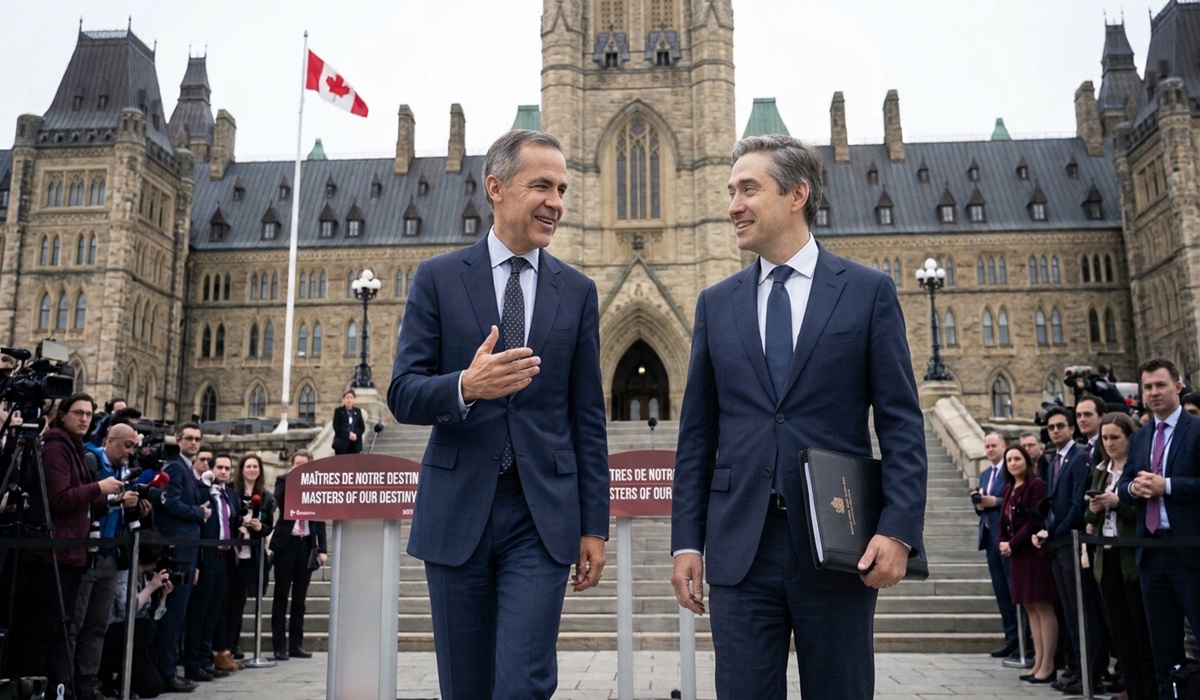
The federal government unveiled its latest financial roadmap in Ottawa yesterday, sparking intense debate from coast to coast. Titled the ambitious Masters of our Destiny, the federal budget arrived amid global economic friction, ongoing cost-of-living pressures, and sharp domestic political divisions. At its core, the massive plan attempts to perform a delicate balancing act by pouring billions of dollars into economic growth, clean energy, and housing while simultaneously trying to reassure international markets and fiscal hawks that the national treasury remains under prudent management. For everyday citizens trying to navigate inflation and elevated interest rates, the document represents a profound declaration of federal priorities, complete with direct affordability supports, major structural tax modifications, and expansive industrial subsidies.
The bottom line of any federal budget begins with the deficit, and the figure presented yesterday quickly became the central flashpoint of the entire release. Ottawa projected a federal deficit of sixty-two billion dollars, a substantial gap driven by escalating borrowing costs, defence commitments, and sweeping strategic investments aimed at kickstarting a nationwide investment supercycle. Finance Department officials emphasized that despite the heavy spending, key fiscal anchors remain intact, pointing to steady economic growth figures that outpace many peer nations as proof that the underlying strategy is working. Government ministers argued passionately that the massive outlays are essential fuel for long-term productivity, framed around targeted tax deductions for business investment and funding for major infrastructure projects. However, economic analysts swiftly noted that strong revenue windfalls were matched almost dollar for dollar with new spending obligations rather than being set aside to pay down existing debt. This dynamic has left financial experts debating whether the federal government is properly preparing the country for potential external economic shocks down the road.
Reaction from political opponents in the House of Commons was instantaneous and unrelenting. Official Opposition leaders wasted no time launching a scathing critique of the financial package, characterizing the multi-billion-dollar deficit as proof of fiscal recklessness that will inevitably prolong inflationary pressures for Canadian families. Conservative spokespeople argued that the administration has continually failed to exercise spending discipline, pointing out that national debt servicing costs are swallowing up resources that could otherwise be directed toward core public services. Opposition members also zeroed in on federal immigration and temporary resident targets outlined in the plan, accusing the government of failing to align population growth with the physical realities of the housing market and healthcare infrastructure. On the other end of the political spectrum, progressive voices expressed deep skepticism regarding the budget’s reliance on private capital incentives, asserting that the framework leans too heavily on corporate tax breaks rather than immediate, aggressive public expansion of social safety nets.
Across the provinces, reactions from provincial leaders proved far more nuanced, creating an intriguing landscape of regional alignment and vocal dissent. Several provincial leaders commended Ottawa for making long-overdue commitments to energy projects, natural resource extraction, and critical minerals development. Leaders in resource-rich provinces praised federal incentives designed to streamline project approvals and expand clean electricity infrastructure, with some declaring the plan one of the most practical federal frameworks delivered in years. Yet, that praise was tempered by familiar jurisdictional friction. Multiple provincial leaders expressed frustration over the perceived lack of direct, unconditional transfers for healthcare systems and regional infrastructure maintenance. Premier after premier noted that while grand national strategies sound promising on paper, municipal and provincial authorities remain on the front lines of housing shortages, emergency room wait times, and road repairs, requiring reliable revenue streams rather than targeted federal initiatives burdened with restrictive conditions.
Beyond the political rhetoric and high-level macroeconomic figures lies the fundamental question of what this comprehensive budget actually means for Canadians in their daily lives. For workers, families, and business owners, the impact will be felt through a combination of direct financial relief and major bureaucratic modernizations. A cornerstone of the human-centric policy push involves eliminating what policy analysts describe as the time tax—the cumbersome administrative burden associated with personal finances and annual tax compliance.In a significant shift that will reshape the calendar for millions of filers, the federal government moved the annual income tax filing and balance-due deadline to mid-May for all individuals, consolidating separate cutoffs for regular employees and self-employed workers into a single date.Officials project this extension will save taxpayers hundreds of millions of dollars in late-filing interest and penalties over the coming years while giving households additional time to gather documentation.
Furthermore, the tax system is undergoing a series of practical simplifications aimed at easing administrative friction for households and small enterprises.Canadians will soon have access to optional flat-rate calculation methods for several common personal deductions and credits, eliminating the tedious obligation to collect and retain physical paper receipts for routine expenses.Small-business operators and independent professionals will also benefit from adjusted tax instalment rules, allowing many to make a single annual payment at the end of the calendar year rather than navigating complex quarterly calculations.Furthermore, the window to contest assessments with the revenue agency has been expanded significantly, granting taxpayers up to a full year to resolve disputes without navigating complex extension applications.These structural tweaks, combined with increased deposit insurance protections and modernized anti-fraud measures across financial institutions, aim to provide everyday consumers with greater financial security and peace of mind.
On the housing front, the budget introduces tailored mortgage insurance rule adjustments designed to incentivize the construction of medium-density housing developments, alongside ongoing funds dedicated to heat pump retrofits and community building. By attempting to unblock supply chains and incentivize home construction, Ottawa hopes to alleviate the severe affordability crisis that has priced an entire generation out of real estate ownership. Parents across the country will also see continued federal stabilization funding aimed at protecting affordable national childcare structures, ensuring that early learning spaces remain financially accessible while supporting higher workforce participation rates.
Ultimately, yesterday’s budget represents a monumental fiscal blueprint that attempts to redefine Canada’s economic positioning in an increasingly turbulent world. By pouring massive resources into productivity, green transformation, and defence, the administration is betting heavily that long-term structural growth will generate enough economic capacity to manage the immense deficit. Whether this ambitious gamble pays off will depend entirely on how effectively these investments translate into tangible economic opportunities, lower living costs, and improved public services.For now, Canadians are left to weigh the immediate benefits of simplified tax processes and targeted financial supports against the lingering uncertainty of a heavy national debt load that future generations will eventually be called upon to manage.
About The Author