An Unbroken Lineage of Leadership Rewriting the American Political Landscape
- TDS News
- Breaking News
- Indigenous
- November 4, 2026

By: Donovan Martin Sr, Editor in Chief
The story of American democracy has long been written in the margins of those who were here first, yet the ballot box has rarely reflected the ancestral depth of the land itself. For centuries, Native American women have carried the governance, culture, and survival of their communities on their shoulders, acting as tribal leaders, matriarchs, community organizers, and quiet architects of resilience, often without the formal recognition or power granted by the United States government. Across generation after generation, indigenous women fought not merely for the right to vote, but for the fundamental acknowledgement of their sovereignty and humanity within a federal system that systematically attempted to erase them. To understand the profound weight of this year’s midterm elections is to understand this long, grueling arc of history, a timeline marked by institutional barriers, broken treaties, and an unyielding refusal to be silenced. When the polls closed and the final returns were tallied across the nation, two monumental victories emerged as seismic shifts in the political landscape, signaling a transformative era where indigenous leadership moves from the grassroots to the highest halls of state and federal power. In Minnesota and New Mexico, voters chose to break centuries of precedent, electing Peggy Flanagan as the first Indigenous woman to serve in the United States Senate from Minnesota and Deb Haaland as the first Indigenous woman elected governor of New Mexico. These watershed moments are not accidental anomalies or sudden turns of luck; they represent the culmination of decades of strategic organizing, deep community trust, and the undeniable force of two women whose personal histories are inextricably bound to the heritage, struggles, and triumphs of their ancestors.
In Minnesota, the election of Peggy Flanagan to the United States Senate represents a powerful reckoning with the past and a bold promise for the future. Flanagan, a citizen of the White Earth Band of Ojibwe, has long walked in two worlds with a grace and determination that have defined her entire professional life. Born and raised in Minnesota, her journey to the floor of the United States Senate was forged in the fires of community advocacy, childhood hardship, and a profound commitment to making marginalized voices heard in spaces where they were historically ignored. Raised by a single mother in a modest household, Flanagan experienced firsthand the structural inequities that affect working-class families and Native communities, from food insecurity and housing instability to the systemic gaps in public education and healthcare. Rather than allowing these challenges to instill a sense of defeat, they ignited in her a lifelong passion for public service and grassroots mobilization. She earned her degree in child development and American Indian studies from the University of Minnesota, setting the foundation for a career that seamlessly blended policy, advocacy, and cultural identity. Long before she ever stepped onto a campaign stage, Flanagan was a revered community organizer, working tirelessly with Wellstone Action to train thousands of progressive activists, women, and people of color across the state to run for office and transform their neighborhoods from the ground up.
Her transition into electoral politics was marked by an authentic, relational style of leadership that prioritized listening over grandstanding. Flanagan served as an executive director of Children’s Defense Fund Minnesota, where she championed policies aimed at eradicating child poverty, expanding access to early education, and protecting vulnerable families. When she was elected to the Minnesota House of Representatives in 2015, representing St. Louis Park, she immediately stood out as a coalition builder who could bridge urban and rural divides while keeping tribal sovereignty and native youth at the forefront of her policy agenda. Her talent and relentless drive quickly caught the attention of statewide leaders, leading to her historic selection as Lieutenant Governor of Minnesota in 2018 alongside Governor Tim Walz. As the highest-ranking Native American woman in statewide executive office in U.S. history at the time, Flanagan used her platform to advocate for indigenous communities, ensuring that tribal nations were treated as true government-to-government partners in state affairs. She brought a mother’s care, an advocate’s urgency, and an Ojibwe woman’s worldview to state governance, championing paid family leave, mental health funding, tribal consultation laws, and environmental protections for sacred waters and lands.
Her campaign for the United States Senate was a natural, albeit historic, progression of a life dedicated to breaking barriers. Running against formidable political headwinds and intense national scrutiny, Flanagan grounded her platform in the core values of her heritage: stewardship, interconnectedness, and accountability to future generations. She spoke directly to working families across Minnesota, connecting the struggles of rural farmers and urban workers with the ongoing efforts of tribal nations to protect their natural resources and preserve their cultural legacies. Her victory as the first Indigenous woman elected to the United States Senate from Minnesota is more than a personal milestone; it is a deeply symbolic and practical turning point for national legislative politics. When she steps onto the Senate floor, she brings with her the collective wisdom of her elders, the lived experience of a working mother, and an acute understanding of how federal legislation directly impacts tribal lands, environmental policy, and the everyday lives of everyday people. Her presence in the Senate guarantees that indigenous perspectives will no longer be an afterthought or a token inclusion in federal debates, but a driving force in shaping the nation’s laws, judicial appointments, and moral vision.
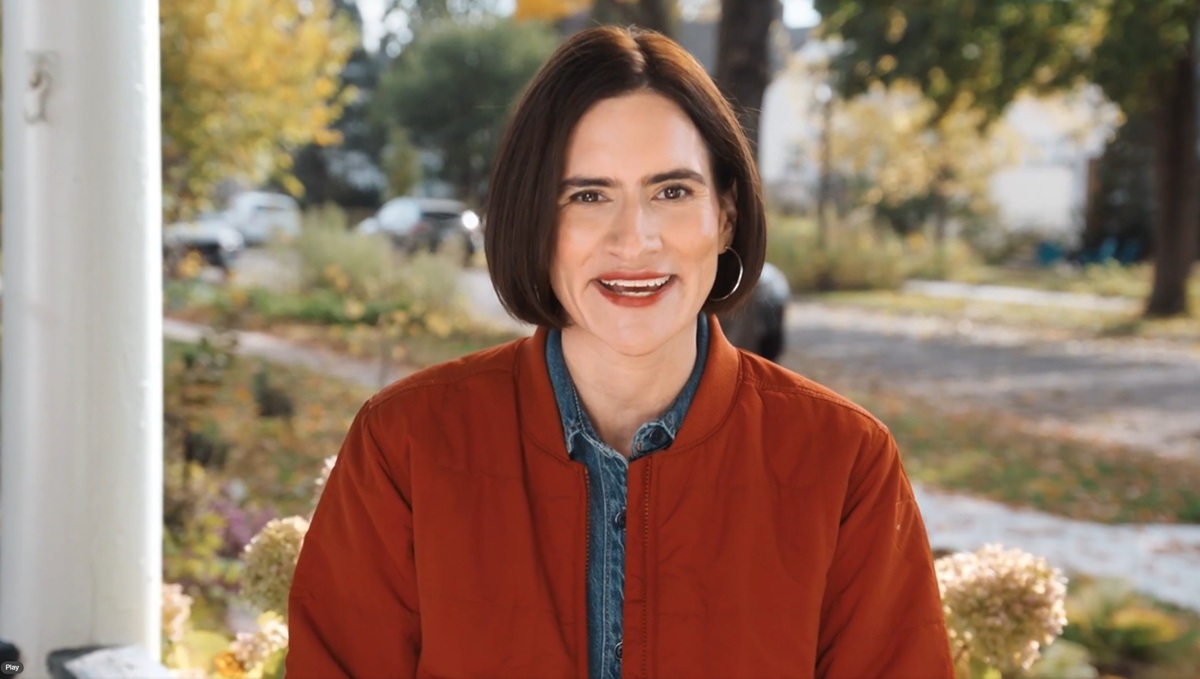
Farther southwest, in the high deserts and ancient red rocks of New Mexico, another historic mandate was delivered that resonated across Indian Country and the entire nation. Deb Haaland, a member of the Pueblo of Laguna with 35th-generation New Mexican roots, won a decisive victory to become the first Indigenous woman elected governor of New Mexico. Haaland’s path to the governor’s mansion is a story of grit, survival, and an unwavering connection to the land and people that sustained her ancestors for centuries. Raised in a military family, her father was a decorated Marine Corps officer and her mother served in the Navy—Haaland moved frequently as a child, learning adaptability while remaining deeply anchored to her Pueblo culture, traditions, and family matriarchs. Like many single mothers in America, her adult life was defined by hard work, financial struggle, and perseverance. As a young mother raising her daughter on her own, Haaland put herself through college and law school while running a small business selling salsa and navigating periods of housing insecurity and relying on food stamps to get by. These personal trials did not harden her; instead, they cultivated a profound sense of empathy and a deep, intuitive understanding of the safety nets and structural supports that working families desperately need to thrive.
Haaland’s political trajectory was built from the soil up, starting at the lowest levels of grassroots party work. She began by volunteering on political campaigns, knocking on doors, making phone calls, and driving voters to the polls in remote tribal communities where political engagement was often overlooked by traditional party machinery. Her ability to organize and mobilize native voters earned her national respect and led to her election as the chair of the Democratic Party of New Mexico in 2015, where she successfully rebuilt the party infrastructure, flipped legislative seats, and dramatically increased voter turnout across tribal lands. In 2018, Haaland made national headlines when she was elected to the United States House of Representatives, becoming one of the first two Native American women ever to serve in Congress. In Washington, her relentless work ethic and deep expertise in public lands, water rights, and tribal affairs quickly distinguished her. This momentum culminated in her historic appointment as the United States Secretary of the Interior, making her the first Native American cabinet secretary in American history. In that role, she oversaw the vast agency that had once been used as a tool of displacement and assimilation against her own people, fundamentally shifting its mission toward conservation, climate resilience, renewable energy development, and honoring federal treaty responsibilities.
Her election as governor of New Mexico represents the fulfillment of a journey that brings her back to the very state where her roots run deeper than the nation itself. Running on a comprehensive platform focused on clean energy transition, public education funding, healthcare expansion, and economic development that honors cultural preservation, Haaland built a broad coalition of urban, rural, and tribal voters. Her campaign spoke directly to the core challenges facing New Mexico, from water scarcity and climate change to economic inequality and rural infrastructure needs. By winning the governorship, Haaland breaks one of the most stubborn glass ceilings in American state politics, proving that an indigenous woman whose ancestors lived on the land for thirty-five generations is uniquely equipped to steward that state into a sustainable and prosperous future. Her executive leadership in Santa Fe will offer a powerful model for state governance, demonstrating how environmental justice, tribal sovereignty, economic growth, and cultural dignity can align to uplift an entire state’s population.
Together, the historic victories of Peggy Flanagan and Deb Haaland signal a permanent shift in the architecture of American political power. For over two centuries, decisions affecting indigenous lands, waters, families, and sovereignty were made in rooms where native people were entirely absent, treated as relics of the past rather than living partners in the present. By stepping into the United States Senate and the office of the Governor, Flanagan and Haaland are dismantling those historic exclusions and reshaping the national narrative. Their elections are not merely victories for diversity or representation for representation’s sake; they bring distinct worldviews, grounded in intergenerational responsibility and community accountability, into executive and legislative chambers where long-term vision is desperately needed. As young Native girls and young women across the country look to Minnesota and New Mexico today, they no longer have to imagine whether someone who looks like them, shares their culture, and knows their history can reach the highest levels of governance. The door has been opened wide, pushed open by two extraordinary leaders whose journeys remind us that when indigenous women lead, the benefits reach far beyond tribal borders to enrich the democratic fabric of the entire nation.
About The Author