Unanswered Questions at the North End Plant: Accident, Overcapacity, Deliberate or Systemic Failure?
- TDS News
- Canada
- November 4, 2026
By: Donovan Martin Sr, Editor in Chief
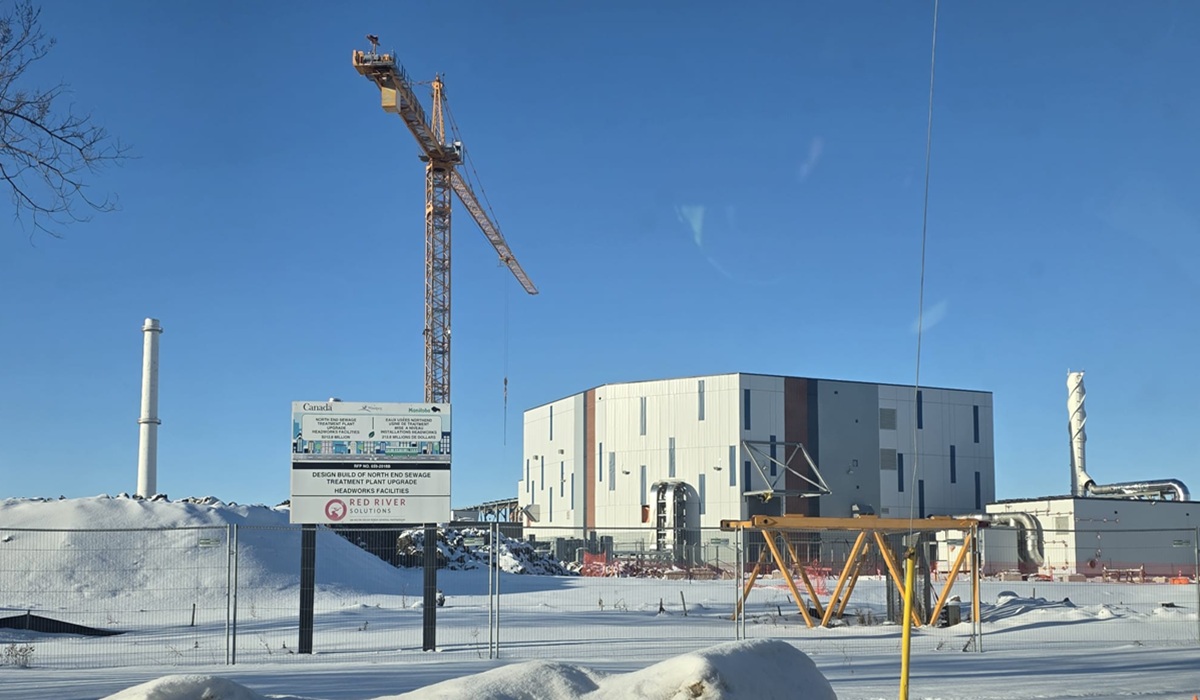
When nearly ten million litres of raw, untreated wastewater pour directly into the Red River, the official explanation from City Hall is remarkably neat. We are told that two automated bypass gates at the North End Water Pollution Control Centre opened unexpectedly in the middle of the night, that primary alarms mysteriously failed to register the event, and that the spill was only halted after secondary sensors elsewhere in the facility caught a shift in overall flow. It is presented to the public as a freak, automated malfunction, a unfortunate combination of digital hiccups and silent sensors. But for a city that has watched its rivers turned into default spillways time and after time, that explanation falls flat. In heavy industrial engineering, gates of this magnitude do not simply glide open on a whim. The mechanics of massive wastewater isolation and bypass gates are built upon heavy physical resistance, complex motorized actuators, and rigid safety protocols. To believe that two independent, heavy-duty automated gates opened simultaneously without a command signal, operated in complete silence, and then abruptly stopped spilling after almost three hours requires an extraordinary leap of faith. The public is being asked to accept a narrative of spontaneous mechanical failure, but the technical realities of municipal utility engineering suggest a far more troubling set of questions that City Hall has yet to answer.
To understand why the “spontaneous accident” narrative raises so many red flags, one must look at how municipal wastewater control systems are actually designed and built. In facilities like the North End Water Pollution Control Centre, bypass gates are not light valves controlled by a single flick of a switch. They are massive, heavy-duty steel barriers driven by high-torque electric or hydraulic actuators designed to hold back immense pressure head from millions of gallons of daily influent. Opening a bypass gate requires a deliberate sequence of mechanical and electrical events: an output signal from a programmable logic controller, the activation of motor starters, the physical disengagement of mechanical brakes, and the sustained application of power to turn massive drive screws or actuate heavy hydraulic rams. Furthermore, industrial control environments are engineered under strict fail-safe principles. If a controller loses power, if communications drop, or if a software glitch occurs, critical bypass gates are designed to fail in a closed or secure position to prevent environmental contamination. For two separate gates to actuate open in unison, a specific, multi-step sequence of operational instructions had to reach those actuators.
Beyond the physical movement of the gates, the total silence of the facility’s monitoring systems during the event strains credibility. Industrial processing plants utilize Supervisory Control and Data Acquisition (SCADA) networks engineered with multi-layered telemetry and redundant alarm loops. When a gate leaves its fully closed position, physical limit switches and digital position transmitters immediately trip hardwired state changes. These switches do not rely on complex software logic; they are direct, physical indicators designed to immediately alert operators via prominent visual and audible alarms on main control room dashboards. Yet, according to official reports, no primary alarm was triggered when the gates opened. The spill ran unchecked from 1:10 a.m. until 3:47 a.m., ending only after staff investigated an indirect alarm triggered by flow variances elsewhere in the plant. How does a primary position limit switch fail on two separate gates at the exact same moment that the gate actuators unexpectedly energize? How does an entire control network overlook the physical displacement of major environmental barriers for over two and a half hours?
Because the official explanation relies on a cascade of statistical impossibilities, critical observers are forced to ask the uncomfortable question that municipal officials are dodging: was this discharge truly a computer glitch, or was it an operational emergency brought on by a complete lack of capacity? Heavy rainfall, sudden influent surges, or internal process bottlenecks can put immense hydraulic pressure on an aging facility. When an operational basin reaches maximum capacity, plant operators face a nightmare scenario: allow raw sewage to back up into city streets and residential basements, or relieve the pressure head by utilizing bypass gates to release untreated waste into the river. If the plant was overwhelmed and staff had to relieve hydraulic pressure to avert a catastrophic backup inside the facility, calling it an “unexpected automatic failure” becomes a convenient shield against regulatory wrath and public fury.
The arithmetic of the event only deepens the skepticism surrounding the official timeline. City reports state that approximately 9.8 million litres spilled before the gates were closed. In a dynamic hydraulic environment where untreated sewage flows at fluctuating rates depending on the hour of the night, a discharge that cleanly stops right at the ten-million-litre mark appears remarkably calculated. Was this volume the exact amount of excess volume required to bring internal tank levels back down to a manageable threshold? Did the system magically self-correct at nearly ten million litres, or was the gate opened precisely long enough to relieve an overcapacity emergency and then shut down once the immediate threat to internal plant infrastructure had passed? The public deserves access to raw SCADA event logs, hydraulic basin level records, and operator action logs from that night to verify whether human intervention or capacity pressures played a role.
This recurring nightmare points directly to the long-standing, structural failure in how Winnipeg manages its major capital projects. For years, citizens have watched the estimated cost of upgrading the North End Water Pollution Control Centre balloon toward an eye-watering $3 billion, making it the most expensive infrastructure project in the city’s history. Taxpayers have poured billions into wastewater management, yet they are left with a vulnerable, glitch-prone facility that repeatedly fails environmental standards. Much of this fiscal and operational disaster stems from the city’s reliance on complex, open-ended design-build contracts and heavy procurement outsourcing. Rather than retaining direct oversight, rigid fixed-price structures, and in-house engineering accountability, open-ended design-build frameworks allow costs to surge while shifting operational risk away from contractors and onto the public balance sheet.
The systemic flaws of this contracting approach have not gone unnoticed by local critics. Former mayoral candidate Don Woodstock forcefully raised this exact concern, arguing that the city’s reliance on external contractors to design and execute critical projects like the North End sewage plant strips Winnipeg of essential oversight. Woodstock noted that if the city moved away from hiring outside firms for major designs and instead managed engineers directly under properly structured, tightly tendered contracts without open-ended provisions, Winnipeg would not find itself trapped in an endless cycle of skyrocketing budgets and failing infrastructure. When municipal mega-projects are delivered through sprawling, multi-layered design-build models, accountability becomes diffuse. The city blames the software contractors, the contractors blame the equipment manufacturers, and the public is left holding the bill for a multi-billion-dollar facility that cannot even keep its own bypass gates shut at two in the morning.
While City Hall manages public relations and debates contract structures, the real-world consequences of these massive sewage dumps wash downstream. A release of nearly ten million litres of raw sewage introduces massive loads of harmful pathogens, ammonia, nitrates, and pharmaceutical contaminants directly into the Red River ecosystem. The aquatic life in the Red River, already stressed by decades of municipal discharges, faces acute toxicity spikes that disrupt fish habitats and degrade water quality for miles. Further downstream, First Nations communities that rely on the Red River and Lake Winnipeg for traditional harvesting, fishing, and cultural practices bear the brunt of City Hall’s operational failures. Dumping millions of litres of untreated human waste into a shared waterway violates basic principles of environmental stewardship and compromises the rights of Indigenous communities who have demanded clean water and respectful river management for generations.
Ultimately, the political responsibility for this ongoing crisis lands directly on the desk of Mayor Scott Gillingham. As the head of council, Mayor Gillingham presides over an administration that continues to offer passive explanations for catastrophic environmental failures. It is not enough for the Mayor’s office to express disappointment, order a routine internal review, and wait for the news cycle to move on. Winnipeggers are paying record amounts for water and waste utilities while watching their capital city function like a municipality incapable of managing basic plumbing. Mayor Gillingham must answer the hard questions that City Hall seems eager to gloss over: Was this facility truly out of capacity? Why did fail-safe redundancies fail to operate? And why should taxpayers continue to fund open-ended, multi-billion-dollar infrastructure contracts when the end result is millions of litres of raw sewage floating down the Red River?
About The Author