Scott Colom Wins Historic Mississippi Senate Race After Eight-Day Count
- Kingston Bailey
- Breaking News
- November 12, 2026
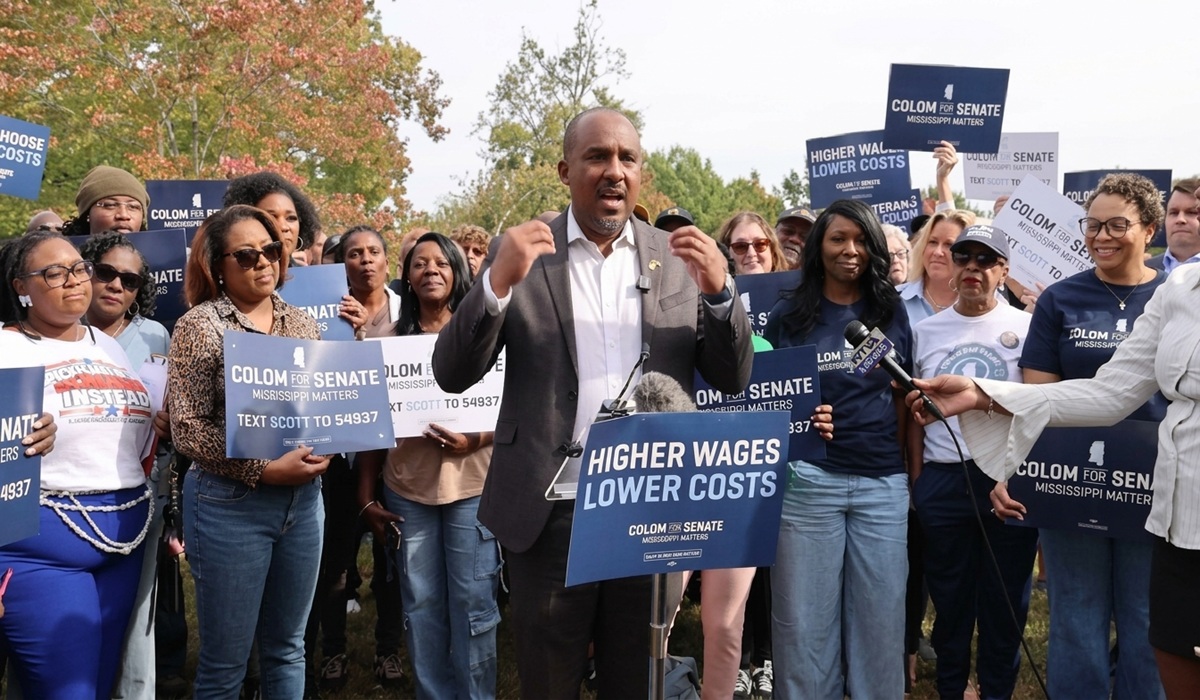
JACKSON, Miss. — Eight days after the polls officially closed, the grueling U.S. Senate race in Mississippi reached its historical conclusion as Democratic candidate Scott Colom unseated Republican incumbent Cindy Hyde-Smith. The Associated Press called the election after a long, meticulous count of affidavit and absentee ballots that saw Colom build an unassailable lead of roughly 2,500 votes, finishing with 49.1% to Hyde-Smith’s 48.8%. The victory marks a monumental shift in Southern politics, delivering the state its first Democratic U.S. senator in 44 years and its first Black U.S. senator since the Reconstruction era ended over a century ago.
Colom, a district attorney from Columbus, Mississippi, becomes only the third Black senator to represent the state in Washington. The previous two, Hiram Revels and Blanche K. Bruce, were elected by the state legislature during Reconstruction in the 1870s. Not since 1874 has a Black candidate won a U.S. Senate seat in Mississippi, making Colom the first Black senator elected by popular vote in the state’s history. Furthermore, no Democrat had captured a Senate seat in Mississippi since John C. Stennis won reelection in 1982. Colom’s win shatters a decades-long Republican stronghold and signals a dramatic realignment in a state long considered politically immovable.
The campaign unfolded against a broader national backdrop of Democratic momentum, but Colom’s victory was built primarily on an aggressive, unconventional local strategy. Leveraging Mississippi’s demographic makeup, the state has the highest percentage of Black residents in the nation, Colom focused heavily on grassroots turnout while simultaneously pitching a moderate policy platform aimed at rural working-class voters. He campaigned on economic relief, maternal healthcare improvements, border security, and Second Amendment rights, directly engaging voters in traditionally conservative strongholds. Colom routinely met voters in person across all eighty-two counties, even handing out free food from a mobile taco truck to foster open conversations in skeptical communities.
In contrast, political analysts noted that Hyde-Smith ran a low-profile campaign, largely relying on traditional party loyalty and high-profile endorsements. While national figures like former President Bill Clinton and former Vice President Kamala Harris aided Colom in the final stretch, the Democratic nominee carried much of the early load himself, running a lean campaign that gained national attention only as polling narrowed in the closing weeks. When the initial election night numbers left the candidates deadlocked, law teams from both parties descended on Jackson to monitor the tabulation of outstanding ballots. The count steadily favored Colom as urban centers and high-turnout rural precincts reported their remaining tallies.
Upon the race being called, Hyde-Smith conceded, wishing Colom well as he prepares to assume office. National party leaders celebrated the win as a major breakthrough for Southern Democrats, while civil rights organizations hailed the outcome as a testament to persistent voter turnout in the deep South. Colom’s historic victory not only changes the structural balance of power in the U.S. Senate but also redefines the boundaries of political competitiveness across the region.
About The Author