Echoes of Belknap: The Dark Irony Behind Pete Hegseth’s Historical Impeachment Push
- TDS News
- Breaking News
- November 9, 2026
By: Donovan Martin Sr., Editor-in-Chief
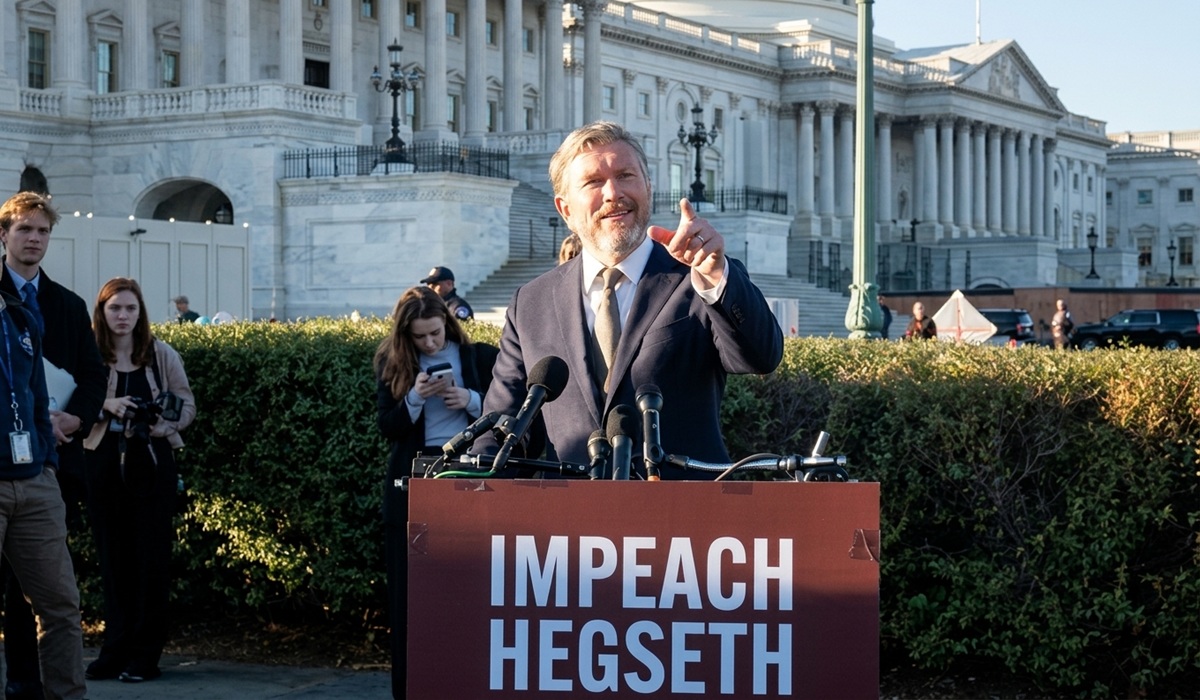
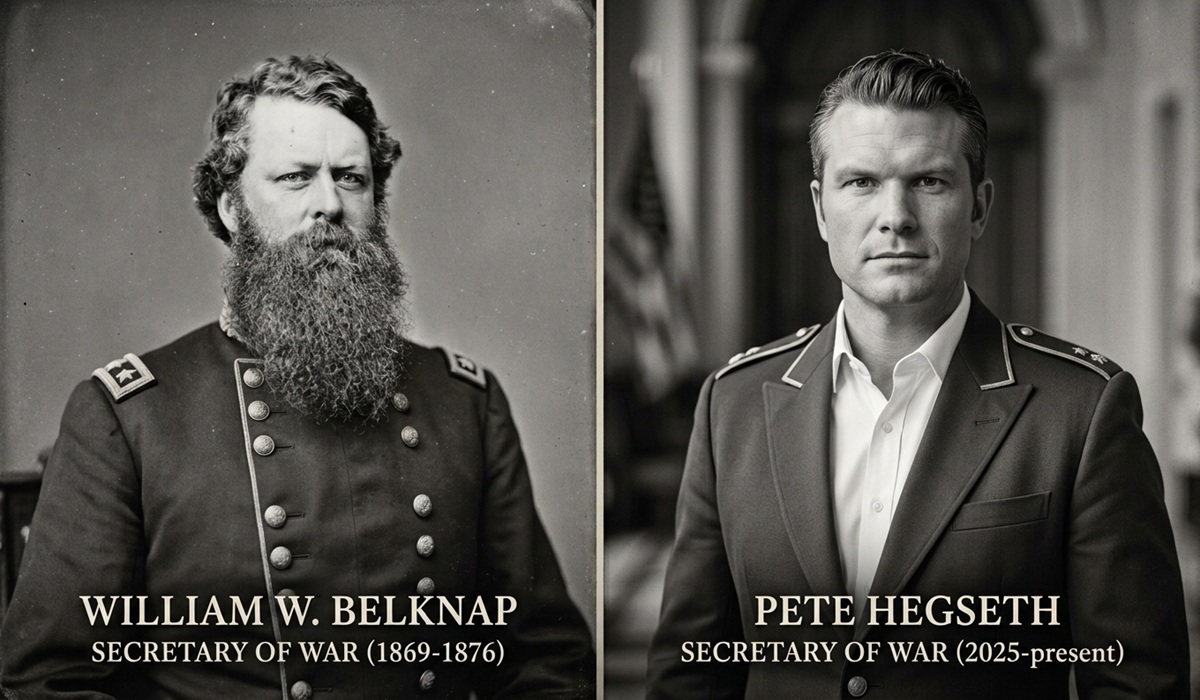
When Congress was established, the founders envisioned impeachment as an extraordinary constitutional brake, a rare legislative mechanism reserved for preventing executive authority from sliding into unfettered overreach. Over the course of nearly two and a half centuries, that severe mechanism has almost never targeted cabinet secretaries. In fact, only two cabinet officials in American history have ever faced formal impeachment by the House of Representatives. The first instance occurred in 1876 when Secretary of War William Belknap was impeached following a sweeping corruption scandal involving kickbacks from military trading posts. Today, as Representative Thomas Massie forces a high-stakes floor vote on articles of impeachment targeting Secretary of Defense Pete Hegseth, history offers an extraordinary piece of political irony: Hegseth’s push to officially rename his department back to the Department of War aligns him directly with Belknap, binding their legacies together under the exact same historical moniker.
The structural parallels between the two cases begin with the unique title itself. Following World War II, Congress restructured the nation’s military apparatus under the National Security Act of 1947, consolidating the historic Department of War into a unified Department of Defense designed to reflect post-war deterrence and constitutional oversight. Upon taking office, Hegseth made rebranding the Pentagon one of his signature symbolic initiatives, publicly championing a return to the historic “Secretary of War” title to project unyielding military strength. Yet, in reclaiming that nineteenth-century label, Hegseth inadvertently linked his executive tenure to the singular cabinet officer who brought formal impeachment down upon the military establishment nearly 150 years ago.
The irony deepens when examining the core arguments driving both constitutional crises. In 1876, William Belknap’s impeachment stemmed from allegations that he breached public trust and violated statutory boundaries for personal and administrative gain. In Hegseth’s case, Massie’s eight articles of impeachment focus heavily on executive overreach, citing unauthorized military strikes in Iran, Yemen, and international waters as direct violations of the War Powers Resolution and Article I of the Constitution. The stark contradiction at the heart of Hegseth’s tenure lies in his decision to adopt a title emphasizing raw executive power while provoking a constitutional reckoning over the legislative branch’s exclusive authority to declare and oversee military conflict.
Beyond procedural mechanics, the political dynamics of both impeachments highlight a profound breakdown in executive control. Belknap’s downfall exposed deep fractures within President Ulysses S. Grant’s administration, forcing a public reckoning over administrative oversight during a period of intense national scrutiny. Massie’s motion against Hegseth mirrors that internal instability, but with an even rarer ideological twist: rather than an opposition party leading the charge, a sitting member of the administration’s own party has seized the legislative reins to demand accountability. By forcing a privileged floor vote, Massie has ensured that Hegseth’s attempt to project absolute authority under the historic “Secretary of War” banner has instead placed him on the brink of becoming only the third cabinet official, and the second under that specific title, to be formally impeached by the House.
Looking back across the sweep of American political history, the strange convergence of titles, unconstitutional military excursions, and legislative rebellion reads almost like a dark satire scripted by destiny itself. When William Belknap held the reins of the Department of War in the 1870s, his downfall exposed the rot of personal corruption and the dangerous hubris of an executive branch operating beyond effective legislative tether. Today, as modern Washington grapples with unauthorized military hostilities in the Middle East and explosive extrajudicial operations abroad, the decision by executive leadership to enthusiastically revive that very same historic nineteenth-century moniker has injected a poetic, inescapable irony into the unfolding constitutional crisis.
By demanding the title of Secretary of War, Pete Hegseth sought to invoke an era of unbridled military might and unchallengeable executive command, completely unaware that he was stepping directly into the historical footprint of the only other cabinet chief ever handed that exact designation before facing an impeachment vote by the House of Representatives. Now, as a floor vote looms under the weight of Thomas Massie’s privileged resolution, that nineteenth-century ghost has returned to haunt the Pentagon. The grand rebranding effort intended to project untouchable strength has instead transformed into an unintended historical prophecy, binding a modern political reckoning to the oldest and rarest constitutional penalty in the American republic.
About The Author