The Constitutional Mechanics and Unprecedented Reality of Thomas Massie’s Campaign to Impeach Pete Hegseth
- Kingston Bailey
- Breaking News
- November 10, 2026

The halls of Capitol Hill are no stranger to intense political drama, but the decision by Kentucky Republican Representative Thomas Massie to introduce eight formal articles of impeachment against Secretary of War Pete Hegseth marks a seismic shift in modern American governance. The resolution, introduced under privileged status, has set off a political tsunami within the conservative establishment and forced a high-stakes legislative confrontation with a full House vote expected by Wednesday. Massie’s move targets the Pentagon chief over unauthorized military engagements, including strikes in Iran, Yemen, and international waters, alleging clear violations of the War Powers Resolution, executive overreach, and high crimes and misdemeanours. While clashes over foreign policy are common, the sight of a sitting lawmaker attempting to forcibly remove a key executive official appointed by his own party’s administration represents an unprecedented breakdown of party discipline and a major constitutional milestone.
Understanding how this process unfolds requires a deep dive into the procedural machinery of the United States House of Representatives. When a member files a standard bill or resolution, congressional leadership typically holds the power to send it to a committee, where it can be quietly delayed, debated, or buried without ever reaching the floor. However, when a member introduces impeachment articles as a privileged resolution under House Rule IX, the legal rules change entirely. Privileged status elevates the matter above ordinary legislative business, obligating the chamber to take formal action within two legislative days of the motion being called up.
Once Massie triggers the resolution on the House floor, House leadership cannot simply ignore the motion. They are forced to present the chamber with three primary procedural paths. First, leadership can allow a direct, on-the-record vote on the adoption of the impeachment articles themselves. Second, they can move to refer the resolution to the House Judiciary Committee for further investigation, effectively postponing an immediate floor crisis. Third, and most likely in high-pressure political scenarios, leadership can file a motion to table the resolution. A motion to table acts as a parliamentary kill switch: it is unamendable, takes precedence over the underlying resolution, and requires only a simple majority to pass. Voting to table allows lawmakers to dispatch the issue procedurally without formally voting on whether the defense secretary’s actions warrant removal, giving vulnerable members a buffer against controversial floor votes.
Should a motion to table fail and a simple majority of the House vote to approve even a single article of impeachment, Pete Hegseth would immediately become the first Defense Secretary in American history to be impeached. Under the U.S. Constitution, an impeachment by the House functions akin to a formal indictment. Following a successful House vote, the process transitions entirely to the United States Senate, which assumes the responsibility of sitting as a court of impeachment. In the Senate, designated House managers act as prosecutors presenting the case, while the impeached official’s legal team mounts a defense before the assembled senators. Conviction and formal removal from office require a strict constitutional threshold of a two-thirds majority of senators present and voting.
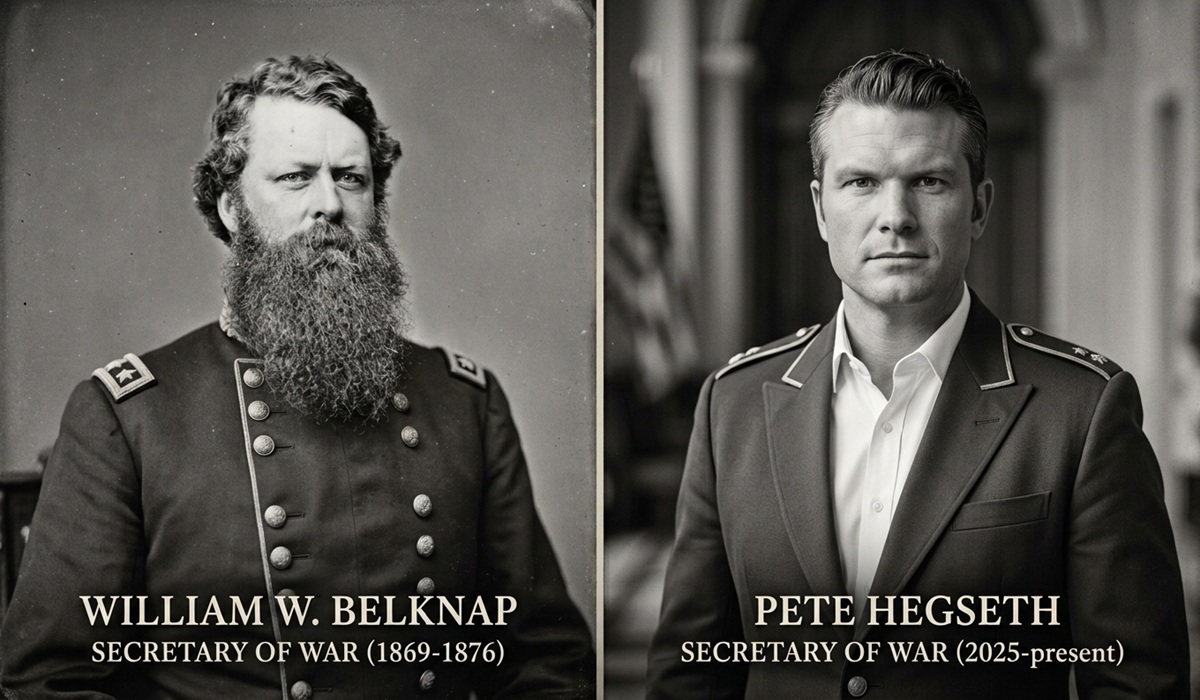
To grasp the magnitude of Massie’s legislative maneuver, one must look at the rarity of executive cabinet impeachments throughout American history. While Congress frequently oversight-checks the executive branch through contentious committee hearings, subpoena enforcement, and budget negotiations, actual cabinet-level impeachments are extraordinarily scarce. Over the course of nearly two and a half centuries, only two cabinet officials have ever been impeached by the House of Representatives. The first occurred in 1876, when Secretary of War William Belknap was impeached following allegations of bribery and corruption tied to lucrative trading post governorships in the American West. Belknap famously tendered his resignation to President Ulysses S. Grant just hours before the House vote, though the Senate proceeded with a trial anyway, ultimately acquitting him due to doubts over whether it maintained jurisdiction over a former official. The second instance did not occur until nearly 150 years later, in early 2024, when Homeland Security Secretary Alejandro Mayorkas was impeached following a narrow, highly partisan vote in the House, only for the Senate to swiftly dismiss the trial charges.
What elevates Massie’s push from a typical Capitol Hill skirmish to a historic constitutional event is the political origin of the attack. Impeachments in modern American history have almost exclusively functioned as partisan battles, conceived and executed by an opposition party seeking to hold an administration accountable or gain electoral leverage. Massie’s decision to personally file and force a floor vote on eight distinct articles of impeachment against a Cabinet secretary of his own party shatters that long-standing dynamic. Driven by libertarian principles regarding war powers and strict adherence to Article I of the Constitution, Massie’s rebellion bypasses traditional party loyalties.
By forcing this vote, Massie places every member of the House in a challenging political posture. House leadership faces the difficult task of managing a razor-thin majority where even a tiny handful of conservative defectors joining a united opposition can swing the final outcome. For lawmakers representing tight suburban battlegrounds, a vote to table the resolution risks angering voters concerned about executive overreach and foreign interventions. Conversely, a vote allowing impeachment to move forward threatens to break party unity and trigger severe blowback from the party’s grassroots base. As the Wednesday deadline approaches, Massie’s resolution stands as a stark reminder of the House’s potent constitutional oversight powers and highlights how a single determined lawmaker can force a national reckoning on executive authority.
About The Author