When America Grounded to a Halt: Software Glitch or Cyber Attack
- Naomi Dela Cruz
- U.S.A
- November 14, 2026
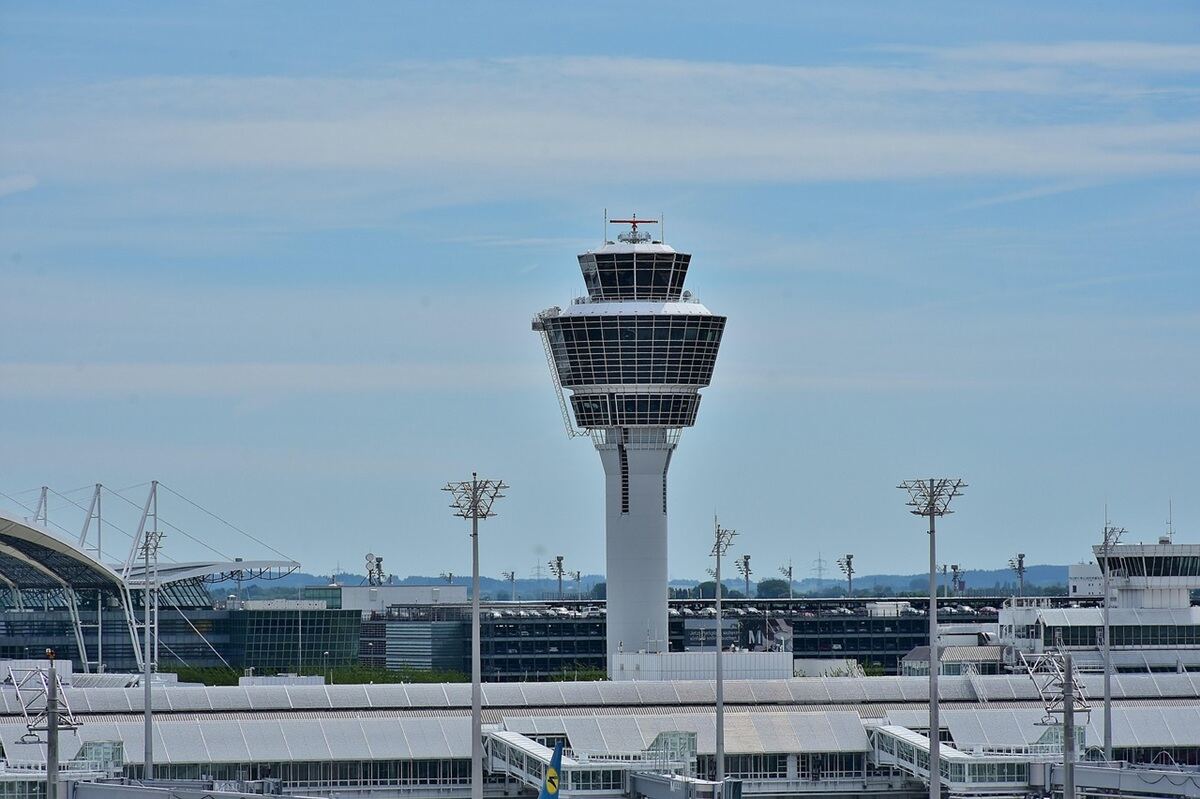
Image Credit: RitaE
The skies over North America experienced an unprecedented standstill when the Federal Aviation Administration issued a rare nationwide ground stop, marking only the third such nationwide halt in United States aviation history following the events of September 11 and the January 2023 Notice to Air Missions failure. The emergency directive froze all departing flights across the country for more than four hours, spanning from 3:54 p.m. to 8:15 p.m. Eastern Time on Friday, November 13, 2026. The sweeping shutdown impacted all 22 regional Air Route Traffic Control Centers, grounding approximately 2,500 aircraft mid-transit and unleashing a cascading wave of disruption that generated over 10,000 flight delays and 4,000 cancellations across the continent.
In the immediate aftermath of the airspace reopening, two competing narratives gripped the public consciousness and intelligence circles. While federal officials insisted the shutdown was the result of aging infrastructure buckling under a modern software rollout, widespread speculation and social media chatter rapidly circulated claims of a sophisticated foreign cyberattack originating from Iran. Both interpretations emerged from the convergence of specific technical, political, and geopolitical realities unfolding during a tense week for national infrastructure.
During a joint Friday night press briefing, Transportation Secretary Sean Duffy and Homeland Security Secretary Markwayne Mullin firmly rejected the cyberattack theory, attributing the crisis instead to a telecommunications and router overload. According to the cabinet secretaries, the FAA had activated a new artificial intelligence assisted air traffic management tool named Smart across all 22 regional Air Route Traffic Control Centers just three days prior to the outage. Integrating these advanced digital patches onto decades old FAA hardware overwhelmed the legacy switches and routers. Rather than experiencing a total electrical blackout, the outdated routers began transmitting corrupted and inconsistent data across the network. Because air traffic control operations depend entirely on flawless data integrity during regional handoffs, standard aviation safety protocols mandate an immediate ground stop to prevent any risk of mid-air separation failures.
Despite the technical explanation provided by transport and security officials, the incident immediately ignited sharp political skepticism in Washington. Critics pointed out that Secretary Duffy and Secretary Mullin used the briefing to press Congress for fifty billion dollars in emergency funding to construct a brand new air traffic control network, arriving on top of twelve point five billion dollars approved during the previous legislative cycle. Opponents argued that the administration was either leveraging an operational malfunction to secure a massive budgetary expansion or attempting to mask a deeper, unresolved cybersecurity vulnerability within federal systems.
Meanwhile, rumors of an Iranian cyberattack gained remarkable traction across digital platforms and intelligence discussions despite the Department of Homeland Security confirming there was zero forensic evidence of an unauthorized intrusion. The theory found fertile ground due to a volatile combination of concurrent geopolitical events occurring that exact week. The aviation crisis unfolded amid heightened military friction with Iran, including naval mine incidents in the Strait of Hormuz, public threats directed at United States Treasury officials, and ongoing intelligence reports linking Iranian threat actors to targeted cyberattacks against domestic military base infrastructure.
The atmosphere of apprehension was further amplified by a separate technological breakdown occurring just twenty four hours prior to the aviation shutdown. A massive global Microsoft cloud outage disrupted enterprise services, email platforms, and collaboration tools worldwide on Thursday. Witnessing major corporate cloud infrastructure fail one day followed by the complete paralysis of the United States airspace the next day primed the public and independent analysts to assume a coordinated, state-sponsored cyber campaign was underway. Compounding the anxiety, Homeland Security Secretary Mullin noted during official remarks that the president had declared the situation a national emergency, reinforcing the narrative that aging federal technology presented an acute national security hazard.
A dispassionate examination of the available evidence reveals that software update failures represent one of the most common failure modes in government information technology. Layering modern, high bandwidth software applications onto legacy telecommunications switches without conducting exhaustive end-to-end load testing frequently results in cascading system bottlenecks. This operational reality closely mirrors the January 2023 database outage, which initially sparked widespread rumors of foreign interference before forensic logs confirmed a contractor had accidentally deleted database files during routine maintenance. Furthermore, closed loop radar and routing switches utilized by air traffic control are entirely air-gapped from the public internet, rendering a simultaneous nationwide takedown by external actors extraordinarily difficult without insider access. By contrast, state actors typically target public facing digital infrastructure, power grids, or municipal utilities rather than hardened aviation networks. Ultimately, the information vacuum that persisted during those four tense hours, combined with active geopolitical tensions and back-to-back technological failures, created the perfect conditions for a covert cyberattack narrative to capture the public imagination.
About The Author