The Longest Border Becomes a Front Line: The New Weaponization of Trade
- Ingrid Jones
- U.S.A
- July 21, 2026
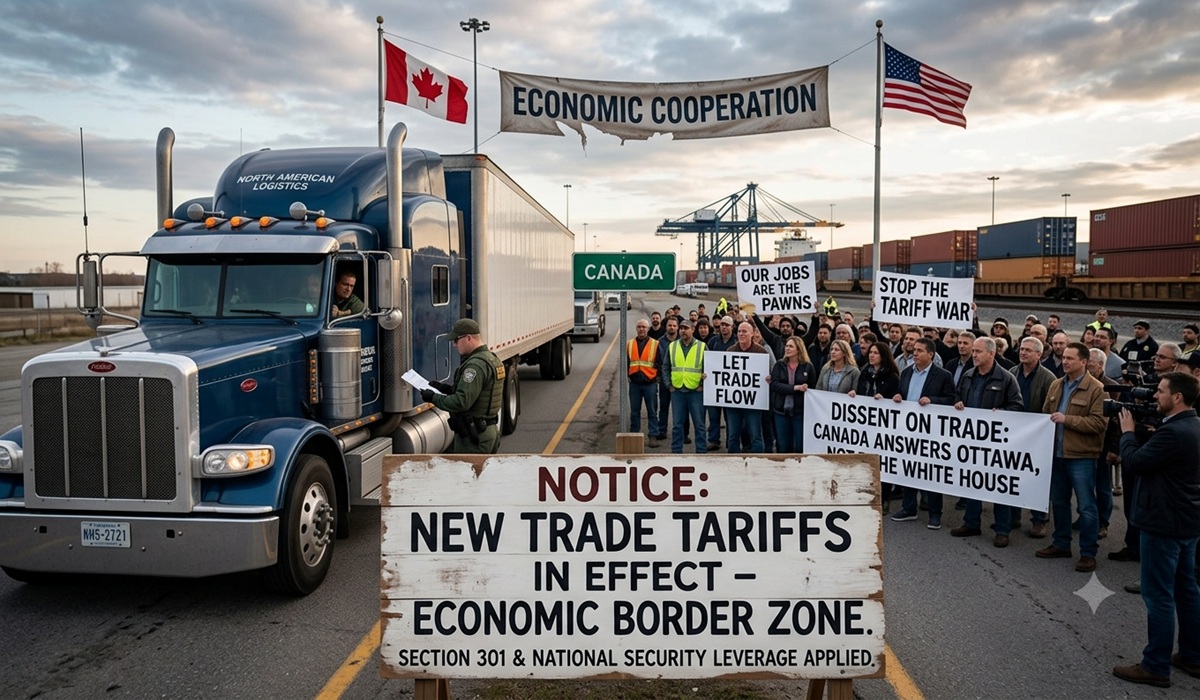
What began as economic maneuvering has rapidly escalated into a full-scale geopolitical rift along the world’s longest undefended border. The economic relationship between the United States and Canada—historically anchored by seamless supply chains and mutual security agreements—is being systematically dismantled and weaponized in ways that challenge decades of diplomatic norms. At the heart of this friction is a fundamental shift in how trade policy is conducted: moving away from multi-year treaty negotiations to swift, unilateral tariff threats issued directly from the Oval Office.
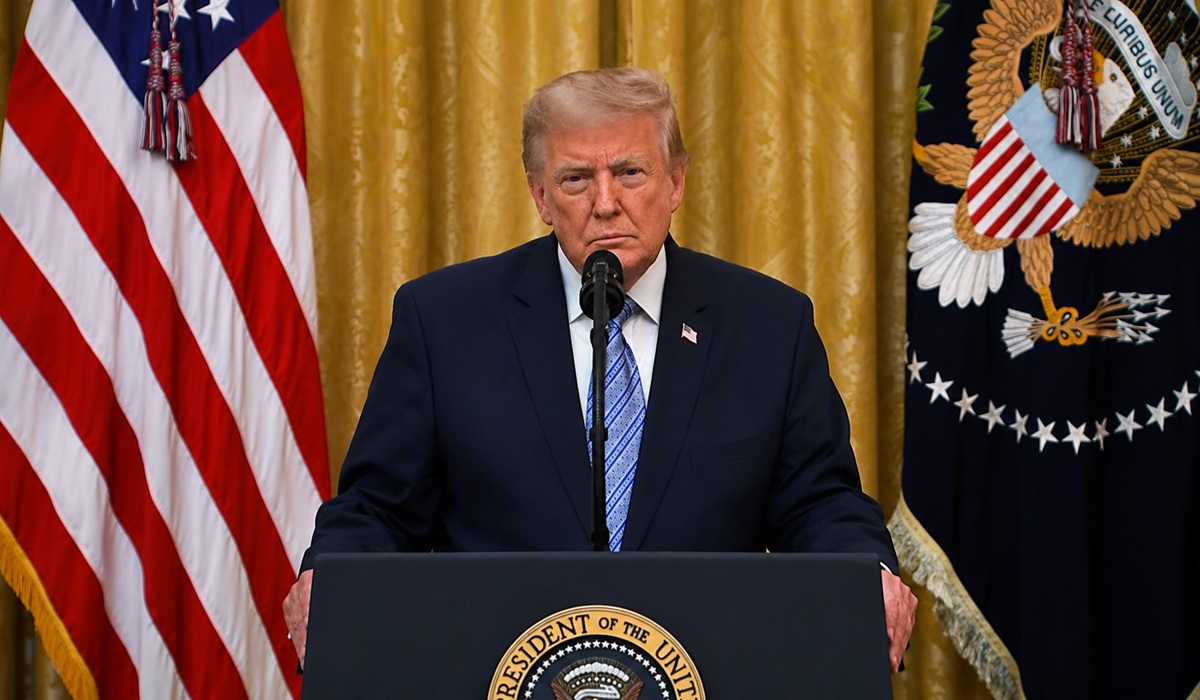
This seismic shift was catalyzed by an official White House letter addressed to Canadian Prime Minister Mark Carney. In a move that stunned diplomats, President Donald Trump outlined a sweeping economic mandate, citing national security concerns, border enforcement failures, trade deficits, and long-standing protectionist policies—such as Canada’s steep tariffs on American dairy. The administration’s letter made the strategy clear: tariffs are no longer just tools for protecting domestic industries; they are multi-purpose leverage designed to force immediate concessions on non-trade disputes.
The letter explicitly connected distinct policy arenas. In what has been termed the ‘Fentanyl & Border Clause,’ the White House framed cross-border drug flow as both an economic and national security issue, making tariff relief contingent on strict Canadian border enforcement. This was immediately coupled with traditional agricultural disputes, where the U.S. demanded the dismantle of Canada’s supply-management system, which imposes tariffs upwards of 200% to 400% on imported American dairy products. Perhaps most jarringly, the economic mandates were expanded to include environmental penalties, with the administration framing cross-border wildfire smoke drifting into northern U.S. states as a bilateral economic liability deserving of punitive measures.
The Canadian response, led by Prime Minister Mark Carney—former governor of both the Bank of Canada and the Bank of England—has been a careful balance of resilience and strategic counter-pressure. Carney has steadfastly maintained that Canada will not sign a one-sided economic agreement born from coercion. “We answer to Canadians,” Prime Minister Carney declared, defining his government’s red lines. “Ottawa will only sign an agreement that benefits Canadian workers, businesses, and the national economy — a deal that respects existing free-trade pacts.”
Ottawa’s counter-strategy merges measured diplomacy with targeted economic retaliation. While Canada has rolled back select non-essential tariffs to lower domestic consumer costs, it has simultaneously maintained firm retaliatory duties on strategic U.S. sectors, including steel, aluminum, and non-compliant automotive imports. Furthermore, Canadian trade officials have aggressively pointed out that unilateral blanket tariffs directly violate the terms of the United States-Mexico-Canada Agreement (CUSMA)—a deal ironically negotiated during President Trump’s first term. Internally, Carney is also encouraging Canadian provinces to eliminate interprovincial trade barriers, aimed at strengthening domestic economic self-reliance.
The economic fallout of this protracted conflict is radiating across North America. Because the U.S. and Canadian manufacturing sectors are deeply integrated—particularly in automotive, steel, energy, and agriculture—tariffs on one side immediately ripple through supply chains on the other. A 25% tariff on a complete vehicle might seem like a final cost, but it often applies to components that have crossed the border multiple times during assembly, geometrically compounding costs.
In the automotive sector, where billions are in play, Canadian matching tariffs on U.S.-built vehicles are now set against broad U.S. penalties, resulting in inevitable price hikes for consumers on both sides. In the steel and aluminum industries, the volley of duties has raised costs for all downstream manufacturers, squeezing margins from construction to aerospace. Even in the highly contentious dairy and agricultural sectors, the friction reduces predictability, stalling investment.
As the standoff continues, the long-term message from the White House is unmistakable: traditional free-trade agreements will no longer insulate allies from unilateral economic action. If the U.S. and Canada fail to establish a stable, updated framework for cross-border cooperation, the current environment of escalating tariffs risks permanently re-routing global investment. The world is watching how Canada—and the broader international economy—adapts to a new world order where economic partnership is not a permanent state but a resource to be weaponized.
About The Author