EDMONTON — Severe early-summer weather across the Edmonton region has generated approximately $230 million in insured property damage since May, according to preliminary estimates from the Insurance Bureau of Canada.
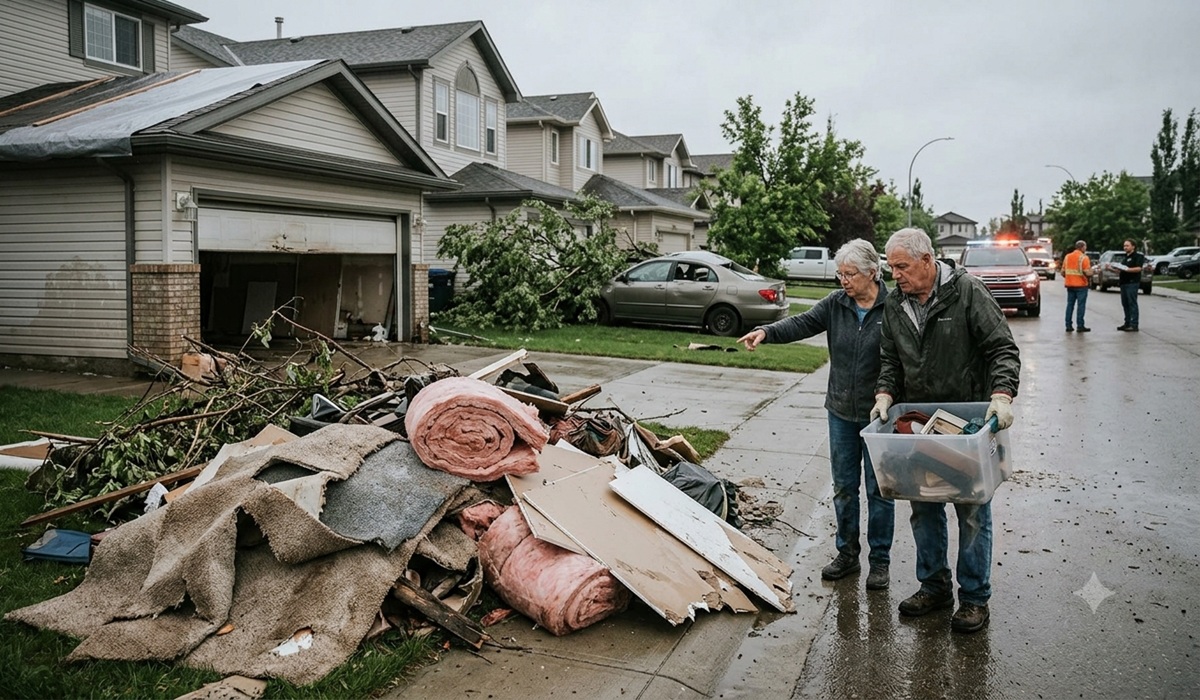
The figure stems primarily from two major storm systems that battered the capital region, leaving thousands of residents dealing with flooded basements, torn roofs, and damaged vehicles. Industry officials warn the final price tag will likely rise as adjusters continue processing claims from subsequent mid-July storms.
Rob de Pruis, national director of consumer and industry relations for the Insurance Bureau of Canada, said the financial toll was driven by back-to-back weather events. A major flooding event from late May into early June accounted for roughly $80 million in damage, as prolonged rainfall overwhelmed municipal drainage systems across Edmonton and surrounding communities like Strathcona County. A second system around June 20 and 21 added another $150 million, bringing high-velocity winds, localized heavy rainfall, and hail that stripped roofing shingles and downed mature trees onto power lines and parked vehicles.
Alberta’s geography makes the region a natural focal point for severe summer weather. Cold air pushing off the Rocky Mountains frequently collides with warm, moisture-laden air masses sitting over the prairies, creating atmospheric instability that triggers heavy convection storms, hail, and intense rain dumps.
Residential property claims represent the vast majority of files submitted to insurers, outnumbering commercial and auto claims. Saturated ground and surcharged storm mains forced water into basements through sumps and floor drains, while high winds damaged siding, fences, and outbuildings.
The surge in claims has put heavy pressure on local restoration companies working through a backlog of assessments. With Alberta recording multi-billion-dollar weather losses over three consecutive summers, industry experts expect insurers to reassess regional risk models, which could lead to premium increases during upcoming policy renewal cycles.
Insurance representatives emphasize that standard home policies do not automatically include overland flood or sewer backup coverage, which are typically sold as optional endorsements. Homeowners recovering from recent damage or preparing for future storms are advised to take photos of all destroyed property before starting cleanup, maintain receipts for structural repairs, and consider installing backwater valves and battery backups for sump pumps.
About The Author