The Funeral of Ayatollah Ali Khamenei That Sought to Redefine the Middle East
- Naveed Aman Khan
- Pinpoint
- July 4, 2026
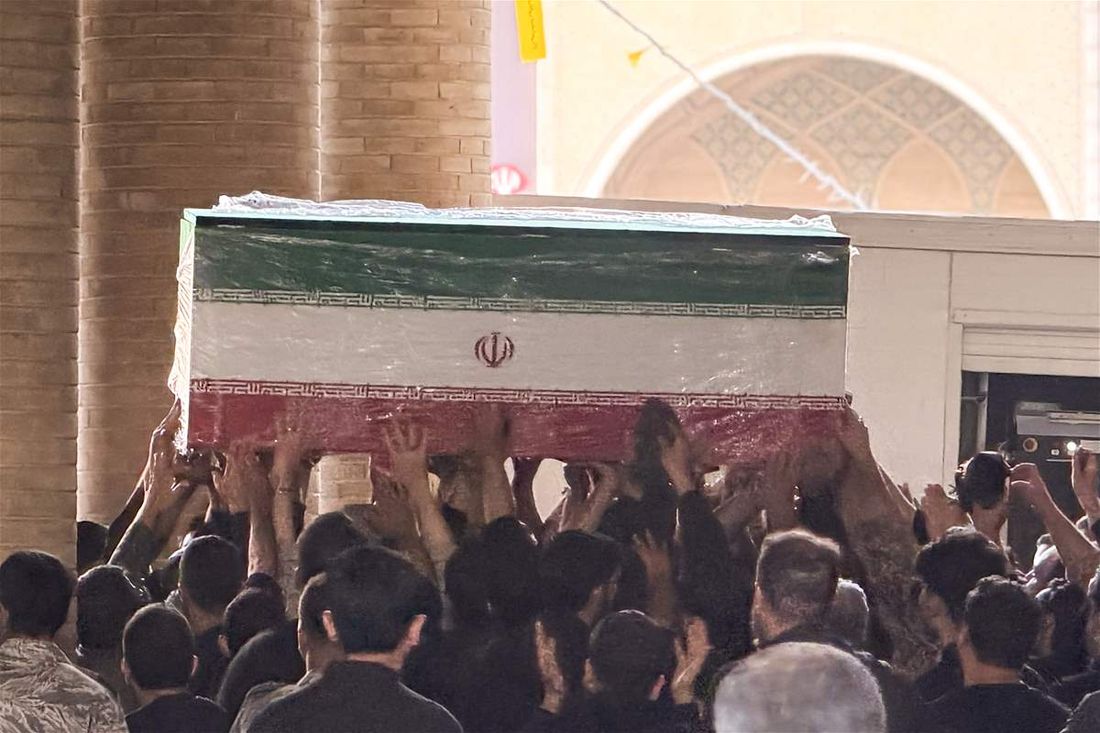
The passing of a towering political and religious leader is rarely confined to the boundaries of personal grief. At times, it evolves into a defining political event through which nations reaffirm their ideological identity, project strategic confidence, and communicate their future direction to the world. The funeral ceremonies of Iran’s Supreme Leader Ayatollah Ali Khamenei represented far more than a farewell to an individual who had dominated Iranian politics for decades. They became a carefully orchestrated demonstration of continuity, resilience, and geopolitical messaging at a moment when regional politics appeared to be undergoing profound transformation.
History demonstrates that the funerals of influential leaders often become extensions of their political legacy. They provide governments with an opportunity to reaffirm legitimacy while allowing supporters to publicly display loyalty and collective identity. The extraordinary scale of Ayatollah Khamenei’s funeral, reportedly attended by millions of mourners and numerous foreign delegations, projected the image of a political system that sought to emphasize institutional stability despite the loss of its highest authority. Whether viewed through a religious or political lens, such massive public participation conveyed a powerful message that the ideological foundations of the Islamic Republic remain deeply rooted within significant segments of Iranian society.
The comparison with the funeral of Ayatollah Ruhollah Khomeini, the founder of the Islamic Republic, carries immense symbolic significance. Khomeini’s funeral in 1989 remains one of the largest public gatherings in modern history and symbolized the emotional connection between the revolutionary leadership and the Iranian people. Drawing parallels between the two ceremonies was intended to reinforce the perception that the revolutionary project initiated in 1979 has endured despite decades of extraordinary challenges. From the devastating Iran-Iraq War to crippling economic sanctions, diplomatic isolation, internal political unrest, and continuous regional rivalries, the Islamic Republic has repeatedly demonstrated its capacity to survive pressures that many observers once believed would threaten its existence.
Equally significant was the participation of foreign dignitaries and official delegations from numerous countries. In international diplomacy, attendance at state funerals extends well beyond expressions of sympathy. Such occasions frequently serve as platforms for discreet diplomatic engagement, strategic consultations, and reaffirmation of political partnerships. For Tehran, hosting foreign leaders during such a sensitive period projected an image of continued international relevance despite years of Western-led economic and political pressure. It reinforced Iran’s long-standing narrative that it remains a central player in regional affairs and retains influence among governments and political movements that seek alternatives to the existing international order.
One of the most profound symbolic aspects of the funeral was the reported transportation of Ayatollah Khamenei’s coffin through the sacred Iraqi cities of Najaf and Karbala before burial. These cities occupy an unparalleled position within Shiite religious tradition as centers of theological scholarship, sacrifice, and spiritual authority. Associating the Supreme Leader’s final journey with these holy sites elevated his political legacy beyond Iran’s national borders and situated it within the broader historical narrative of Shiite Islam. For millions of Shiite believers across the Middle East, such symbolism reinforced the perception that Khamenei’s leadership represented not merely political authority but also the continuation of a centuries-old religious mission centered on resistance, sacrifice, and faith.
Perhaps the most controversial dimension surrounding these ceremonies lies in the narrative that they marked not only the conclusion of one leader’s life but also the beginning of a fundamentally different geopolitical era. According to this interpretation, the conflict that reportedly began on February 28, 2027, involving military operations by the United States and Israel against Iran ultimately concluded in Iran’s favor. From this perspective, the funeral became not a ceremony of mourning but a celebration of strategic endurance and national resilience. Supporters portray it as the symbolic inauguration of a regional order in which American military dominance has diminished and indigenous powers exercise greater influence over Middle Eastern affairs.
Such claims, however, require careful analytical scrutiny. International politics rarely experiences abrupt transformations based on a single conflict or political event. The United States continues to possess unmatched global military capabilities, extensive alliance networks, technological leadership, and immense economic influence. Similarly, NATO remains among the world’s most powerful collective security organizations. Declaring the definitive end of American supremacy or the collapse of the Western strategic order would therefore represent a political interpretation rather than an established historical conclusion. History repeatedly demonstrates that major powers often recover from setbacks, adapt to evolving circumstances, and reshape their strategies in response to changing geopolitical realities.
Nevertheless, perceptions themselves possess extraordinary power in shaping international politics. Throughout history, victories have often been measured not solely by military outcomes but by the narratives that emerge afterward. If millions of people across the Middle East genuinely believe that Iran successfully resisted overwhelming external military pressure, that perception alone can strengthen Tehran’s regional influence. Political legitimacy frequently depends as much upon collective belief as upon objective military calculations. Since the 1979 Islamic Revolution, Iran has consistently framed external confrontations within a broader narrative of resistance against foreign domination, national independence, and religious commitment. Each episode of confrontation has been incorporated into a larger historical story that strengthens domestic cohesion and reinforces ideological identity.
The humanitarian dimension of the conflict further amplifies these narratives. Images of civilian casualties, particularly the deaths of women and children, possess immense emotional influence over international public opinion. Throughout modern history, civilian suffering has frequently reshaped diplomatic debates, altered perceptions of legitimacy, and influenced global political discourse. Such images become deeply embedded within national memory, transforming military conflicts into moral struggles that extend far beyond the battlefield. Competing interpretations inevitably emerge, with each side emphasizing different aspects of responsibility, justice, and victimhood.
Consequently, history seldom accepts wartime narratives at face value, instead subjecting them to decades of scholarly examination and historical reassessment.
The funeral also highlighted the enduring intersection of religion and geopolitics within the Middle East. Unlike many secular political systems, where leadership transitions are largely administrative, Iran’s political structure fuses religious legitimacy with state authority. Consequently, the death of a Supreme Leader carries implications not only for governance but also for ideological continuity, regional alliances, and religious identity. Every ceremonial gesture, diplomatic meeting, and symbolic procession becomes part of a carefully constructed political language understood by domestic supporters and international observers alike.
Ayatollah Khamenei’s funeral will occupy an important place in the political history of the twenty-first century regardless of how future historians assess the broader geopolitical claims associated with it. It demonstrated how modern states employ public ceremonies to reinforce national unity, preserve ideological continuity, project diplomatic influence, and shape historical memory. It became a powerful convergence of religion, diplomacy, strategic communication, historical symbolism, and national identity. In an era increasingly defined by contests over narratives as much as territory, the funeral underscored an enduring reality: political power is exercised not only through armies and institutions but also through symbols, collective memory, and the stories nations choose to tell about themselves and the world.
About The Author