Pakistan new strategic balancer in Middle East
- Naveed Aman Khan
- Pinpoint
- Tiger's Eye Advisory Group - Trending News
- June 29, 2026
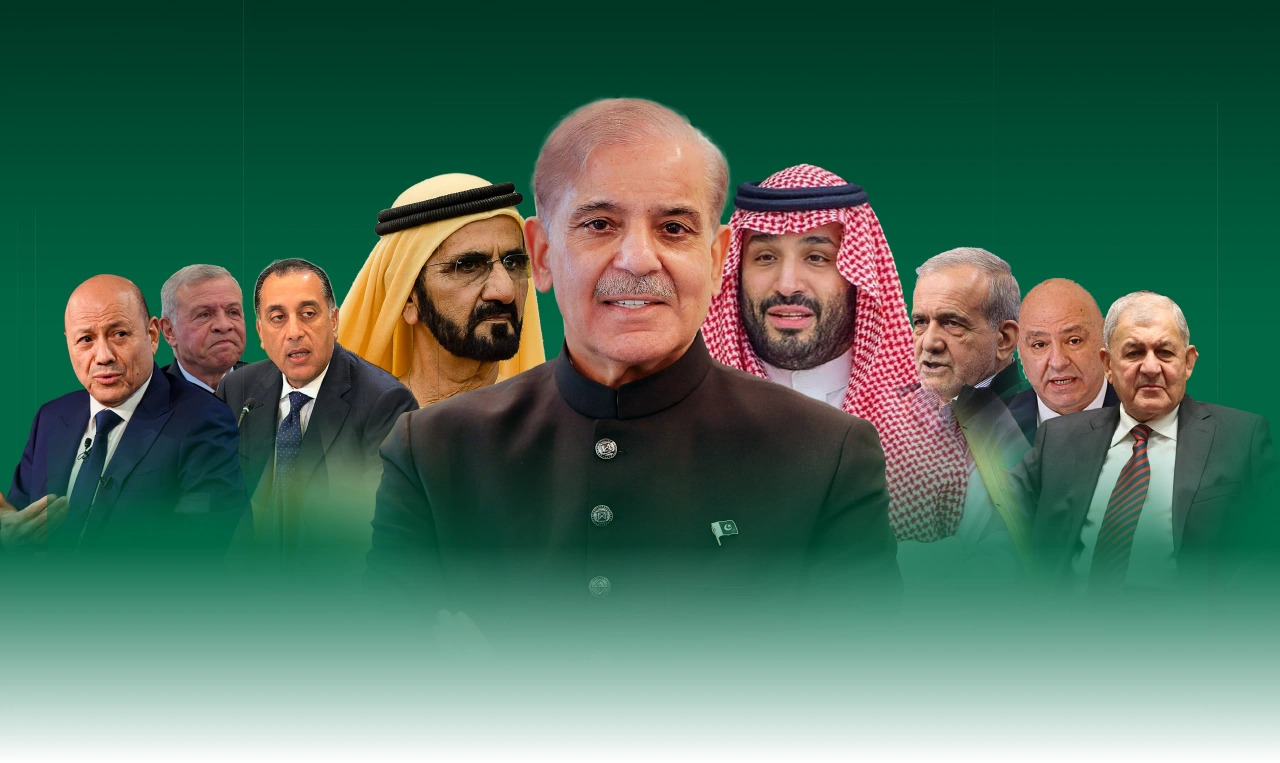
The Middle East is undergoing one of the most consequential geopolitical transformations since the end of the cold War. The traditional security architecture built around overwhelming American military dominance is gradually giving way to a more complex regional balance shaped by competing powers, economic diplomacy, technological competition, and shifting alliances. The recent military confrontation between Israel and Iran, coupled with renewed diplomatic engagement between Washington and Tehran, has demonstrated that neither perpetual conflict nor unconditional military superiority can provide lasting stability. Instead, the region now stands at a strategic crossroads where diplomacy and deterrence are unfolding simultaneously.
The United States remains the world’s most powerful military actor, yet its strategic priorities have evolved considerably. Washington increasingly views long-term competition with China in the Indo-Pacific as its foremost geopolitical challenge. Consequently, successive American administrations have sought to reduce direct military commitments in the Middle East without abandoning the region altogether.
This does not necessarily mean an American withdrawal. Rather, it reflects a transition from large-scale military deployments toward offshore balancing, intelligence cooperation, advanced military partnerships, and selective intervention. America is unlikely to leave the Middle East completely because the region continues to influence global energy markets, maritime security, counterterrorism, and Israel’s security. However, Washington’s future presence will likely be more measured, less expensive, and increasingly dependent upon regional partners.
If the United States reduces its footprint, no single country possesses the capability to replace it entirely. Instead, a multipolar regional order is gradually emerging. China is expanding its economic footprint through infrastructure investments, energy partnerships, and trade while carefully avoiding direct military entanglements. Russia seeks to preserve its influence through Syria, defense cooperation, and diplomatic engagement despite being constrained by the Ukraine conflict. Turkey has become an increasingly assertive regional actor with growing influence across Syria, Iraq, the Caucasus, and parts of Africa.
Saudi Arabia and the United Arab Emirates are pursuing more independent foreign policies, emphasizing economic diversification while maintaining strategic partnerships with both Washington and Beijing. Iran continues expanding its regional influence through allied political and armed groups. The future Middle East is therefore unlikely to witness one dominant external power replacing the United States; instead, multiple regional and global actors will compete and cooperate simultaneously.
One of the most significant questions concerns the prospects for a lasting understanding between the United States and Iran. Although decades of hostility have created profound mistrust, both sides possess compelling incentives to avoid direct military confrontation. Washington seeks regional stability, secure energy supplies, and reduced military commitments, while Tehran requires sanctions relief, economic recovery, and international investment. A limited understanding focusing on nuclear restrictions, regional de-escalation, prisoner exchanges, and phased sanctions relief remains plausible.
However, achieving a comprehensive peace agreement will remain exceptionally difficult because of ideological differences, domestic political opposition within both countries, and the influence of regional actors that remain deeply skeptical of rapprochement.
Even if Washington and Tehran achieve a diplomatic breakthrough, regional stability cannot be taken for granted. Israel has consistently viewed Iran’s nuclear ambitions and expanding regional influence as existential threats.
Israeli security doctrine emphasizes preventing adversaries from acquiring capabilities that could fundamentally alter the regional military balance. Consequently, there remains a realistic possibility that Israel could undertake covert operations, cyberattacks, intelligence missions, or targeted military strikes against Iranian assets if Israeli leaders conclude that diplomacy has failed to eliminate perceived security risks. However, a large-scale unilateral attack immediately following an American-Iranian agreement would carry significant diplomatic costs and could strain relations with Washington. Therefore, while limited covert activities may continue, any broader military action would likely depend upon Iran’s subsequent behavior rather than the agreement itself.
Within this evolving strategic environment, Pakistan occupies an increasingly important position. Located at the intersection of South Asia, Central Asia, the Persian Gulf, and western China, Pakistan possesses strategic geography that few countries can match. Islamabad enjoys cordial relations with Saudi Arabia, the United Arab Emirates, Qatar, Türkiye, and China while maintaining a functioning relationship with Iran despite occasional border security challenges. This unique diplomatic position provides Pakistan with an opportunity to serve as a bridge rather than a participant in regional rivalries.
Pakistan’s greatest contribution may not come through military involvement but through diplomatic facilitation, economic connectivity, and regional confidence- building. The China-Pakistan Economic Corridor provides access to the Arabian Sea through Gwadar, offering future opportunities for regional trade linking Central Asia, western China, and potentially even Gulf markets. Pakistan can also expand defense cooperation with Gulf states, contribute to maritime security in the Arabian Sea, participate in humanitarian initiatives, and support dialogue among competing regional actors. Islamabad’s longstanding military cooperation with Gulf countries, combined with its balanced relations with Iran, enhances its credibility as a constructive regional stakeholder.
Economically, a more peaceful Middle East would present Pakistan with significant opportunities. Greater regional stability could increase foreign investment, boost remittances from overseas Pakistani workers, expand energy cooperation, improve trade connectivity, and create new markets for Pakistani exports. Pakistan could also strengthen its role in food security, information technology, pharmaceuticals, engineering services, and logistics for Gulf economies undergoing rapid diversification.
Nevertheless, Pakistan must pursue a policy of strategic neutrality. Becoming aligned exclusively with one regional bloc would undermine its diplomatic flexibility and economic interests. Instead, Islamabad should continue promoting balanced engagement with all major regional actors while avoiding entanglement in sectarian or geopolitical rivalries.
The coming decade will likely witness an increasingly fluid Middle East where military power alone will no longer determine regional leadership. Economic resilience, technological innovation, diplomatic agility, and strategic connectivity will become equally decisive. America is not abandoning the Middle East, but it is certainly redefining its role. No single successor is waiting to replace Washington; rather, a multipolar order is steadily taking shape.
The prospects for a limited US.-Iran understanding remain cautiously optimistic, though fragile. Israel will continue closely monitoring Iran’s strategic capabilities and may rely more heavily on covert measures than overt warfare. Amid these changing dynamics, Pakistan has a rare opportunity to transform its strategic geography into strategic influence. Success, however, will depend not upon geography alone but upon consistent diplomacy, economic reform, regional connectivity, and a carefully balanced foreign policy that prioritizes peace over polarization. In an era defined by uncertainty, Pakistan’s greatest strategic asset may be its ability to engage with all sides while belonging exclusively to none.
About The Author