Sadiq Khan: From the Son of Pakistani Immigrants to Britain’s Lord for Life
- Naveed Aman Khan
- Pinpoint
- July 18, 2026
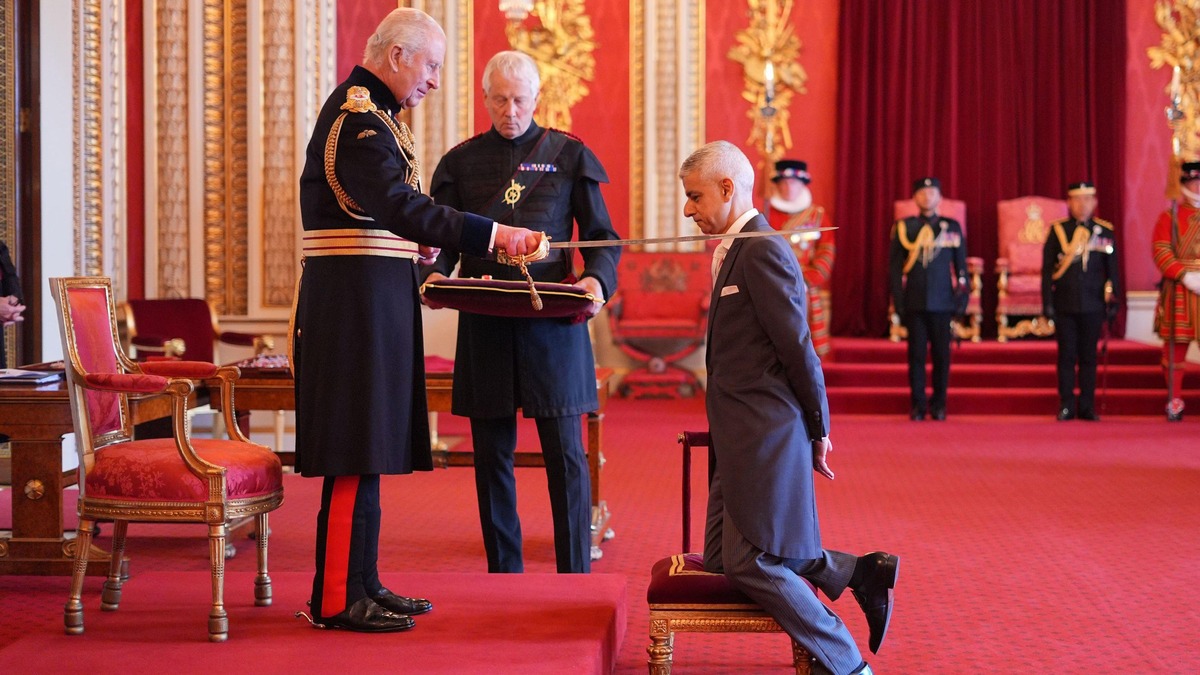
Sadiq Khan’s political journey is one of the most remarkable success stories in modern British democracy. It is a story that transcends race, religion, ethnicity and social class, demonstrating that talent, perseverance and public service can overcome even the most formidable barriers. From growing up in a modest working-class family in South London to becoming the first Muslim Mayor of London, serving three consecutive terms, and now being elevated to the House of Lords for life by King Charles III on the advice of Prime Minister Keir Starmer, Khan’s career symbolizes the enduring strength of democratic institutions and the opportunities they can provide to those willing to dedicate themselves to public service.
His life is particularly inspiring for millions of young people across Britain, Pakistan and the wider world. It reinforces the timeless belief that where there is determination, discipline and hard work, there is always a path to success. Sadiq Khan has become not merely a successful politician but a global symbol of diversity, inclusion and democratic achievement.
Born in 1970 to Pakistani immigrant parents, Khan’s early life reflected the aspirations and struggles of countless immigrant families. His father worked as a bus driver while his mother was a seamstress. Raised in a council house with seven siblings, he understood firsthand the importance of education, perseverance and equal opportunity. Unlike many political leaders who inherit influence or privilege, Khan built his career from the ground up.
Before entering politics, Khan established himself as a respected human rights lawyer, representing disadvantaged communities and defending civil liberties. His legal background strengthened his reputation as someone committed to justice, fairness and the rule of law. These values would later define much of his political philosophy.
His election as Mayor of London in 2016 was historic on multiple fronts. He became not only London’s first Muslim mayor but also the first mayor from an ethnic minority background. More importantly, Londoners elected him because of his vision rather than his ethnicity or religion. His victory demonstrated the maturity of British democracy, where voters increasingly prioritize competence over identity. Winning a second term further validated public confidence in his leadership. Securing an unprecedented third consecutive mandate placed him among the most influential mayors in London’s modern history.
Governing one of the world’s leading financial, cultural and diplomatic capitals is no ordinary responsibility. London is home to more than nine million residents, representing hundreds of nationalities and speaking hundreds of languages. Successfully leading such a diverse global city requires exceptional political skill, administrative competence and consensus-building ability.
Throughout his three terms, Khan consistently emphasized making London greener, safer and more accessible. His administration expanded investment in public transportation, cycling infrastructure and environmentally sustainable urban planning. His policies promoted cleaner air through expanded low-emission initiatives while encouraging the transition toward greener transportation systems. Environmental sustainability became one of the defining characteristics of his mayoralty.
Transport remained another central pillar of his leadership. Despite enormous financial pressures, particularly during the COVID-19 pandemic, his administration worked to preserve London’s integrated public transport system. Investment in new transport infrastructure, modernization of services and improved connectivity remained priorities throughout his tenure.
Housing affordability represented one of London’s most difficult challenges. Khan sought to increase affordable housing construction while encouraging partnerships between local authorities and private developers. Although London’s housing crisis remains complex and cannot be attributed to any single administration, his consistent focus on expanding affordable housing reflected his commitment to addressing one of the city’s most pressing social issues.
Public safety also occupied a central place in his agenda. His administration invested in policing, youth engagement programs and community partnerships aimed at reducing violent crime. Recognizing that crime prevention requires more than law enforcement alone, he promoted educational opportunities, youth development and social inclusion as long-term solutions.
Perhaps one of Khan’s greatest tests came during the COVID-19 pandemic. London faced unprecedented health, economic and social challenges. His administration coordinated emergency responses, supported vulnerable communities and worked closely with national authorities to maintain essential public services. While no government escaped criticism during such an extraordinary global crisis, his calm leadership during one of the darkest chapters in recent history earned widespread recognition.
Internationally, Khan emerged as one of the world’s most recognizable city leaders. London strengthened its global profile through continued investment, tourism, innovation and cultural diplomacy. He consistently projected London as an open, diverse and globally connected metropolis despite the uncertainties created by Brexit and other geopolitical developments.
One of Khan’s defining strengths has been his ability to speak confidently against racism, anti-Semitism, Islamophobia and all forms of discrimination. Rather than promoting division, he has consistently advocated unity, tolerance and mutual respect. In an era marked by growing political polarization across many democracies, his emphasis on social cohesion has resonated far beyond Britain.
His elevation to the House of Lords for life represents another extraordinary milestone. Appointment as a Life Peer is among Britain’s highest public honors, recognizing sustained contributions to national life. Becoming a Lord enables him to continue shaping public policy, legislation and national debate beyond his tenure as Mayor. The honor reflects recognition not only of his political achievements but also of his decades of service to British public life.
For the British Pakistani community, Khan’s success carries profound symbolic significance. Millions of people of South Asian origin have contributed immensely to Britain’s economy, healthcare, education, business and public service. Sadiq Khan’s rise demonstrates that British institutions remain capable of rewarding merit, dedication and leadership regardless of one’s ethnic background. His achievements are therefore celebrated not simply as personal victories but as milestones for an entire community.
Yet Khan’s influence extends well beyond questions of identity. His career illustrates the importance of democratic participation, accountability and inclusive governance. Whether admired or criticized for specific policies—as is inevitable for any long-serving elected leader—his resilience, accessibility and commitment to public engagement have remained defining features of his political style.
For developing countries, particularly Pakistan, Khan’s journey offers valuable lessons. Leadership should be built upon competence, integrity, public service and long-term vision rather than dynastic politics, personal wealth or ethnic divisions. Young people aspiring to public office can draw inspiration from his example, recognizing that meaningful leadership begins with serving communities rather than seeking power for its own sake.
Sadiq Khan’s story also underscores the enduring value of multicultural societies. His success demonstrates that diversity, when combined with equal opportunity and democratic institutions, can become a source of national strength rather than division. His leadership has shown that modern cities flourish when they embrace inclusion, innovation and shared civic values.
As Lord Sadiq Khan begins the next chapter of his public life, his remarkable journey stands as a testament to perseverance and democratic possibility. From the son of a Pakistani bus driver to a three-term Mayor of one of the world’s greatest cities and now a Life Peer in the British Parliament, his career embodies the principle that public service, hard work and determination can overcome even the most unlikely odds. His legacy will not simply be measured by infrastructure projects, environmental initiatives or political milestones, but by the hope he has inspired among millions who now believe that no dream is too ambitious. In every sense, Sadiq Khan has become a role model not only for Britain or Pakistan, but for the entire world—a living reminder that where there is a will, there is indeed a way.
About The Author