Iran’s Hormuz Gamble: A Miscalculation Amid Mourning, Anger and Regional Uncertainty
- Naveed Aman Khan
- Pinpoint
- Middle East
- Tiger's Eye Advisory Group - Trending News
- July 9, 2026
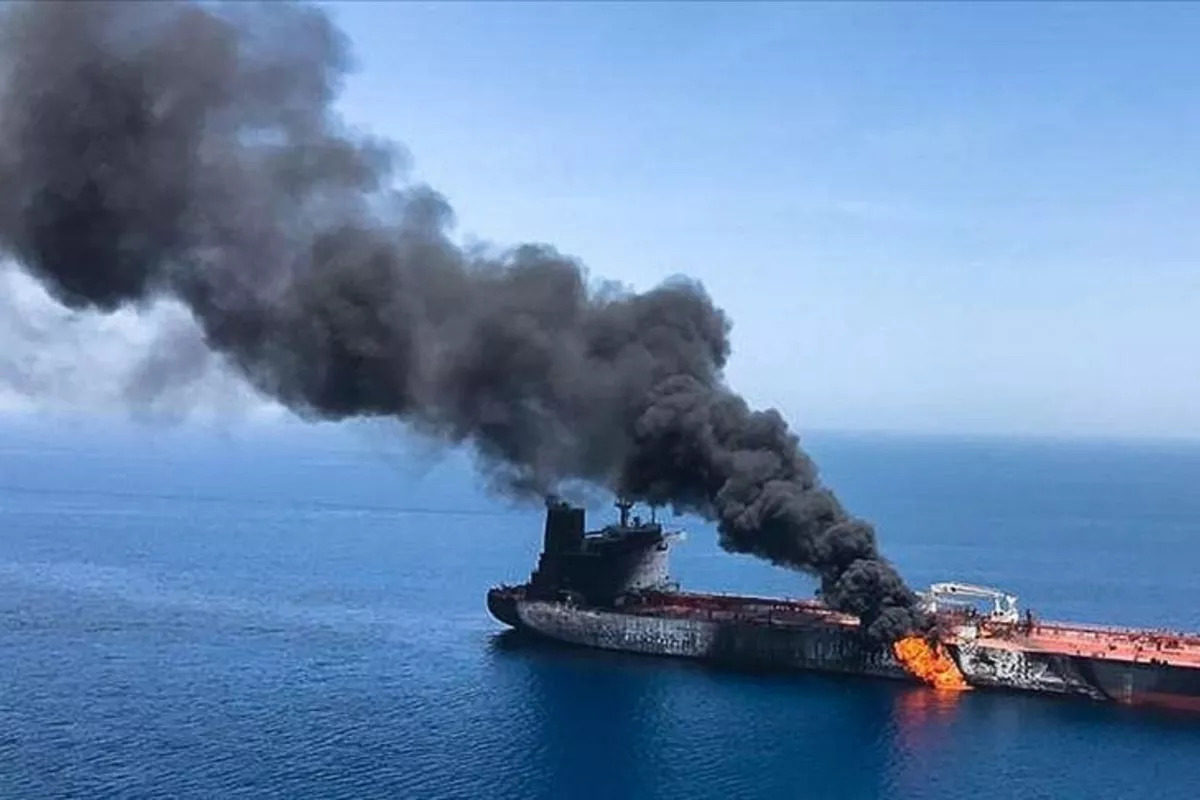
The timing of Iran’s attack on Qatri oil vessel passing through the Strait of Hormuz has raised serious questions about Iran’s strategic calculations at a moment when the country was already experiencing an emotionally charged period of national mourning. As millions of Iranians attended the funeral processions and remembrance ceremonies for former Supreme Leader Ayatollah Ruhollah Ali Khomeini, the decision to escalate tensions in one of the world’s most strategically important waterways appeared, to many observers, as a risky move that could carry consequences far beyond Iran’s immediate objectives.
The funeral ceremonies were not merely religious or cultural gatherings. They also served as a powerful political demonstration of national identity, revolutionary loyalty, and resistance against external pressure. The large participation of mourners and the emotional atmosphere created an impression of unity at a time when Iran faced significant internal and external challenges. However, the transition from a display of public solidarity to military escalation has created a complex strategic dilemma for Tehran.
Iran’s leadership may have interpreted the massive public turnout and anti-American and anti-Israeli slogans during the mourning processions as evidence of renewed national strength and public support for a more aggressive foreign policy. Chants of “Death to America” and “Death to Israel,” which have been a recurring feature of Iranian political demonstrations since the 1979 revolution, reflect deep-rooted ideological opposition toward Washington and Tel Aviv. For many supporters of the Islamic Republic, these slogans represent resistance against perceived foreign domination and decades of geopolitical confrontation.
However, political symbolism and military strategy are not always the same. A large public gathering does not necessarily translate into unlimited strategic freedom. Governments must distinguish between emotional moments of national unity and the realities of international power competition. A decision taken during a period of heightened emotions can sometimes lead to unintended consequences.
The attack on the oil vessel, raises the question of whether Iran acted from a position of confidence or whether it overestimated its strategic advantage. Tehran may have believed that its ability to disrupt maritime traffic in the Strait of Hormuz would strengthen its negotiating position and demonstrate that it could challenge its adversaries despite international pressure. The Strait of Hormuz remains one of the most critical energy routes in the world, with a significant portion of global oil supplies passing through it every day. Any threat to shipping in this region immediately affects global markets, energy prices, and international security calculations. Yet, such actions also carry enormous risks.
Iran has historically used the Strait of Hormuz as a strategic pressure point, but every escalation in this region invites a response from global powers that depend on the stability of energy routes. The United States and its allies have repeatedly made clear that freedom of navigation in international waters is a vital interest. A military confrontation in the Gulf could quickly expand beyond the immediate parties involved.
The timing of the attack makes the situation even more complicated. Iran was attempting to project an image of national unity and strength during the mourning period. Instead, the incident risked shifting international attention from the symbolism of the funeral ceremonies to accusations of regional destabilization.
In moments of crisis, countries often seek to demonstrate strength, but excessive confidence can produce strategic errors. A government may believe that limited military action will send a warning message, but opponents may interpret it as aggression requiring a stronger response. The danger of escalation lies precisely in this gap between intended message and perceived threat.
The attack also comes at a time when the Middle East remains deeply unstable. Conflicts in Gaza, tensions between Iran and Israel, disputes involving regional militias, and competition between global powers have created an environment where even a single military incident can trigger a broader confrontation. Iran’s actions have once again brought the possibility of a wider regional war back into focus.
The consequences could be serious. Economically, any prolonged instability around the Strait of Hormuz could increase oil prices, create inflationary pressures worldwide, and damage fragile economies dependent on energy imports. Politically, it could weaken diplomatic efforts aimed at reducing tensions between Iran and Western countries. Strategically, it could encourage Iran’s opponents to adopt a more confrontational approach.
For Iran, the biggest challenge is balancing revolutionary ideology with national interest. The Islamic Republic has always presented itself as a symbol of resistance against foreign influence, but maintaining that image requires careful strategic judgment. A powerful state must know not only when to demonstrate strength but also when restraint serves its long-term objectives better.
The funeral processions demonstrated that the Iranian leadership still possesses the ability to mobilize significant public support among its core supporters. But popular emotion cannot substitute for strategic planning. Military decisions made in moments of grief, anger, or national pride can sometimes create vulnerabilities rather than advantages. The attack on the oil vessel may therefore be remembered as a moment when Iran’s desire to project strength collided with the realities of global geopolitics. Whether it was an intentional warning, a show of defiance, or a miscalculated move, the consequences could extend beyond Tehran’s expectations.
Iran’s latest escalation highlights the dangerous intersection of domestic symbolism and international strategy. The mourning ceremonies for Ayatollah Ali Khomeini represented Iran’s revolutionary legacy and national resilience, but the decision to strike a vessel during this sensitive period may have complicated that message. Instead of strengthening Iran’s position, the action risks creating a new cycle of confrontation. In the volatile politics of the Middle East, strength is not measured only by the ability to strike, but also by the wisdom to understand when not to do so. For Iran, the coming days will determine whether this was a calculated move or a serious strategic mistake that opened the door to another devastating regional crisis.
About The Author