Pakistan’s Independent Power Producers (IPPs ) Crisis: How Successive Governments Engineered an Economic Trap
- Naveed Aman Khan
- Pinpoint
- Tiger's Eye Advisory Group - Trending News
- May 14, 2026
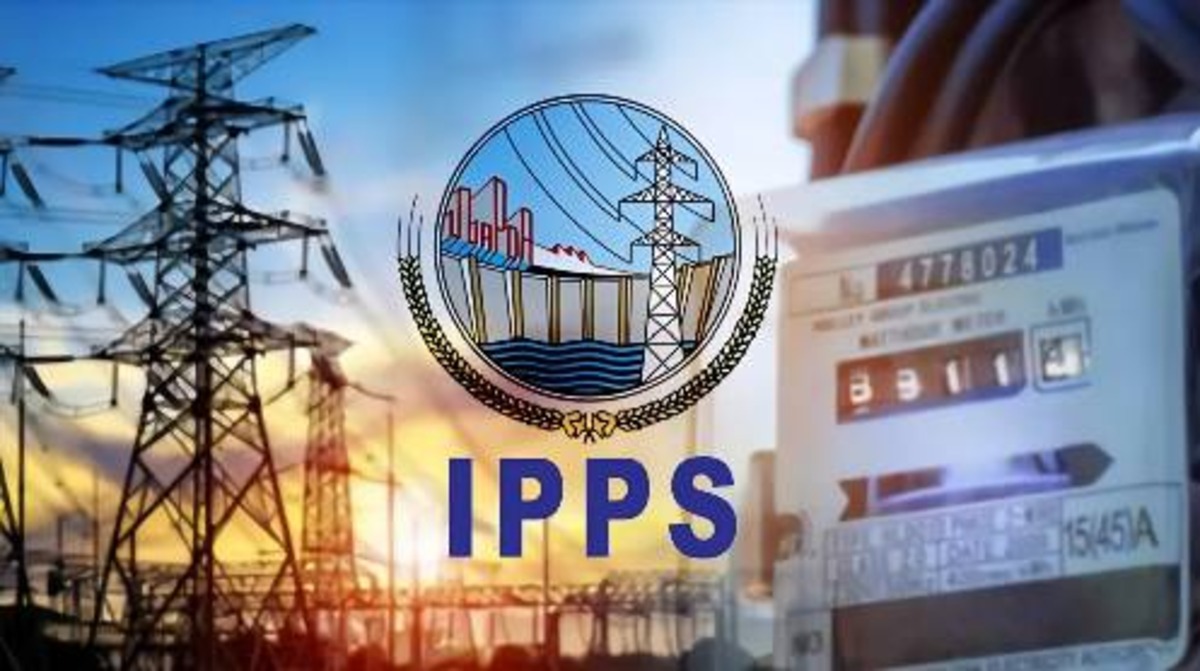
Pakistan’s energy sector has become one of the clearest examples of how flawed policymaking, weak governance, and politically protected economic arrangements can gradually push an entire nation toward financial instability. What was once presented as a solution to Pakistan’s electricity shortages has now transformed into a massive burden on the economy and the public. The Independent Power Producer (IPP) model, introduced to encourage private investment in the energy sector, has instead evolved into a system that guarantees profits for a select group of companies while transferring all risks and costs to the Pakistani people.
Today, annual payments to IPPs have crossed Rs. 3.4 trillion. This staggering figure reflects not only a crisis of energy management but also a crisis of governance. The most alarming aspect is that these payments continue regardless of whether electricity is actually produced or consumed. Under the controversial “capacity payment” clauses, the Government of Pakistan is obligated to pay private power producers simply for maintaining generation capacity. In practical terms, billions of rupees are extracted from the national treasury even when power plants remain idle.
The responsibility for this disastrous arrangement rests heavily on successive governments that negotiated, approved, and protected these irrational agreements. It is impossible to separate the current energy crisis from decades of political decisions made without transparency, accountability, or long-term national planning. Governments repeatedly signed contracts heavily tilted in favor of private investors while ignoring their devastating consequences for the public and the economy.
The original objective behind inviting private power producers was understandable. Pakistan faced severe electricity shortages during the 1990s and later periods, and policymakers believed that private investment could quickly bridge the supply gap. However, instead of creating balanced agreements that protected both investors and consumers, governments accepted conditions that virtually guaranteed profits to IPPs under all circumstances. These agreements often included dollar-indexed returns, sovereign guarantees, fuel cost protections, and mandatory capacity payments.
Such extraordinary concessions shifted commercial risks away from investors and placed them entirely on the Pakistani state.
No responsible government should have signed agreements where public funds remain legally committed even if electricity demand falls, transmission systems fail, or consumers cannot afford the rising tariffs. Yet this is exactly what happened. These agreements effectively transformed the energy sector into a mechanism of wealth transfer from ordinary citizens to powerful corporate entities.
The consequences are now visible across every layer of Pakistani society. Electricity tariffs have become unbearable for millions of households. Middle-class and lower-income families are increasingly forced to allocate a major portion of their monthly income merely to pay electricity bills. For many citizens, electricity has shifted from being a basic necessity to becoming an economic punishment.
Industries are also suffering severely. Pakistan’s manufacturing sector, already struggling with inflation, currency depreciation, and political instability, faces some of the highest electricity costs in the region. High energy prices have reduced industrial competitiveness, discouraged investment, and weakened exports. Factories operating under rising operational costs cannot compete effectively in international markets against countries with cheaper and more stable energy systems. As industries slow down or close, unemployment rises, economic growth weakens, and social frustration intensifies.
The circular debt crisis further exposes the structural failures of the system. Pakistan’s energy sector debt continues to rise because the government cannot fully recover the enormous costs embedded within the power system. Distribution losses, electricity theft, poor governance, and inflated contractual obligations combine to create a cycle of debt accumulation. Instead of fundamentally reforming the system, governments repeatedly pass the burden onto consumers through tariff increases and additional taxes.
What makes the situation even more troubling is the persistent lack of accountability.
Despite years of public outrage and repeated discussions about reviewing IPP contracts, comprehensive reforms have remained limited. Various governments promised audits, renegotiations, and structural changes, yet meaningful transformation has been slow and selective. Political considerations, elite business interests, and institutional weaknesses have consistently prevented serious accountability.
There is also a broader moral dimension to this crisis. Pakistan is a country where millions struggle with poverty, unemployment, inflation, and inadequate public services. In such conditions, guaranteeing trillions of rupees to private companies while citizens endure economic hardship raises serious questions about state priorities. The perception that powerful business groups continue receiving protected profits while ordinary people absorb the economic pain has significantly deepened public distrust toward political institutions.
At the same time, it is important to acknowledge that not all private investment in the energy sector is inherently harmful. Pakistan genuinely required additional power generation capacity during periods of severe shortages. Investors also needed legal and financial assurances to commit capital in a politically unstable environment. However, there is a fundamental difference between offering reasonable investment protections and creating contracts so heavily skewed that they undermine national economic sustainability.
The real failure lies in governance. Governments failed to negotiate from a position of national interest. They failed to build transparent regulatory oversight. They failed to anticipate future demand patterns, currency risks, and fuel price volatility. Most importantly, they failed to protect the public from the long-term consequences of poorly structured agreements.
Pakistan now urgently needs a comprehensive restructuring of its energy policy. IPP agreements must undergo transparent audits and renegotiations where legally and financially possible. The government must prioritize cheaper domestic energy sources, including hydropower, solar, wind, and indigenous coal where economically viable. Transmission and distribution reforms are equally essential to reduce losses and improve efficiency. Most importantly, future energy planning must focus on sustainability and affordability rather than short-term political gains.
The crisis also demands political courage. Reforming entrenched interests within the energy sector will not be easy. Powerful stakeholders benefit enormously from the current system, and resistance to meaningful change is inevitable. However, delaying reforms will only deepen Pakistan’s economic vulnerability and public anger.
Pakistan’s IPP crisis is ultimately more than an energy issue; it is a reflection of how weak governance and short-sighted policymaking can destabilize an entire economy. The burden of irrational contracts is no longer confined to government balance sheets — it is being paid daily by ordinary citizens through inflation, unemployment, declining industrial growth, and unaffordable electricity bills.
Unless the state decisively reforms the energy sector with transparency, accountability, and genuine public interest at its core, the country risks turning its energy infrastructure into a permanent engine of economic instability. The Pakistani people have already paid a heavy price for decades of flawed decisions. They should not be forced to continue financing a system designed to protect profits while sacrificing national welfare.
About The Author