What You Need To Install a Well on Your Property
- Casey Cartwright
- Home Improvement
- Tiger's Eye Advisory Group - Trending News
- May 12, 2026
For many property owners, a private well represents independence. It can make rural land livable, reduce reliance on municipal infrastructure, and give a household direct access to the groundwater beneath its own property. In an era when questions about water security, aging public systems, climate pressure, and local control shape public debate, that independence carries real appeal.
Yet a well is not a simple backyard upgrade. It is a permanent water system that connects land use, public health, engineering, geology, and local regulation. In this guide, we’ll explain what you need to install a well on your property, from legal permission to well equipment and more.
The first requirement is legal permission. Well rules vary by state, county, township, and local health department, so property owners should not assume that owning land automatically grants the right to drill wherever they choose. Most jurisdictions require a permit before drilling begins, and many require a licensed well contractor to perform the work. Local officials may also review the proposed location to confirm safe distances from septic systems, livestock areas, fuel tanks, chemical storage, property lines, drainage fields, and other possible contamination sources.
Before you install a well on your property, you’ll need a proper site evaluation. Some properties sit over productive aquifers that can supply steady water at manageable depths, while others require deeper drilling, produce limited flow, or contain groundwater with minerals, sediment, bacteria, or naturally occurring contaminants. A drilling contractor may use local well logs, regional aquifer data, neighboring well records, and on-site conditions to estimate depth, yield, and likely construction requirements. Those estimates help the owner budget realistically, but they do not guarantee an exact result.
The physical location of the well deserves careful thought. A well should sit where equipment can reach it during drilling, repair, and future service. It should also remain accessible after landscaping, fencing, driveways, additions, or outbuildings change the property. Placing a well in a protected but reachable area can prevent expensive problems years later.
The well design must match the household’s needs. A small seasonal cabin, a full-time family home, a farm property, and a residence with irrigation demands may all require different flow rates, storage decisions, and pump configurations. Contractors typically consider the expected daily water use, the number of fixtures, the depth of the well, the recovery rate, and the distance between the well and the home. The pump must be strong enough to lift water from the aquifer and deliver it at usable pressure, but oversized equipment can create inefficiency and premature wear.
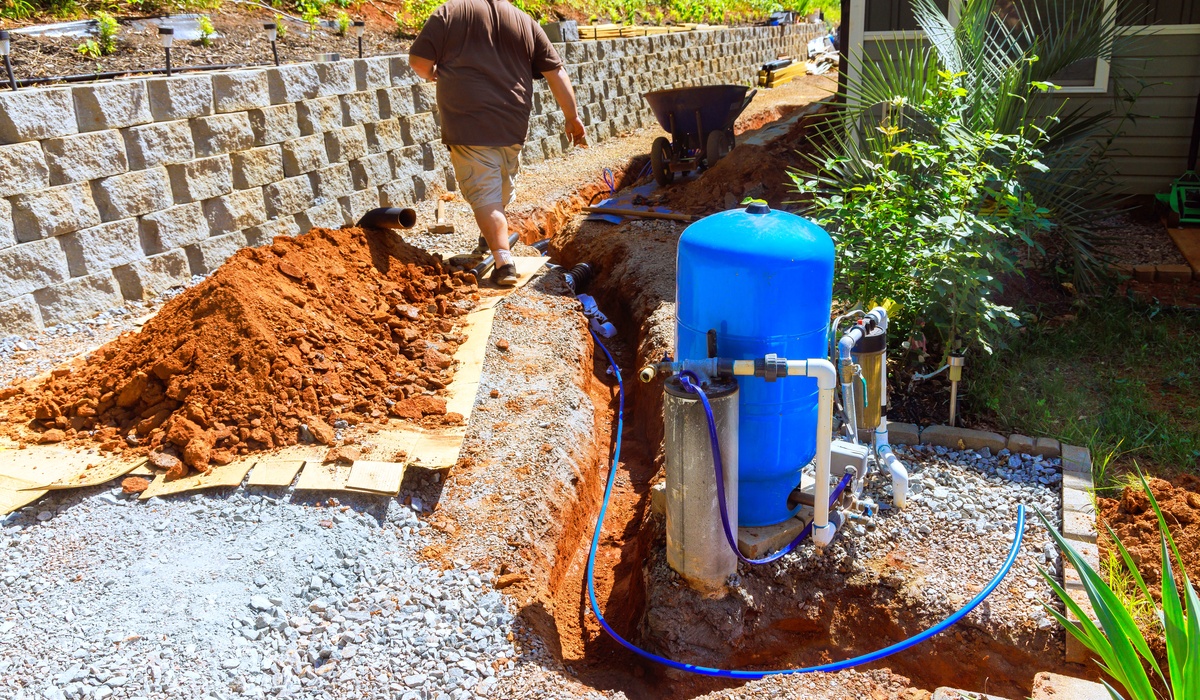
That system includes more than a hole in the ground. A residential well usually requires casing, a sanitary well cap, grout or sealing material, a submersible or jet pump, a drop pipe, wiring, a pressure tank, a pressure switch, water lines, and sometimes treatment equipment. Each component affects reliability. Property owners must choose the right well drop pipe for their pump system carefully to support the pump load and set themselves up well for future maintenance.
Water quality testing should not wait until problems become obvious. Clear water can still contain contaminants, and unpleasant taste does not always identify the most serious risks. After drilling, owners should arrange testing through a certified laboratory and follow any local health department requirements before using the water for drinking, cooking, or bathing. Baseline testing helps establish what treatment, if any, the home needs. Common concerns include:
- Coliform bacteria
- Nitrates
- Arsenic
- Iron
- Manganese
- Hardness
- Total dissolved solids,
- pH balance
Treatment equipment, when necessary, should match the test results rather than assumptions. A water softener addresses hardness, but it does not solve bacterial contamination. A sediment filter may protect fixtures and appliances, but it does not remove every chemical concern. Buying treatment equipment before testing can waste money and create a false sense of security.
Cost planning should account for both installation and ownership. Drilling depth, casing requirements, local geology, pump size, trenching distance, electrical work, permitting, water treatment, and site restoration can all affect the final price. A shallow estimate may look attractive at the beginning, but wells can become more expensive when contractors encounter hard rock, low yield, or poor water quality.
Owners should also plan for continuing expenses, including annual testing, filter changes, pressure tank service, pump repairs, electrical use, and eventual component replacement. A well can provide long-term value, but it is still infrastructure, and infrastructure requires maintenance.
Seasonal and environmental events can also affect a well. Flooding can introduce bacteria and debris, drought can lower water levels and strain pumps, nearby construction can alter drainage patterns, and new agricultural activity, chemical storage, or fuel spills in the area can change the risk profile. After major flooding, a sudden change in taste, odor, color, or pressure, or any known contamination event nearby, owners should stop treating the well as static. A well is part of a living landscape, and its condition can change along with the land around it.
Documentation protects the owner and future buyers. A property file should include permits, drilling records, depth, casing details, pump specifications, water test results, treatment equipment manuals, service invoices, and contractor contact information. These records help technicians diagnose problems, help buyers understand the system during a real estate transaction, and create accountability. When private infrastructure remains undocumented, the next owner may inherit confusion, risk, and avoidable costs.
Homeowners should also think about emergency preparedness. A well depends on electricity unless the system includes backup power or a hand-pump arrangement. During outages, a home may lose running water even when groundwater remains available.
For rural households, this can affect drinking water, sanitation, livestock, heating systems, and fire readiness. A generator, properly installed transfer equipment, stored potable water, or another backup plan can turn a private well from a vulnerability into a more resilient household asset.
A successful well project depends on qualified professionals. A reputable contractor should explain the permit process, discuss likely depth and yield, describe materials, provide a written estimate, answer questions about disinfection and testing, and follow state and local construction standards. Owners should resist the temptation to choose solely on price. Poor construction can invite contamination, shorten equipment life, reduce water output, and make later repairs more difficult.
Installing a well ultimately means accepting a different relationship with water. Instead of paying a utility bill and trusting a public system, the owner becomes the steward of a private source. That role can bring autonomy, stability, and practical value, especially for rural properties and homes beyond municipal service lines. It also demands attention to law, science, equipment, and long-term care.
The best approach to private well installation treats the project as essential infrastructure from the beginning. Before drilling, owners need permits, professional guidance, a suitable site, a realistic budget, and an understanding of the groundwater beneath the land. After drilling, they need testing, maintenance, documentation, and a plan for responding when conditions change. A well can serve a household for decades, but only when the owner respects what it is: not just a water source, but a private public-health system on one property.
About The Author