In The Month of Ramadan, We Honour Fatima al-Fihriya
- TDS News
- Tiger's Eye Advisory Group - Trending News
- Ramadan
- March 5, 2026
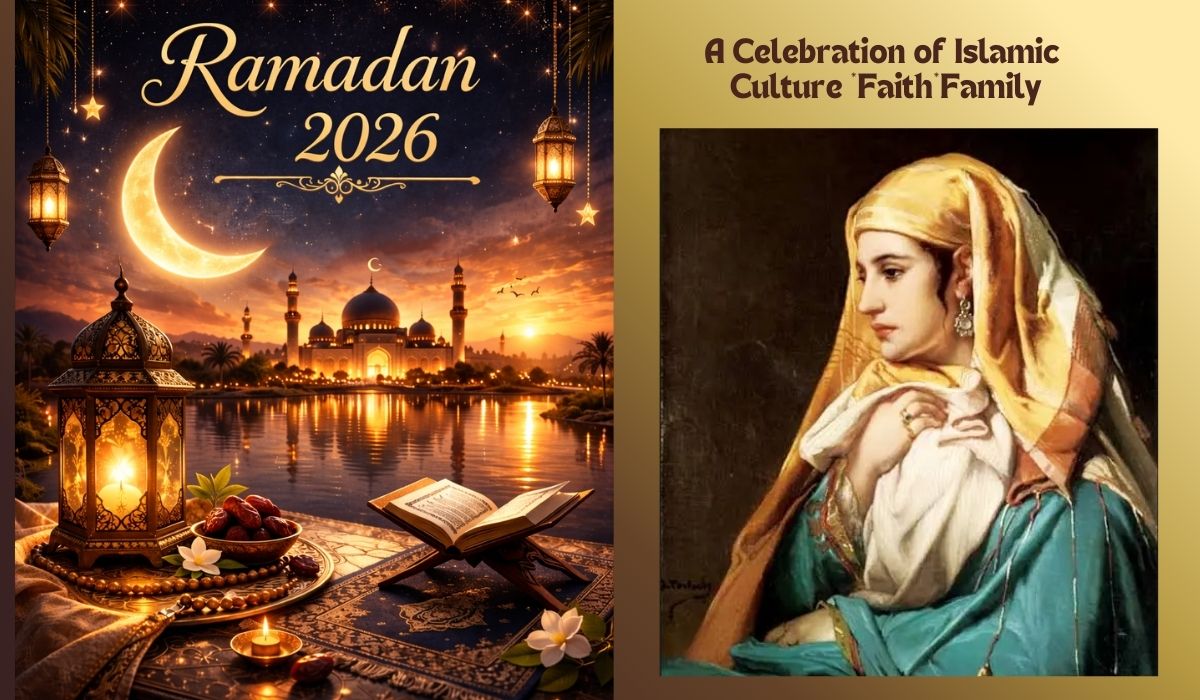
The Woman Whose Vision Built the World’s First University
Ramadan is a month that often brings forward the most visible names in Islamic history, yet many of the people who shaped civilization through quiet determination remain largely unknown outside scholarly circles. One such figure is Fatima al‑Fihri, a woman whose life demonstrates how faith, knowledge, and generosity can reshape the intellectual landscape of an entire world.
Fatima al-Fihri lived in the ninth century in the city of Fez during a time when the Muslim world was experiencing an extraordinary intellectual awakening. Scholars, poets, mathematicians, and philosophers were transforming cities into vibrant centers of learning. Yet even in that flourishing environment, the idea that a woman would establish one of the most influential institutions of learning in human history would have seemed remarkable.
Her family had migrated from the city of Kairouan, bringing with them both wealth and a strong commitment to faith. After the death of her father, Fatima and her sister inherited a considerable fortune. Rather than using the money for personal comfort, Fatima made a decision that reflected both her devotion and her understanding of the importance of education.
She set out to build a mosque that would serve not only as a place of worship but also as a center for learning. Construction began in 859, and according to historical accounts, she personally oversaw the project. Some traditions say she even fasted throughout the entire period of construction as a spiritual act of dedication, ensuring the project remained rooted in humility and gratitude.
What emerged from her vision was the institution now known as the University of al-Qarawiyyin. Over the centuries, the mosque developed into a fully functioning center of higher learning. Scholars from across the Muslim world and beyond traveled to Fez to study theology, mathematics, astronomy, law, and philosophy.
Long before modern universities appeared in Europe, students were already gathering in its courtyards and study halls. The institution eventually became recognized by UNESCO and Guinness World Records as the oldest continuously operating university in the world.
The intellectual influence of al-Qarawiyyin reached far beyond North Africa. Scholars who studied there helped preserve classical Greek philosophy, advance mathematics, and expand scientific understanding during a period historians often refer to as the Islamic Golden Age. The ripple effects of that scholarship would eventually reach Europe and shape the foundations of the Renaissance.
What makes Fatima al-Fihri’s story especially meaningful during Ramadan is the motivation behind her achievement. She did not build the institution for prestige or recognition. Her intention was rooted in charity, service, and devotion to God. In Islamic tradition, acts of charity that benefit society for generations are known as sadaqah jariyah, ongoing charity whose rewards continue long after the giver has passed away.
Few examples of this concept are as powerful as the university she founded. More than eleven centuries later, the institution still stands in Fez, continuing to teach and inspire students from around the world.
Fatima al-Fihri’s legacy reminds us that the pursuit of knowledge has always been deeply intertwined with faith in the Muslim world. Her life also quietly challenges assumptions about the role of women in history. At a time when many societies limited women’s influence in public life, she created one of the most important educational institutions humanity has ever known.
During Ramadan, when millions reflect on generosity and the long-term impact of good deeds, the story of Fatima al-Fihri offers a powerful reminder. True influence is not always loud or celebrated. Sometimes it is built brick by brick, guided by faith, patience, and a vision that stretches centuries into the future.
About The Author