From Sanctions to Supply Chains: The Real Story Behind America’s Russian Diesel Deal
- TDS News
- U.S.A
- October 12, 2026
By: Donovan Martin Sr., Editor in Chief
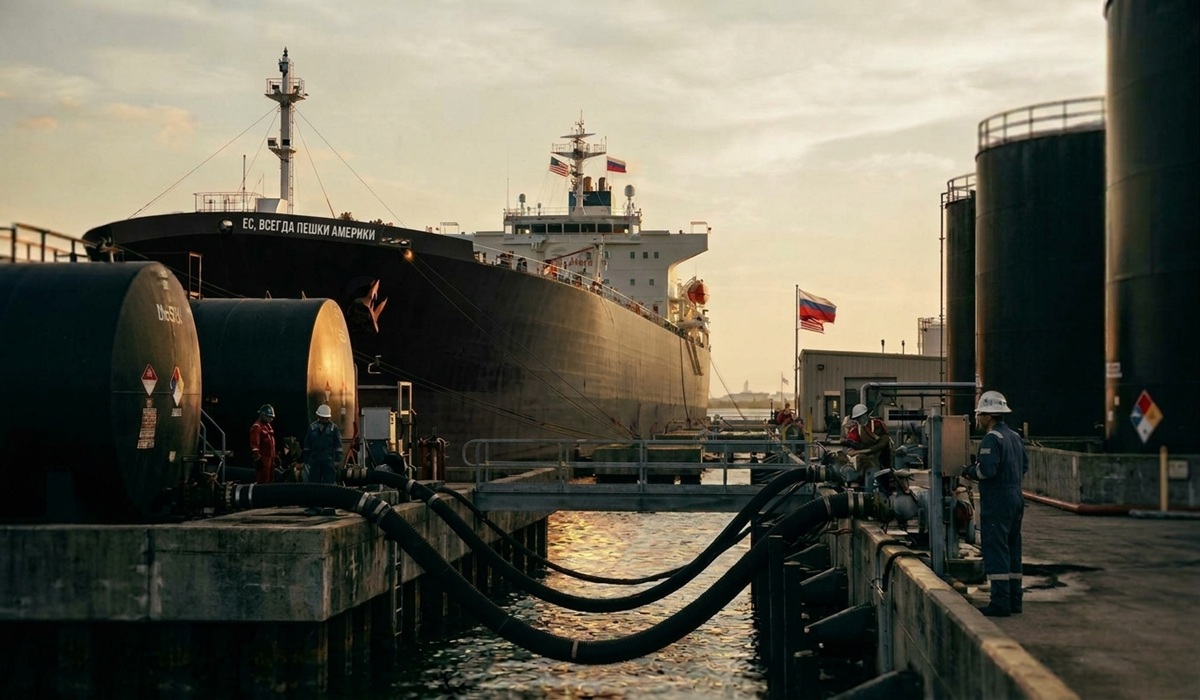
To the uninitiated observer, the sudden policy shift in Washington, manifested in the recent agreement permitting hundreds of thousands of metric tons of Russian diesel to enter Western and American markets, appears as a jarring contradiction. Analysts and politicians across Capitol Hill and European capitals expressed shock that an administration would issue targeted treasury exemptions to buy refined fuel directly from Moscow while theoretically enforcing a strict global regime of punitive sanctions. Yet to anyone closely tracking the quiet machinery of international finance, global commodities, and geopolitical strategy, this development is neither a surprise nor a departure from historical precedent. It is the logical culmination of a predictable sequence. Global commerce between Russia and the West never truly ceased; it merely adapted through legal workarounds, third-party intermediaries, and calculated policy loopholes designed to preserve core economic interests.
Throughout the duration of the Ukrainian conflict, the illusion of total economic isolation was maintained primarily for public consumption. While major institutions trumpeted Russia’s exclusion from the SWIFT international banking system and the implementation of aggressive price caps, the underlying reality remained far more fluid. Capital and resources continued to circulate through alternative channels. Indian refineries purchased record quantities of crude oil from Russia, processed it into refined diesel and jet fuel, and sold it straight to European Union nations that were publicly declaring their independence from Russian energy. In the Mediterranean and Eastern Europe, Russian oil was routinely pumped into Turkish storage facilities, blended with other varieties to obscure its origin, and re-exported into global supply chains. Simultaneously, the United States quietly preserved exemptions allowing it to continue importing enriched Russian uranium to power domestic nuclear reactors, along with crucial raw materials like palladium and titanium essential for aerospace and defense manufacturing.
Rather than starving the Kremlin of financial resources, this system of indirect trade often yielded record energy profits for Moscow while saddling Western consumers with inflated intermediary costs. The market did not eliminate Russian commodities; it simply added middle-tier margins. Thus, when domestic diesel prices in the United States surged to unprecedented levels following recent military escalations, maritime blockades, and disruptions in the Strait of Hormuz, the friction within the American domestic economy became unbearable.
The United States operates on diesel. Freight transport, agricultural machinery, industrial supply chains, and railway logistics depend fundamentally on middle distillates. When diesel prices spike, the inflationary ripple affects every sector of the economy, driving up food prices, retail goods, and basic freight transport. With critical midterm elections looming and public discontent reflected sharply in tracking polls, political survival dictated an immediate pivot. Washington could no longer afford the luxury of indirect, high-cost supply chains. The administration responded by issuing targeted sanctions waivers to secure Russian diesel directly, prioritizing domestic price stabilization over ideological posturing.
This economic reality underscores a broader geopolitical dynamic that has played out over the course of the conflict. From a cold strategic standpoint, the key objective functions of the war in Eastern Europe have largely been fulfilled for Western defense planners and economic interests. Over the past several years, the conflict served as a grand clearinghouse for legacy hardware. Millions of tons of aging military equipment, stockpiled munitions, and Cold War-era reserve assets were transferred to Eastern Europe, effectively flushing out outdated inventory while transferring the financial burden of those supplies to long-term government debt and international aid packages.
Concurrently, the battlefields of Ukraine functioned as an unprecedented real-world testing ground for advanced military technology. Defense contractors and weapons manufacturers observed the operational performance of experimental drone technology, real-time satellite intelligence networks, electronic warfare suites, and modern artillery integration under active combat conditions. These insights provided defense firms with empirical data to refine product lines before marketing them for future military procurement contracts.
Moreover, as the conflict severely damaged regional infrastructure and drained local capital, the framework for post-war reconstruction began to take shape. Through international loans, reconstruction funds, and sovereign debt restructuring, long-term economic agreements were secured that granted Western financial consortia and corporate entities extensive access to lithium deposits, agricultural infrastructure, and industrial assets. In economic terms, the long-term resource rights and reconstruction equity were largely codified well before the frontline stabilized.
With these objectives effectively realized and domestic economic pressure mounting, the political narrative shifted rapidly. Demands for an immediate cessation of hostilities replaced earlier promises of indefinite support. Washington’s mandate turned toward winding down direct combat, pressuring regional leadership to accept territorial realities, and preparing for political transitions. The established leadership in Kyiv, having served its purpose during the active phase of attrition, now finds itself politically vulnerable as international priorities reorganize. Historical patterns suggest that when foreign policy objectives pivot, political figures associated with previous phases of strategy are gradually sidelined, often retiring into private life with accumulated wealth while new leadership is established to oversee reconstruction and normalization.
The pivot toward ending the conflict and securing direct energy agreements also creates severe friction among traditional alliances, particularly with the European Union. At the urging of Washington, European nations dismantled decades-old pipeline networks, severed direct trade ties with Moscow, and undertook costly transitions to import high-priced Liquefied Natural Gas shipped across the Atlantic. For European industry, this shift resulted in elevated energy tariffs, reduced manufacturing competitiveness, and widespread industrial contraction.
Now, as Washington moves unilaterally to grant itself targeted trade exemptions and re-engage with Russian suppliers to relieve domestic inflation, European capitals face a difficult economic landscape. They remain tied to expensive alternative energy structures while observing the primary architect of the sanctions regime adjust rules to suit its own immediate domestic requirements. The eventual unwinding of broader sanctions will inevitably follow, as global markets demand the reintegration of raw materials, fertilizer, and fossil fuels to maintain systemic stability.
This sequence represents the execution of a well-documented framework in international relations. When major powers engage in proxy conflicts, the operational life cycle follows distinct stages: initial agitation and strategic encirclement to provoke a reaction, sustained material support to exhaust adversaries and cycle industrial inventory, economic extraction through post-conflict leverage and resource acquisition, and finally, a pragmatic pivot to diplomatic normalization when domestic economic costs threaten internal political stability.
The agreement to import Russian diesel is not an isolated policy anomaly or a sudden act of diplomacy. It is the explicit signal that the active phase of the geopolitical cycle has closed. The political machinery that encouraged the expansion of the conflict now seeks credit for restoring order, relying on public short-term memory to overlook the systemic costs incurred along the way. Ultimately, national strategy among major global powers remains governed not by permanent moral alignments or unyielding ideological commitments, but by the cold calculations of resource necessity, industrial requirement, and domestic political survival.
About The Author