Trump, Putin, and Xi Issue Joint Peace Declaration in Shenzhen as Washington Presses Europe on Ukraine Spending
- Kingston Bailey
- U.S.A
- November 20, 2026
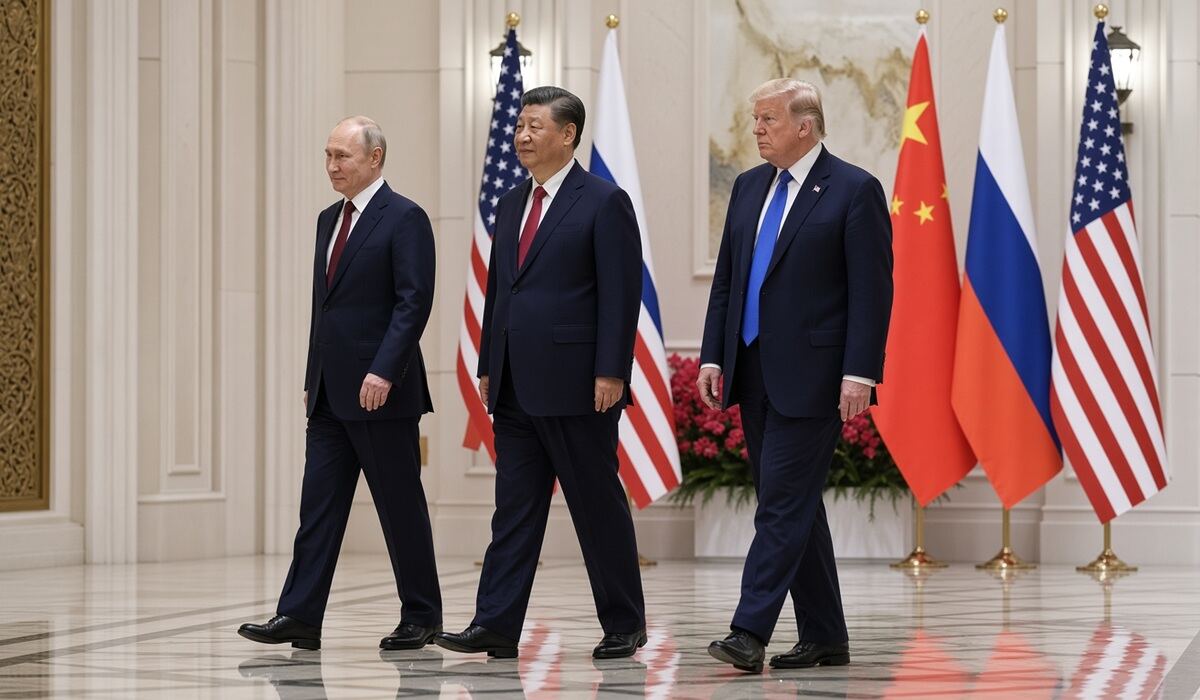
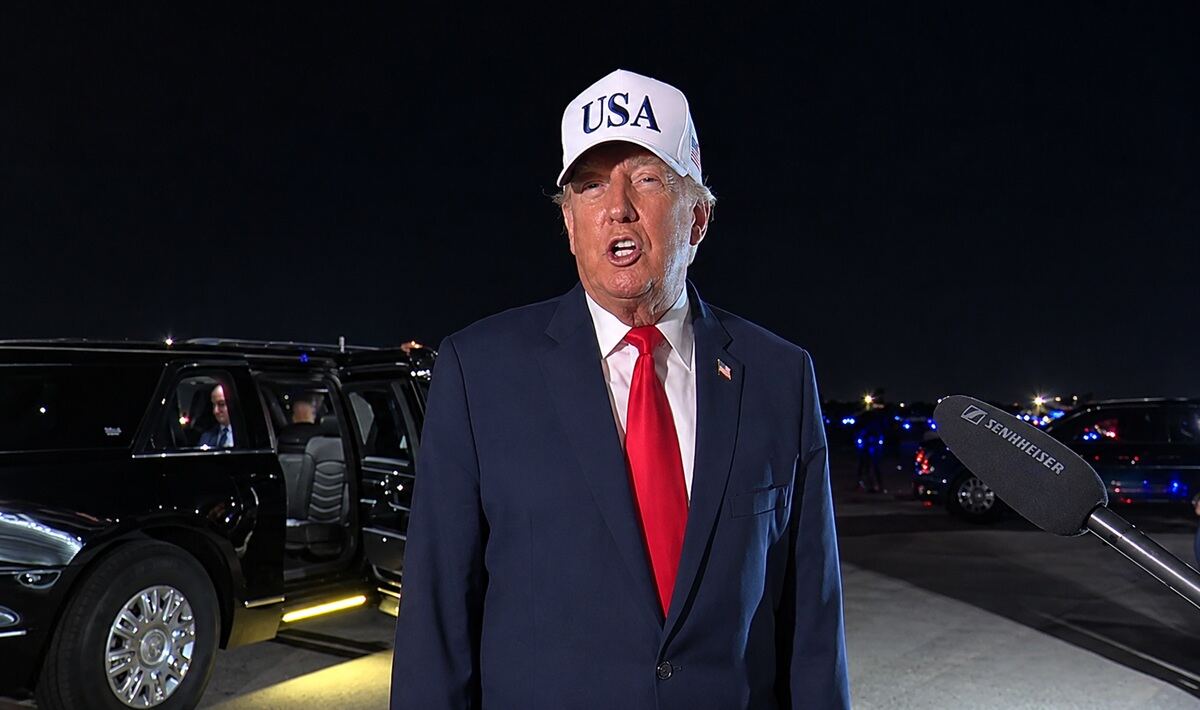
WASHINGTON (AP) — President Donald Trump joined Russian President Vladimir Putin and Chinese President Xi Jinping in issuing a landmark trilateral declaration on nuclear restraint and global energy stability during a high-stakes meeting in Shenzhen, China, before immediately turning his diplomatic focus toward pressuring European allies to curtail billions of dollars in military assistance to Ukraine.
The extraordinary three-way summit on Thursday, convened on the margins of the Asia-Pacific Economic Cooperation gathering in southern China, produced the first joint heads-of-state communique among the world’s three foremost nuclear powers in years. In the text released by the White House, Trump, Putin, and Xi reaffirmed the foundational Cold War principle that a nuclear war cannot be won and must never be fought, committing their respective governments to structured bilateral and trilateral dialogues aimed at reducing strategic nuclear risks and preventing weapons proliferation.
Beyond arms control, the Shenzhen declaration outlined unexpected areas of alignment on global governance, international law, and energy markets. The three leaders pledged to coordinate efforts to expand the global production and supply of refined petroleum products, emphasizing the necessity of uninterrupted energy flows to stabilize international economies. They also endorsed institutional reforms at the United Nations Security Council, where all three nations hold permanent veto power, stating that the body must be modernized to respond more effectively to contemporary geopolitical crises.
In a pointed rebuke to international tribunals, the joint statement further asserted that state consent and the legal immunities of sitting heads of state are paramount principles of international order, warning that the International Criminal Court and similar judicial bodies must not overstep their jurisdictional boundaries. That language represented a notable diplomatic victory for Putin, who has faced an international arrest warrant since 2023, as well as a reflection of longstanding American and Chinese skepticism toward supranational courts.
Yet even as the White House hailed the Shenzhen accord as a breakthrough in great-power diplomacy, the president’s subsequent conversations with European leaders sparked immediate alarm across allied capitals. Within hours of leaving his private discussions with Putin and Xi, Trump held a conference call with members of the European-led Coalition of the Willing, a 34-nation diplomatic and military grouping established to sustain Kyiv’s defense against Russian aggression.
According to European officials briefed on the private exchange, Trump questioned the wisdom of continuing to pour tens of billions of dollars into military aid packages for Ukraine, arguing that the prolonged conflict has exacted an unacceptable human toll and drained Western treasuries. The president told his European counterparts that based on his direct conversations in Shenzhen, he believed Putin was genuinely prepared to negotiate a settlement to end the war.
Trump’s assessment stands in stark contrast to fresh intelligence evaluations circulated across Western capitals earlier this week. According to officials familiar with those assessments, American and European intelligence agencies have concluded that the Kremlin has no intention of making meaningful territorial concessions and is instead preparing to sustain offensive ground operations throughout the winter months. Intelligence analysts warned that Moscow plans to pair winter infantry assaults with continued long-range drone and missile barrages targeting Ukrainian energy infrastructure and urban centers in an effort to exhaust Kyiv’s air defenses and fracture Western political unity.
The divergence between the White House’s diplomatic optimism and the sobering conclusions of intelligence professionals underscores a deepening strategic rift between Washington and its traditional transatlantic partners. European leaders, many of whom view Russian expansionism as an existential threat to continental security, have spent the past year expanding domestic defense manufacturing to offset fluctuating American support. Hearing the American president echo Moscow’s framing of the conflict immediately after meeting with Putin and Xi has heightened anxiety in London, Paris, Berlin, and Warsaw that Washington may attempt to broker a ceasefire arrangement over the heads of Ukrainian and European officials.
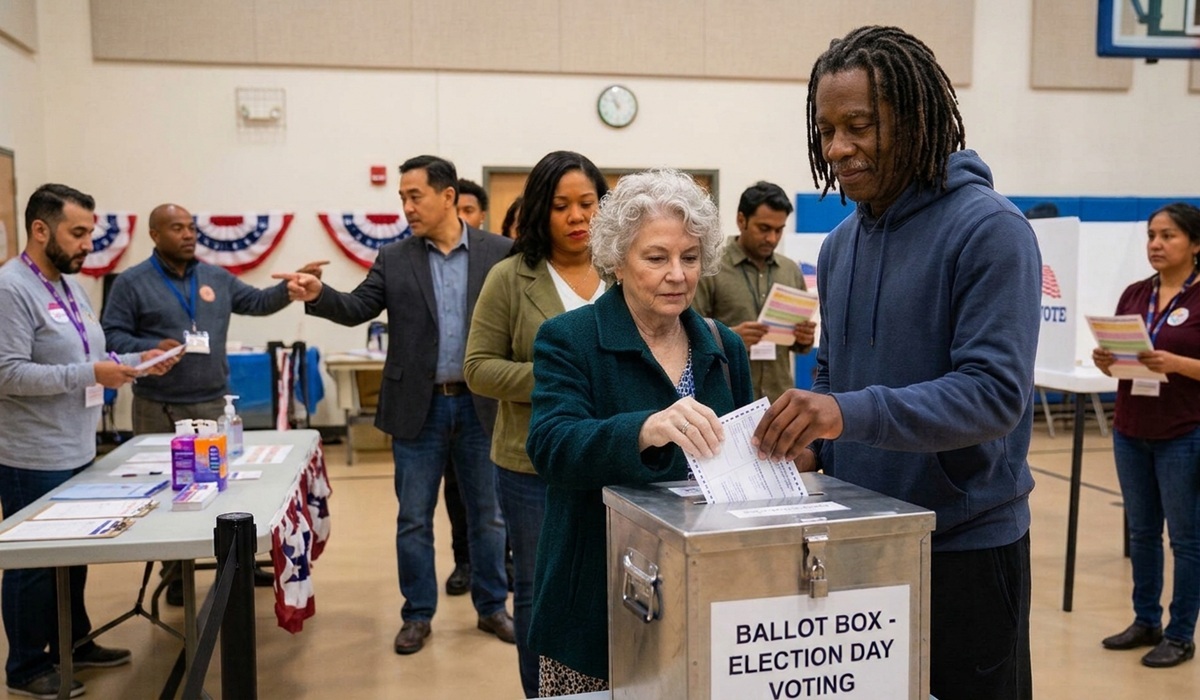
At home, Trump’s assertive foreign policy maneuvers coincide with a dramatic shift in domestic political power following the November midterm elections. Final tallies from across the country confirm that the Democratic Party has captured control of both the House of Representatives and the Senate, ending two years of unified Republican governance in Washington and setting the stage for intense legislative battles over foreign aid, trade authority, and executive oversight.
In the House, Democrats flipped more than a dozen competitive Republican-held districts across industrial battlegrounds and suburban corridors, securing a decisive majority well above the 218-seat threshold. Key Democratic pickups included districts in Michigan, New York, Pennsylvania, Virginia, Iowa, Colorado, Arizona, Ohio, and California, driven by voter dissatisfaction over consumer prices, tariff-induced supply disruptions, and health care costs. In the Senate, Democrats similarly crossed the 51-seat mark needed to reclaim the gavel, giving incoming Senate leaders the power to scrutinize judicial and diplomatic nominations as well as international agreements.
Incoming Democratic committee chairs have already signaled that oversight of the administration’s Russia and China policies will be a top priority when the new Congress convenes in January. Lawmakers from both parties have expressed concern over recent administration decisions affecting national security, including the approval of nearly 900,000 advanced artificial intelligence semiconductors for export to China over the past six months and ongoing naval blockades targeting Iranian ports in the Persian Gulf that have driven up global maritime insurance premiums.
Supporters of the president argue that his willingness to engage directly with authoritarian rivals in Shenzhen demonstrates pragmatic statesmanship designed to prevent catastrophic conflict between nuclear-armed superpowers. Administration officials contend that linking nuclear risk reduction with global energy stabilization addresses the most urgent threats facing American households, and they insist that European nations must assume primary financial responsibility for security on their own continent.
Critics, however, warn that signaling a retreat from Ukraine while relaxing technology export controls weakens American deterrence in both Europe and the Indo-Pacific. Foreign policy analysts note that Beijing closely watches Western resolve in Eastern Europe when calculating its own strategic options regarding Taiwan and the South China Sea.
As Trump returns from Asia to face a newly empowered Democratic opposition on Capitol Hill, the administration’s dual-track approach of personal summitry with Moscow and Beijing alongside sharp pressure on traditional allies promises to test the durability of post-war international alliances well into 2027.
About The Author