American War Casualties In Middle East Are Staggering: Wait Till The American People Know How Bad
- Contributor
- U.S.A
- August 1, 2026
Digital Image rendering
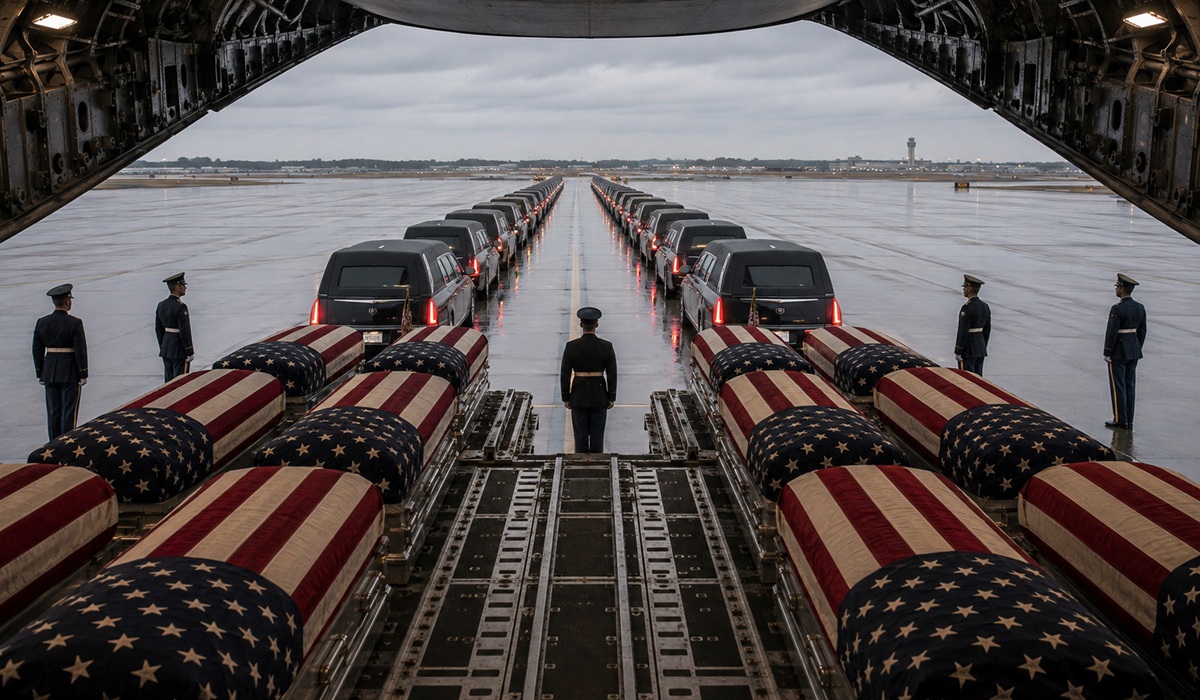
WASHINGTON — The mounting toll of American casualties in the ongoing conflict with Iran has exposed a widening and fatal chasm between official administration assurances and the devastating reality on the ground. As flag-draped transfer cases return home and military hospitals absorb a relentless wave of wounded personnel, independent economic tracking and defense estimates indicate that direct conflict expenditures have already surpassed tens of billions of dollars. This staggering financial and human cost lays bare an immense public commitment that consistently outstrips domestic social investments, all while the administration’s initial framing of the war unravels under the weight of firsthand accounts from the theater of operations.
Throughout the buildup and execution of hostilities, officials repeatedly assured the American public that the engagement would be swift, surgical, and insulated from heavy personnel losses. Yet those official guarantees have collapsed as reports from the front lines reveal a steady accumulation of dead and wounded service members. Families across the country are receiving the grim news that their loved ones have fallen victim to a conflict that the administration claimed would remain tightly controlled. Critics and returning personnel point out that the narrative presented to Congress and taxpayers minimized the true dangers of engaging a sophisticated adversary equipped with advanced regional strike capabilities.
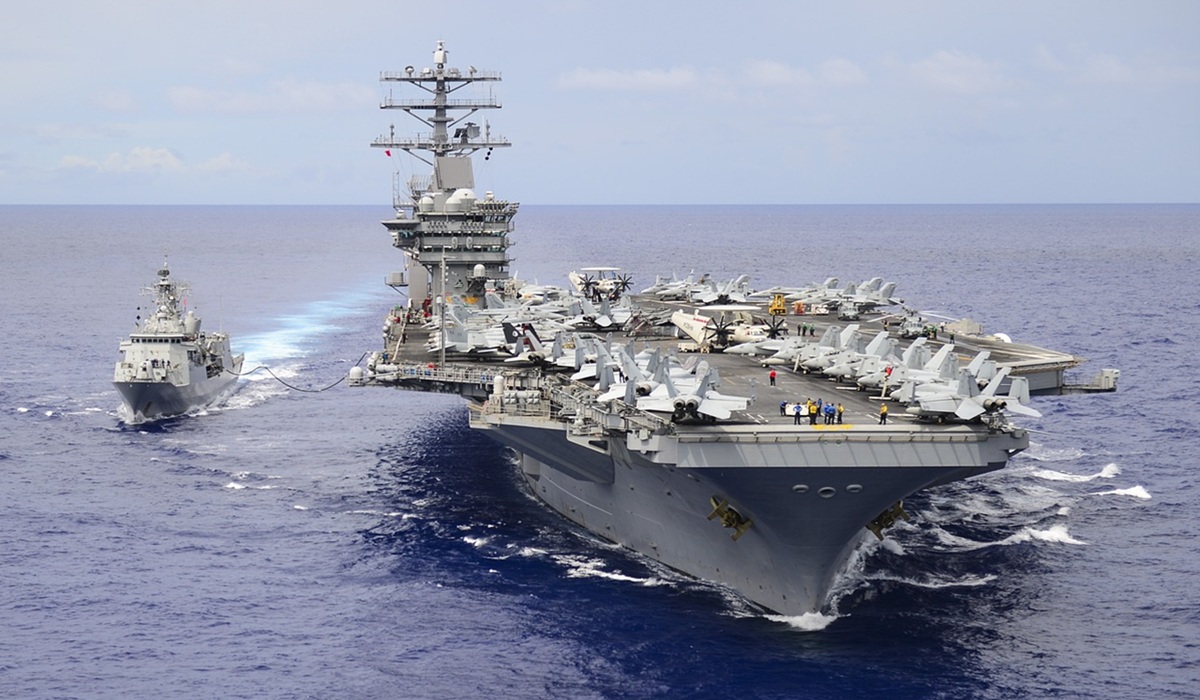
The rapid escalation of casualties arrives as advanced tactical hardware continues to be consumed by high-intensity combat. Elite aerospace assets, including multi-million-dollar fighter jets, sophisticated command and control architecture, advanced radar installations, and specialized battery systems, are being incinerated at an unprecedented velocity. Independent analysts note that official Pentagon accounting frequently undercounts the true price tag by omitting the long-term costs of medical care for wounded personnel, the replenishment of depleted munitions stockpiles, and the reconstruction of regional military infrastructure.
The trillions of dollars historically funneled into military interventions throw a sharp light on the chronic underfunding of domestic institutions designed to support vulnerable populations within the United States. Housing advocates and economists frequently point out that a fraction of the capital consumed by contemporary conflicts could effectively eradicate chronic homelessness nationwide. Comprehensive programs combining permanent supportive housing, mental health counseling, and addiction treatment require financial commitments that pale in comparison to the multi-hundred-billion-dollar baseline budgets allocated annually to the defense sector. When politicians claim that the nation lacks the economic capacity to house every unhoused citizen, the argument stands in glaring contradiction to the seemingly limitless appropriations readily approved for military engagements abroad.
Healthcare access presents another glaring disparity where public policy consistently prioritizes military dominance over human wellbeing. The United States remains the only major industrialized nation without universal healthcare coverage, leaving millions of citizens navigating medical debt, unmanaged chronic illnesses, and prohibitive prescription drug costs. Millions of Americans routinely delay necessary medical treatments due to financial barriers, while federal lawmakers approve supplemental defense packages with bipartisan speed. The financial resources routinely committed to a few weeks of combat operations could easily fund comprehensive healthcare initiatives, modernize public health infrastructure, and expand preventative care access to underserved rural and urban communities alike.
The treatment of military veterans further highlights the institutional hypocrisy embedded within federal spending priorities. Individuals who return from overseas combat zones frequently encounter a Veterans Affairs system plagued by bureaucratic backlogs, understaffed medical facilities, and inadequate mental health support networks. Veterans struggling with post-traumatic stress disorder, traumatic brain injuries, and physical disabilities often must fight for years to secure the benefits and medical care they were promised upon enlistment. Society asks young men and women to operate elite military equipment and risk their lives in foreign wars, yet the political establishment routinely balks at providing the robust, lifelong support systems required to heal the resulting physical and psychological wounds. Funding the Department of Veterans Affairs adequately would require a modest reallocation of defense funds, yet veterans continue to navigate systemic neglect while war machines receive priority funding.
The crushing burden of student loan debt represents yet another domestic crisis that could be substantially alleviated if national budgetary priorities favored human capital over global military projection. Tens of millions of American borrowers carry collective debt loads exceeding one trillion dollars, severely constraining economic mobility, delaying homeownership, and discouraging family formation. The immense debt burden acts as an anchor on the younger generation, dampening broader economic productivity and reinforcing systemic inequality. While critics frequently decry student loan forgiveness proposals as fiscally irresponsible or inflationary, the federal government routinely absorbs astronomical war expenditures without demanding equivalent offsets or spending cuts elsewhere. The capital required to eliminate student loan debt entirely is roughly equivalent to the cumulative financial outlay of America’s major foreign military engagements over the past several decades.
The persistence of these domestic disparities stems from a deeply ingrained political consensus that equates military might with national security while systematically devaluing social security and public infrastructure. Defense contractors and lobbying firms maintain immense influence within the halls of Congress, ensuring that defense appropriations face minimal resistance regardless of which political party holds power. Bipartisan support for high defense budgets is routinely framed as an existential necessity to counter foreign adversaries and protect global trade routes. Consequently, public discourse is successfully steered away from questioning whether endless military intervention serves the long-term interests of ordinary citizens. Whenever domestic spending initiatives are proposed, opponents immediately raise alarms about the national debt and inflation, invoking fiscal conservatism as a barrier to social progress. Yet that same fiscal conservatism mysteriously vanishes whenever the Pentagon requests emergency supplemental funding to replace expended munitions or deploy additional strike groups.
The opportunity cost of prioritizing militarism over human infrastructure is measured not only in unspent dollars but in measurable human suffering and lost potential. When public funds are diverted away from education, healthcare, affordable housing, and social safety nets, communities degrade, poverty rates stagnate, and public trust in democratic institutions erodes. The United States possesses the largest economy in human history, meaning the ongoing failure to address domestic crises is a deliberate policy choice rather than an unavoidable economic limitation. As long as political leaders continue to treat war as the primary instrument of national purpose, systemic domestic failures will persist. Until the nation fundamentally reevaluates its core priorities to place the health, housing, education, and welfare of its populace above the demands of the global war machine, casualties will continue to mount overseas while millions of Americans are left behind to fend for themselves.
About The Author