A New Global Order in the Making: Trump, Putin and Xi Jinping’s Historic Trilateral Summit
- Naveed Aman Khan
- Pinpoint
- November 24, 2026
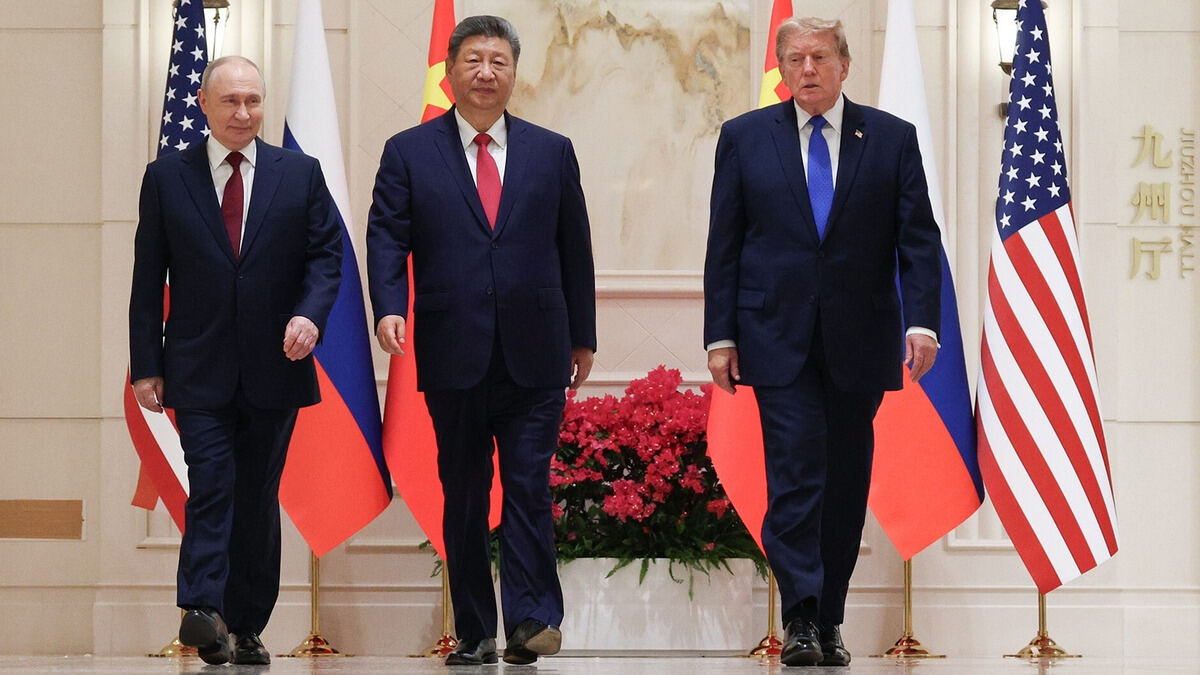
Washington, Moscow and Beijing signal a strategic realignment as nuclear restraint, international institutions and the future of global security take center stage. The international political landscape may be approaching a defining moment following an unprecedented trilateral meeting among the leaders of the United States, Russia and China. The reported summit involving President Donald Trump, President Vladimir Putin and President Xi Jinping carries significance far beyond the symbolism of three powerful leaders sitting together. Their agreement on a joint peace declaration, particularly their reaffirmation that a nuclear war must never be fought, raises important questions about the future of global security, the balance of power and the direction of international diplomacy. At a time when geopolitical rivalries, regional conflicts and strategic mistrust are deepening, such an extraordinary diplomatic engagement could represent an important opportunity to reconsider the foundations of the international order.
The most consequential aspect of this meeting is the participation of three countries whose political interests, security priorities and global ambitions have frequently placed them on opposing sides of international disputes. Washington and Moscow have experienced decades of strategic confrontation, while Washington and Beijing remain engaged in an increasingly complex competition over trade, technology, military influence and global leadership. Russia and China, meanwhile, have strengthened their strategic partnership, partly in response to Western pressure. Bringing these three powers into a common diplomatic framework is therefore a development of considerable international importance. It suggests that despite their differences, all three recognize that certain global challenges cannot be managed through confrontation alone.
The joint declaration’s strongest message concerns nuclear weapons. The commitment that nuclear war must never be fought reflects a shared recognition that a direct military confrontation involving major nuclear powers could have catastrophic consequences for humanity. The importance of this understanding cannot be overstated. In an era of advanced missile systems, expanding military capabilities and declining confidence among major powers, the risk of miscalculation remains a serious concern. Even a limited nuclear exchange could produce consequences extending far beyond the countries directly involved. By emphasizing dialogue and continued negotiations to prevent nuclear proliferation, the three leaders have acknowledged that strategic restraint is not merely a diplomatic preference but an international necessity.
However, political declarations must ultimately be judged by their practical implementation. Reaffirming opposition to nuclear war is important, but it does not automatically resolve disagreements over nuclear modernization, arms control, military deployments or regional security arrangements. The real test will be whether Washington, Moscow and Beijing can translate their political commitment into meaningful negotiations, stronger communication mechanisms and verifiable confidence-building measures. Without concrete action, even the most impressive diplomatic language risks becoming another symbolic exercise.
Another significant dimension of the reported agreement concerns the reform of the United Nations system. The three leaders’ expressed desire to pursue institutional reforms reflects growing dissatisfaction with the existing international governance structure. Established after the Second World War, the United Nations was designed to prevent another global conflict and provide a framework for collective security. Yet the organization has increasingly struggled to respond effectively to major international crises, particularly when the interests of powerful states clash. Disagreements within the Security Council have frequently weakened its ability to deliver decisive action.
Nevertheless, reforming the United Nations should not become an effort by powerful countries to consolidate their influence at the expense of smaller states. The legitimacy of international institutions depends on fairness, representation and respect for the sovereignty of all nations. Any reform initiative must therefore strengthen multilateral cooperation rather than transform the United Nations into an instrument of great-power politics.
The declaration’s reference to limiting the powers of the International Criminal Court (ICC) is equally consequential and potentially controversial. The ICC was established to hold individuals accountable for genocide, war crimes, crimes against humanity and other serious international offenses within its jurisdiction. Protecting diplomatic privileges and the legal immunities of state officials is an important element of international relations. However, diplomatic immunity and accountability for serious international crimes are not interchangeable principles. Any attempt to restrict international judicial authority must be carefully balanced against the broader objective of preventing impunity. Otherwise, the proposed approach could undermine the credibility of international justice and weaken protections for vulnerable populations.
The question of Ukraine also remains central to the emerging diplomatic picture. Putin’s assertion that Kyiv and the European Union are unwilling to compromise highlights the continuing disagreement over the conditions necessary for ending the conflict. Yet a sustainable settlement cannot be achieved simply by assigning responsibility to one side. Any meaningful peace process must consider Ukraine’s sovereignty, territorial integrity, security guarantees and the legitimate concerns of all parties involved. Europe’s participation is equally important because the consequences of the war extend directly into European security, economic stability and the continent’s political future. A trilateral understanding among Washington, Moscow and Beijing could potentially create diplomatic momentum, but it cannot substitute for negotiations involving the parties directly affected by the conflict.
President Trump’s emphasis on dialogue as an essential condition for peace reflects a pragmatic understanding of international diplomacy. His approach suggests that even the most serious geopolitical disagreements require communication if military escalation is to be avoided. Xi Jinping’s call for cooperation among the three countries in addressing global challenges similarly points toward a more coordinated approach to international affairs. Whether these statements develop into a sustained diplomatic framework will depend on the willingness of the three governments to accommodate competing interests and respect mutually agreed principles.
The commitment to increase the production and supply of refined petroleum products also deserves attention. Energy security remains a major component of global economic stability and geopolitical influence. Greater cooperation in petroleum production and supply could help stabilize markets, strengthen energy security and reduce the economic consequences of supply disruptions. However, energy coordination among three major powers could also reshape international energy relationships, potentially affecting producing countries, importing economies and existing strategic partnerships.
For developing countries, including Pakistan, the implications of this emerging diplomatic arrangement could be particularly significant. A more stable relationship among Washington, Beijing and Moscow could create opportunities for economic cooperation, investment, energy security and regional connectivity. Pakistan maintains important strategic and economic relationships with China, while its relations with the United States and Russia also carry considerable diplomatic and economic relevance. However, Islamabad would need to maintain a balanced foreign policy, avoiding unnecessary involvement in great-power rivalries while pursuing its national interests.
Ultimately, the historic significance of this reported trilateral meeting lies not simply in the agreement reached by three powerful leaders but in the possibility of a different approach to managing global competition. It demonstrates that even countries with conflicting strategic interests can recognize the necessity of cooperation when the stakes involve nuclear security, international stability and the future of humanity. Yet the summit also raises difficult questions about the concentration of global decision-making in the hands of major powers, the independence of international institutions and the protection of smaller nations’ interests.
The world does not need another arrangement based exclusively on the calculations of powerful capitals. It needs a credible international framework in which military strength is balanced by diplomatic responsibility, national sovereignty is respected and international law applies consistently. The United States, Russia and China have an opportunity to demonstrate that their combined influence can serve peace rather than deepen geopolitical divisions. Their declarations will matter only if followed by practical commitments, transparent negotiations and respect for international obligations.
The ultimate measure of this unprecedented diplomatic initiative will not be the photographs, statements or ceremonial language surrounding the summit. It will be whether it helps prevent nuclear confrontation, contributes to a sustainable settlement in Ukraine, strengthens international institutions and creates a more predictable global environment. If the three leaders can turn their shared declarations into tangible achievements, this meeting may eventually be remembered as an important turning point in modern diplomacy. If not, it could become another reminder that agreement among powerful nations is considerably easier to announce than to implement.
About The Author