Haiti Turns to El Salvador’s Prison Playbook — New Deal Puts Three High-Security Facilities in Motion
- Hami Aziz
- Trending News
- November 23, 2026
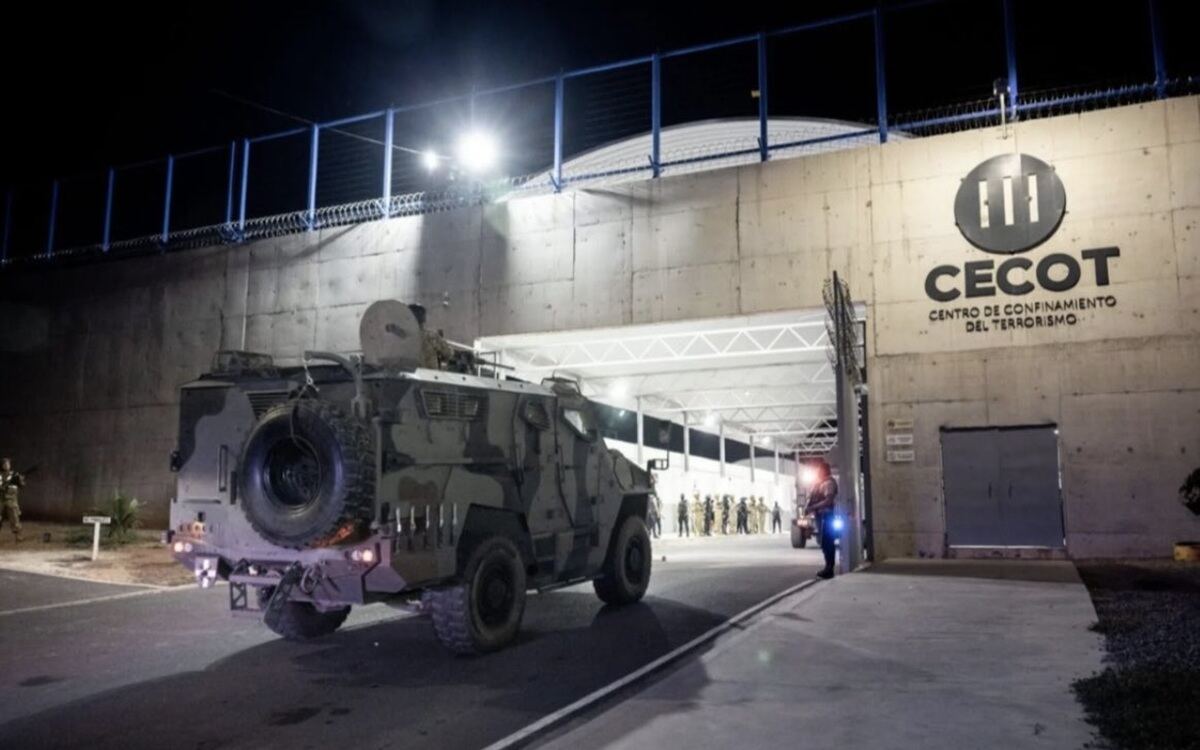
Justice and Public Security Minister Patrick Pelissier announced Friday, Nov. 20, 2026, that Port-au-Prince reached an agreement with a Salvadoran firm and a local Haitian partner to build three new high-security prisons across the country. The announcement followed Pelissier’s mid-November trip to El Salvador for the Second International Conference on State and Democracy, where he toured the Terrorism Confinement Center, known as CECOT, in Tecoluca, the maximum-security complex at the center of President Nayib Bukele’s security campaign.
Haiti’s prime minister has ordered work on the first facility accelerated, though key financial, logistical and operational details remain undisclosed. The project involves three new prison facilities built through a joint venture between an unnamed Salvadoran construction company and a Haitian partner.
Pelissier toured CECOT on Tuesday, Nov. 17, alongside Salvadoran officials in front of cells holding suspected gang members. After returning to Haiti, he praised the prison’s permanence, saying that once an inmate enters, “there is no hope of ever seeing the outside world again.”
Officials have not disclosed the project’s total cost, whether El Salvador is providing financing, where the three sites will be located, their planned capacity or whether Salvadoran personnel will help run the prisons once completed.
The prison agreement builds on a rapidly expanding bilateral security partnership between Port-au-Prince and San Salvador. Beginning in late October 2026, Bukele deployed roughly 2,500 Salvadoran troops to Haiti outside the U.N.-backed force after armed gangs ambushed and killed Salvadoran personnel. Earlier this week, Haiti’s Council of Ministers formalized a broader cooperation pact with El Salvador, prompting street demonstrations in Port-au-Prince where thousands marched with signs reading “Thank you, Bukele” amid widespread frustration over gang violence in the capital.
Haiti’s detention system has been in near collapse since March 2024, when coordinated gang assaults overran the National Penitentiary in Port-au-Prince and the civil prison in Croix-des-Bouquets, freeing thousands of detainees.
Before the 2024 jailbreaks, Haiti’s prison network had an official capacity of roughly 3,900 beds. By late 2025, U.N. monitors reported more than 7,200 men, women and children held in surviving facilities, a figure equal to 302% overcapacity, with many in prolonged pretrial detention. During the first 10 months of 2026, the United Nations documented 4,595 deaths and 2,050 injuries from armed violence across Haiti.
Friday’s announcement also leaves unclear how the Salvadoran deal interacts with a separate, controversial 50-year prison concession Pelissier’s ministry signed in March 2026 with a consortium led by Metric Correctional Facility S.A. That agreement was flagged seven times by Haiti’s Superior Court of Auditors and estimated by watchdogs to cost more than $6 billion over its lifetime.
For Haitian authorities, El Salvador presents a high-profile template. Since imposing a State of Exception in 2022 and detaining more than 90,000 suspected gang members, Bukele’s government has driven homicides to historic lows. Following his meeting with Pelissier, Salvadoran Justice and Security Minister Gustavo Villatoro said his government is “fully willing to support other countries in the fight against crime.”
Human rights groups and legal observers caution, however, that replicating CECOT-style detention carries steep risks in a country that has lacked an elected government since President Jovenel Moise’s 2021 assassination. Critics point to widespread arbitrary arrests, suspended due process and torture allegations linked to El Salvador’s mega-prison.
Constructing high-security walls is only the first step. Building the judicial oversight, sustained funding and institutional capacity required to operate them without compounding Haiti’s humanitarian crisis will be the harder test.
About The Author