The Republican Setback: America’s Midterm Elections Reshape Trump’s Political Future and Open the Door for a Democratic Comeback
- Naveed Aman Khan
- Pinpoint
- November 4, 2026
The 2026 United States midterm elections have delivered a politically significant message to Washington: President Donald Trump’s return to the White House has not translated into an unquestionable Republican mandate. The results, which have surprised some political observers but were anticipated by those following the growing public dissatisfaction with the administration, could mark a turning point in American domestic politics. More importantly, they have opened a new chapter in the struggle for political control ahead of the 2028 presidential election.
Midterm elections are traditionally a referendum on the performance of the sitting president. The party occupying the White House frequently loses congressional seats as voters use the opportunity to express frustration over economic pressures, political divisions, immigration, foreign policy and the administration’s overall performance. The 2026 results appear to reinforce this historical pattern. Republicans entered the election hoping to consolidate their political authority, but Democratic gains have challenged that ambition and raised serious questions about the sustainability of Trump’s political influence.
The most striking feature of this election has been the geographical scale of Republican defeats. Democrats have not merely strengthened their position in traditional Democratic strongholds; they have broken through in states that were considered dependable Republican territory.
In the Senate, Democrats have captured at least seven Republican-held seats, including victories in Kansas, Iowa, Texas, Ohio, Maine, North Carolina and South Carolina. These results are particularly damaging for Republicans because several of these states supported Trump comfortably in the 2024 presidential election. Kansas, for example, had not elected a Democratic senator in nearly a century. Texas, long regarded as a Republican stronghold, has delivered another major political shock by electing Democrat James Talarico. In Iowa, Democrat Josh Turek has won the seat previously held by retiring Republican Joni Ernst.
Maine has also witnessed a significant political change. Republican Senator Susan Collins, one of the most recognisable figures in the party, has conceded defeat to Democrat Troy Jackson. In North Carolina, former governor Roy Cooper defeated Republican Michael Whatley, while Ohio’s Republican Senator Jon Husted lost to Democrat Sherrod Brown. South Carolina’s result is another indication that Democratic candidates have successfully challenged Republican dominance beyond the traditional battleground states.
The gubernatorial elections have delivered equally important setbacks for the Republican Party. Democrats have flipped Republican-held governorships in Georgia, Ohio, Iowa, Texas and Nevada. Keisha Lance Bottoms has won in Georgia, ending the Republican hold on the governorship in a state that Trump carried in 2024. Rob Sand has become Iowa’s first Democratic governor in two decades. In Ohio, Amy Acton defeated Republican Vivek Ramaswamy. Texas has produced one of the most remarkable outcomes, with Gina Hinojosa defeating Republican Governor Greg Abbott to become the state’s first Latina governor. Nevada’s Democrat Aaron Ford has also defeated Republican incumbent Joe Lombardo.
These are not isolated victories. They represent a wider rejection of Republican political dominance and demonstrate that even states considered safe for the GOP can become competitive when voters are dissatisfied with national leadership.
The economy appears to have been the central factor. Trump returned to the presidency promising economic revival, lower living costs, stronger employment opportunities and greater financial security for ordinary Americans. However, inflation, high energy prices and the rising cost of everyday necessities have created frustration among households. Voters who expected immediate economic relief have increasingly questioned whether the administration’s policies are delivering tangible benefits.
The war involving Iran has also become an important political liability. Its economic consequences, particularly energy-market uncertainty and higher fuel prices, have strengthened public concerns about the administration’s foreign-policy decisions. Tariff policies have added pressure on businesses, farmers and consumers, while immigration enforcement and controversies surrounding government accountability have further divided public opinion.
Approximately seven in ten voters believe Congress has not done enough to provide checks and balances on presidential authority. This sentiment helps explain why voters have supported Democratic candidates even in traditionally Republican areas.
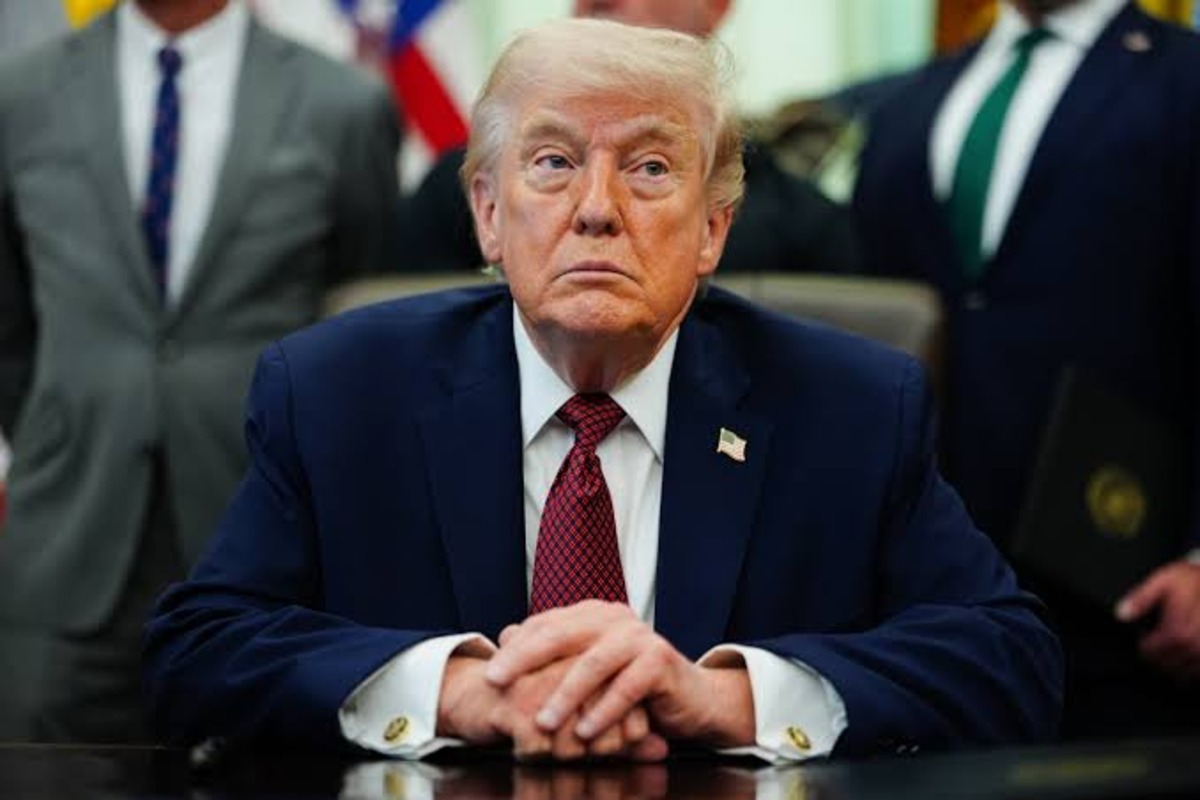
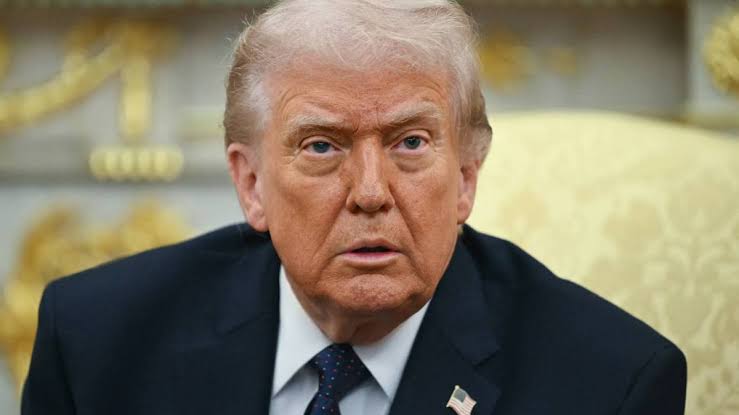
Trump’s personal political influence, once considered the Republican Party’s strongest electoral asset, has also become a potential liability. His endorsements and campaign interventions could not prevent several Republican defeats. The results suggest that a significant section of the electorate is increasingly distinguishing between loyalty to a political personality and the practical performance of government.
The Democrats’ greatest achievement is their capture of both chambers of Congress. With the Senate moving to a Democratic majority and the House also changing hands, Trump’s administration will face a substantially different political environment during its final two years.
Democrats have secured at least 54 Senate seats, including two independents who caucus with them, against 44 Republicans, with some races still awaiting final calls. In the House, Democrats have secured a majority, with more than two dozen Republican-held districts changing hands in the initial results.
This political transformation has practical consequences. Congressional committees will come under Democratic control, giving opposition lawmakers greater authority to investigate administration decisions, demand documents, summon officials and scrutinise federal spending. Trump’s legislative priorities will face stronger resistance, while judicial and senior administrative appointments could become more difficult to secure.
The Democrats will also have greater influence over budget negotiations, government funding, foreign assistance and national security oversight. Although Trump retains presidential veto powers and substantial executive authority, governing without congressional cooperation will become considerably more complicated.
However, Democrats must recognise that winning elections is easier than governing effectively. Their victory represents an opportunity to demonstrate responsible leadership rather than simply oppose Trump. If internal disagreements between progressive and moderate Democrats undermine their ability to deliver, the political advantage could disappear before 2028.
The international implications of these elections could be substantial. America’s allies, competitors and regional partners will interpret the results as evidence that Trump’s domestic political authority has weakened.
The Middle East is likely to be among the regions most affected. Democratic control of Congress could intensify scrutiny of American military involvement, particularly the Iran conflict, defence expenditure and the administration’s relationship with Israel. Congressional pressure for diplomatic engagement, clearer war objectives and restrictions on military funding could complicate Trump’s regional calculations.
For Israel, the results may create additional political uncertainty. While American support for Israeli security remains a significant bipartisan issue, Democratic lawmakers could demand greater accountability regarding military operations, civilian casualties and the future of Gaza. Netanyahu’s government may consequently face a more demanding political environment in Washington.
Europe and Ukraine will also be watching closely. Democratic lawmakers could press for stronger support for Ukraine and a more predictable American commitment to NATO. European governments may interpret the Republican losses as an indication that American foreign policy cannot be based exclusively on the political preferences of one president.
China, meanwhile, will assess whether congressional changes create opportunities for a more predictable diplomatic and economic relationship with Washington. Although Democrats are not necessarily less competitive towards Beijing on trade, technology or strategic influence, congressional oversight could encourage a more institutional approach to American foreign policy.
For Pakistan and South Asia, the emerging political situation deserves particular attention. Congressional attitudes towards Pakistan, Afghanistan, India, regional security and counterterrorism could become more influential. Islamabad should pursue balanced diplomatic engagement with both parties rather than assume that a Democratic congressional majority automatically guarantees a fundamental change in American policy. Relations with China, Pakistan’s economic interests and regional stability will remain important considerations for Washington.
Perhaps the most consequential question is whether the 2026 results have opened the road to a Democratic presidential victory in 2028. The answer is that Democrats have substantially improved their political position, but victory is not guaranteed.
The election has demonstrated that Trump’s electoral coalition is not invulnerable. Young voters, Hispanic communities, independents and voters concerned about economic conditions have contributed to Democratic gains. The party has also demonstrated an ability to compete in states that Republicans previously considered secure.
Potential Democratic presidential contenders will now have stronger opportunities to build national profiles, raise campaign funding and present themselves as alternatives to Trump’s political approach. At the same time, Republicans will face difficult questions about succession, leadership, economic credibility and the future direction of the party after Trump.
Nevertheless, Democrats must avoid interpreting a midterm victory as an automatic presidential mandate. The 2028 election will involve different candidates, different circumstances and potentially different international and economic conditions. A successful congressional campaign does not necessarily translate into a successful presidential campaign.
The 2026 midterm elections represent more than an ordinary transfer of congressional power. They are a warning that presidential popularity, political loyalty and electoral dominance cannot be taken for granted in American democracy. Republicans have suffered serious setbacks in states where their victories once appeared almost certain. Democrats, meanwhile, have demonstrated that their political recovery is no longer confined to traditional strongholds.
For Trump, the immediate challenge will be to govern a country whose voters have given Congress a different political mandate. For Democrats, the challenge is to convert electoral success into credible policies on inflation, employment, healthcare, immigration and international security.
The wider world should also recognise that American political stability and foreign-policy direction are entering another uncertain period. The results could influence Washington’s approach to Iran, Israel, Ukraine, China and the wider international order.
Ultimately, the biggest message of these elections is that the American electorate has begun demanding greater accountability from its political leadership. The Republican defeat has made a Democratic victory in 2028 considerably more plausible. Whether Democrats can transform this momentum into a presidential mandate will depend not on Trump’s mistakes alone, but on their ability to convince Americans that they have a better vision for the country’s future.
The political battle for 2028 has effectively begun, and the 2026 midterms may be remembered as the moment when the balance of American politics started shifting away from Donald Trump.
About The Author