PTI’s Long March from Southern KP: Political Pressure or a Dangerous Gamble?
- Naveed Aman Khan
- Pinpoint
- Trending News
- October 7, 2026
Pakistan Tehreek-e-Insaf’s (PTI) long march toward Islamabad has entered a highly sensitive phase, combining political confrontation, provincial-federal tensions and the already deteriorating security environment in southern Khyber Pakhtunkhwa. The march began from Gandi Chowk in Lakki Marwat on October 4 under the leadership of KP Chief Minister Sohail Afridi after negotiations between the government and opposition ended without agreement. The immediate demands include greater access to Imran Khan and his release, while the dispute has also become deeply intertwined with the federal government’s counterterrorism policy in KP.
The choice of Lakki Marwat and the wider southern KP belt is perhaps the most politically significant aspect of this march. PTI supporters from Tank, Dera Ismail Khan, South and North Waziristan and Bannu were scheduled to join the caravan there before it moved through Karak, Kohat, Peshawar and toward Khairabad. The route therefore passes through some of the country’s most politically charged and security-sensitive districts.
It is important, however, to distinguish between militant influence or operational presence and literal territorial control. There is no sound basis for saying that the TTP formally “controls” Bannu, Karak, Tank or Lakki Marwat in the same sense that a government controls territory. But the security threat in these districts is unquestionably severe. Recent assessments identify Bannu and Lakki Marwat as major centers of militant activity, while Tank and other southern districts have repeatedly suffered attacks. The TTP activity has remained particularly intense in Bannu, Dera Ismail Khan and Lakki Marwat, while 2025 data showed especially high militant activity in North and South Waziristan, Bannu, Tank, Lakki Marwat and D.I. Khan.
There are several possible political explanations. First, southern KP is one of PTI’s strongest political constituencies and offers the party a substantial grassroots support base. Second, beginning from a PTI-governed province allows the provincial government to mobilize its political machinery more effectively than beginning from Punjab or Sindh. Third, the choice sends a political message to Islamabad: PTI is presenting the march not merely as an urban protest but as a movement originating from the province where it holds government.
There is also a powerful political symbolism in starting the march from an area suffering heavily from terrorism. PTI can argue that the people of southern KP have endured terrorism for years and therefore have legitimate grievances about federal security policy. Chief Minister Afridi has publicly questioned the effectiveness of existing counterterrorism policies, while the federal government has accused the KP administration of failing to cooperate adequately on terrorism-related measures. The collapse of negotiations was partly linked to this very disagreement.
But this strategy carries enormous risks. The most provocative question is why the TTP, despite repeatedly attacking civilians, police and security forces in these districts, has not publicly targeted the PTI leadership or the marchers. It would be irresponsible to draw a definitive conclusion from the absence of an attack. The absence of an attack does not establish an alliance, understanding, political sympathy or operational coordination. Terrorist organizations choose targets according to their own calculations, and they may deliberately avoid certain crowds because an attack could produce a massive public backlash or undermine their strategic objectives. Indeed, available security research shows that the TTP’s violence is not indiscriminate. It frequently targets security personnel, government institutions, tribal elders and people associated with state authority. ACLED has documented the TTP’s strategy of weakening state authority in southern KP and expanding its operational presence beyond the former tribal areas.
Consequently, the question should not be reduced to “Why doesn’t TTP attack PTI?” The more important question is: Can a major political gathering safely move through an area where militant organizations have demonstrated the capacity to attack security forces and civilians? That is a legitimate national-security concern.
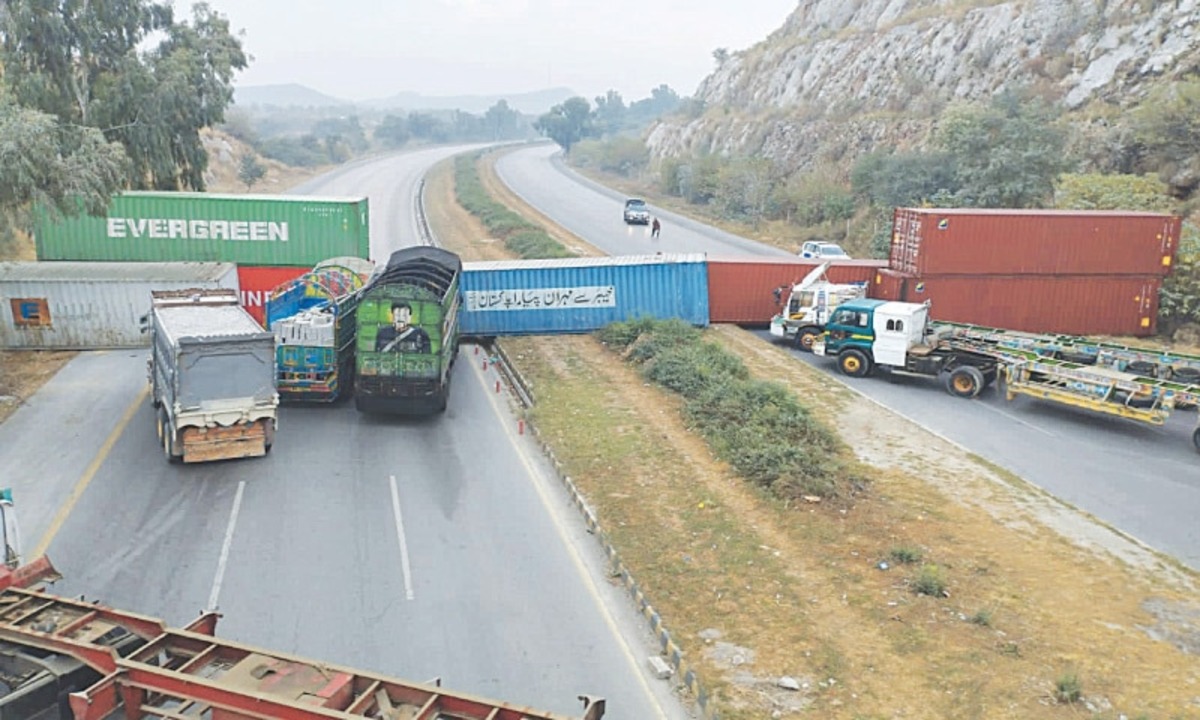
The government therefore faces a difficult balancing act. If it uses excessive force, arrests large numbers of political workers or attempts to physically crush the procession, PTI could transform the confrontation into a political narrative of victimization. Images of clashes between protesters and police could rapidly spread through social media and deepen political polarization. Conversely, if the government allows an uncontrolled procession to enter Islamabad and occupy sensitive areas, it risks paralysis of the federal capital, disruption of diplomatic activity and a deterioration of law and order. The government’s present position is that the march will not be allowed to enter Islamabad. KP Governor Faisal Karim Kundi has said the procession would not be permitted beyond Attock, while the federal government has deployed security arrangements and roadblocks around the capital. Prime Minister Shehbaz Sharif has nevertheless urged PTI to end the march and return to political dialogue.
This suggests that the government is likely to pursue a containment strategy rather than immediately seeking a violent confrontation. It can impose Section 144, restrict routes, establish checkpoints, deploy containers and negotiate behind the scenes. Such measures have already affected movement in several southern KP districts, and one PTI convoy led by former chief minister Ali Amin Gandapur reportedly turned back near Yarik because of roadblocks and security concerns.
The government’s greatest advantage is geography. The PTI caravan must move through several choke points before reaching the federal capital. Every additional kilometer increases logistical requirements, security exposure and the possibility of internal fatigue. The government does not necessarily need to defeat the march politically; it may simply need to prevent it from becoming a massive, sustained occupation of Islamabad. PTI, meanwhile, faces its own strategic dilemma.
A successful march requires numbers, discipline, continuity and a clearly achievable political objective. If tens of thousands of people reach the outskirts of Islamabad, PTI could claim a significant political victory even without immediately securing Imran Khan’s release. It could demonstrate that the party retains organizational strength despite arrests, legal pressure and the imprisonment of its founder. But if participation remains limited, provincial resources become controversial, the caravan repeatedly stalls, or the march ends before reaching Islamabad, the government will portray it as a failed attempt to create political instability.
There is already an important warning sign. The march has encountered logistical and security difficulties even within KP. This demonstrates that mobilization on social media and political rhetoric does not automatically translate into sustained street power. PTI’s challenge is particularly difficult because it must maintain momentum while avoiding violence and protecting participants from both police confrontation and militant threats.
The economic consequences should not be underestimated. Pakistan cannot afford another prolonged political shutdown. Every major confrontation around Islamabad affects transport, trade, business confidence, government functioning and investment sentiment. Road closures can disrupt supply chains between KP, Punjab and the federal capital. Markets react negatively to prolonged uncertainty, while foreign investors become more cautious when political confrontation repeatedly threatens administrative continuity. Pakistan’s economy is particularly vulnerable to political instability because the country needs sustained investment, export growth, fiscal discipline and international confidence.
A prolonged protest movement could distract policymakers from economic reforms, undermine investor confidence and complicate efforts to attract foreign capital. There is also a deeper danger: the erosion of the federation itself. When a provincial government becomes the institutional vehicle for confronting the federal government, political competition can gradually transform into a constitutional crisis. If Islamabad believes that the KP administration is using provincial resources for a political confrontation, while KP believes the federation is attempting to undermine its elected government, mutual distrust can spread beyond the political parties themselves. That would be extremely damaging.
Pakistan’s federal structure depends upon cooperation between Islamabad and the provinces, particularly on terrorism, policing, economic development and resource distribution. KP is already carrying an extraordinary security burden. The latest security assessments show that southern and western KP account for the overwhelming majority of the province’s security incidents and fatalities. The tragedy would be if political confrontation diverted attention from that reality. The TTP and other militant organizations benefit from institutional division. A government distracted by political confrontation has less capacity to concentrate on counterterrorism. Security forces deployed to manage political demonstrations are simultaneously needed for operations against militants. Police resources consumed by protest security cannot be deployed elsewhere.
About The Author